
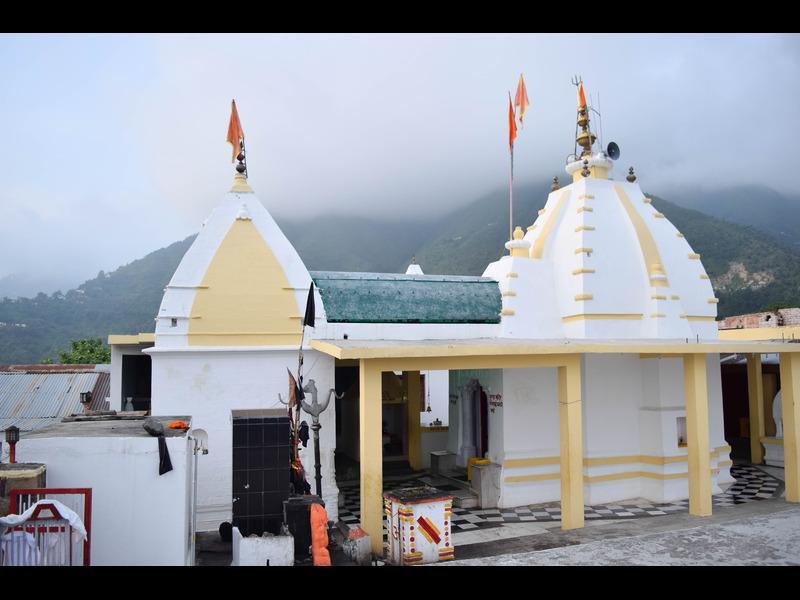
Sudh Mahadev Temple is one of the most revered Shiva pilgrimage destinations in the Jammu region of Jammu and Kashmir. Situated in the mountainous Chenani tehsil of Udhampur district, the temple stands within a peaceful valley surrounded by forested slopes, traditional villages and the spiritual landscape connecting Gauri Kund, Sudh Mahadev and Mantalai.
The shrine is also known as Shool Panishwar Mahadev Temple, Shool Paneshwar Mahadev, Sudhmahadev Mandir and Shri Sudh Mahadev Temple.
Its sacred identity is connected with Lord Shiva, Goddess Parvati, an ancient Shivling, a preserved trident, a traditional mace, natural springs and legends explaining how the name Sudh Mahadev developed.
The temple is generally placed at an elevation of approximately 1,225 metres. It is situated in a lower mountain zone that is cooler than Jammu city but lower than Patnitop’s principal plateau.
Official district information places Sudh Mahadev approximately 48 kilometres from Udhampur and about 112 kilometres from Jammu. Road distances from Patnitop, Kud and Chenani differ according to the selected route, current road alignment and the traveller’s starting property.
Chenani is the principal gateway for the shrine. From Chenani, the road proceeds through mountain villages towards Sudh Mahadev, Gauri Kund and Mantalai.
Road improvement and widening work can affect travel time, traffic flow and parking. Visitors should therefore obtain current route information from their hotel, taxi driver or local authorities before leaving.
Sudh Mahadev Temple does not usually require a long mountain trek. Most pilgrims can approach by road, followed by a relatively short walk through the village or temple complex.
The shrine is therefore suitable for families, senior citizens, children, couples, solo pilgrims and religious groups.
The wider circuit can involve uphill paths, steps, uneven terrain and mountain roads, especially when including Gauri Kund or less-developed local sacred points.
Travellers searching for hotels near Sudh Mahadev Temple, homestays near Chenani, pilgrimage stays near Mantalai, accommodation near Patnitop or places to stay near Shiva temples in Udhampur can use MudrasStays to plan a convenient and spiritually focused journey.
## Spiritual Importance of Sudh Mahadev Temple
Sudh Mahadev Temple is dedicated to Lord Shiva, worshipped as Mahadev, Shool Panishwar and the supreme consciousness associated with meditation, transformation and liberation.
Lord Shiva occupies a central position within the sacred geography of the Jammu Himalayas.
He is worshipped as the yogi of the mountains, the compassionate husband of Goddess Parvati, the lord of time and the divine presence that removes ignorance and destructive attachment.
At Sudh Mahadev, Shiva’s presence is expressed through the Shivling and the sacred trident preserved within the temple tradition.
The Shivling represents Shiva beyond an ordinary human form.
It symbolises limitless consciousness, the source of creation and the divine reality that cannot be confined within one image.
The trident represents Shiva’s power to overcome the three fundamental forms of limitation.
These are interpreted in several ways, including past, present and future; creation, preservation and transformation; or physical, mental and spiritual suffering.
Devotees visit Sudh Mahadev Temple to pray for peace, courage, family welfare, health, protection during travel and strength during difficult periods.
Some pilgrims visit before marriage, a new profession, an examination or another important responsibility.
Others return after experiencing what they regard as the fulfilment of a religious vow.
These prayers and experiences belong to personal faith.
Worship should not be presented as guaranteeing healing, marriage, employment, wealth or another specific result.
The value of the pilgrimage lies in devotion, reflection, discipline and the emotional strength that worshippers may receive.
## The Shivling at Sudh Mahadev
The sacred Shivling is the centre of worship at Sudh Mahadev Temple.
Tourism descriptions commonly refer to it as a naturally occurring or ancient black-stone lingam.
Devotees may regard the sacred form as swayambhu, meaning self-manifested rather than created and installed as an ordinary sculpture.
Swayambhu status is a matter of religious belief.
Visitors should not attempt to examine, measure or test the Shivling as a geological object.
It should be approached through the darshan and ritual arrangements established by the priest and temple management.
The sanctum may become crowded during Mahashivratri, Shravan Mondays and the annual Sudh Mahadev Mela.
Devotees should complete darshan calmly and avoid blocking the entrance.
Water, flowers, bilva leaves and other offerings should only be presented according to current temple customs.
Excessive milk, oil or packaged ritual material can create drainage and waste-management problems.
A simple and sincere offering is more appropriate than large quantities of material that may damage the shrine or surrounding environment.
Photography inside the sanctum should only be undertaken when clearly permitted.
## Lord Shiva and Goddess Parvati
The Sudh Mahadev pilgrimage landscape is deeply connected with Goddess Parvati.
Parvati represents Shakti—the divine power of creation, compassion, courage and active life.
Shiva represents pure consciousness and meditative stillness.
Together, Shiva and Parvati express the unity of awareness and energy.
Regional tradition maintains that Parvati worshipped the Shivling at Sudh Mahadev while performing spiritual discipline in the surrounding mountains.
Before offering her prayers, she is believed to have bathed at Gauri Kund, a sacred spring situated on the approach to Sudh Mahadev.
Mantalai, located beyond Sudh Mahadev, is traditionally associated with her birth, meditation or marriage to Lord Shiva, depending upon the version of the local narrative.
These accounts create a connected Shiva–Shakti circuit rather than three unrelated attractions.
Gauri Kund represents purification and preparation.
Sudh Mahadev represents Shiva worship.
Mantalai represents the sacred relationship between Shiva and Parvati.
The stories belong to Hindu tradition and local faith rather than independently documented history.
Their spiritual meaning lies in discipline, devotion and the union of Shiva and Shakti.
## The Legend of Sudheet
One of the best-known local legends explains the name Sudh Mahadev through a being called Sudheet, Sudhant or a similarly named figure.
According to the regional story, Goddess Parvati was engaged in worship or meditation near the Shivling.
Sudheet approached the sacred place to offer respect.
His fearsome appearance startled Parvati, and she cried out.
Lord Shiva heard the cry and hurled his trident towards the approaching figure.
The trident struck Sudheet.
As he lay wounded, he began chanting the name of Lord Shiva.
Shiva then realised that Sudheet had not intended to harm Parvati.
The Lord offered to restore his life.
Sudheet declined and requested that death at Shiva’s hands become the means of his liberation.
Moved by his devotion, Shiva granted him spiritual release and declared that his name would remain connected with the sacred place.
The name Sudh Mahadev is therefore explained in local tradition as the joining of Sudheet’s memory with Mahadev.
Versions of the story differ regarding the figure’s name, identity and precise actions.
The narrative should be understood as local Hindu tradition, not documented historical biography.
Its deeper meaning concerns intention, misunderstanding, repentance, devotion and liberation.
Sudheet’s outward appearance created fear, but his final devotion revealed a different inner nature.
The story teaches pilgrims not to judge every person only by external form.
## The Sacred Trident
A trident associated with Lord Shiva is preserved within the Sudh Mahadev tradition.
It is commonly described as the trident thrown by Shiva during the Sudheet episode.
Some accounts describe it as broken into separate pieces that are worshipped within or near the temple.
The trident is known as a trishul.
Its three points carry several philosophical meanings.
They may represent the three gunas—sattva, rajas and tamas.
They may represent the past, present and future.
They may represent creation, preservation and dissolution.
They may also represent the destruction of physical, mental and spiritual suffering.
At Sudh Mahadev, the trident is not merely a decorative temple object.
It forms part of the principal religious narrative and receives special attention during the annual fair.
Visitors should not touch, move or decorate the sacred trident without permission.
Garlands, cloth and water should only be offered through the authorised ritual procedure.
Photography should remain secondary to the dignity of worship.
## The Traditional Mace of Bhima
JKTDC information also records a mace traditionally believed to have belonged to Bhima, one of the five Pandava brothers of the Mahabharata.
Bhima is remembered for extraordinary physical strength, courage and loyalty to his family.
Maces are closely associated with his warrior identity.
Many temples and mountain destinations across North India preserve objects, impressions or structures connected in local belief with the Pandavas.
The Sudh Mahadev mace should be understood within this wider religious geography.
Its connection with Bhima is a matter of tradition, not an archaeologically verified chain of ownership from the Mahabharata period.
The object remains culturally important because it connects the temple with themes of strength, duty and righteous action.
Visitors should not attempt to lift, test or measure the mace.
Sacred objects should be approached through respect rather than physical curiosity.
## Age of Sudh Mahadev Temple
Sudh Mahadev is often described as being approximately 2,800 or 3,000 years old.
This figure appears in official tourism descriptions as a traditional age attributed to the temple and its Shivling.
It should not be interpreted automatically as the securely dated construction age of every visible wall, tower and roof.
Living Himalayan temples are repaired and rebuilt repeatedly.
Snow, rain, earthquakes, fire, moisture and continued worship can affect older structures.
The sacred site or Shivling may be regarded as extremely ancient even when the present temple building includes later reconstruction.
A responsible description should therefore state that Sudh Mahadev is traditionally believed to preserve a very ancient Shiva shrine, while the precise archaeological chronology of the complete building is not firmly established through the commonly available records.
This distinction respects both faith and historical accuracy.
## Architecture of Sudh Mahadev Temple
The present temple complex contains brightly painted shrine towers, covered passages, courtyards, ritual spaces and buildings serving worshippers.
The main shikharas are commonly painted in combinations of orange, white, yellow or other warm colours.
Saffron flags rise above the temple towers.
The shikhara marks the position of the sanctum and symbolically represents a sacred mountain.
This meaning is especially powerful at Sudh Mahadev because the temple itself is surrounded by mountain slopes.
The temple complex has developed through several periods of maintenance and expansion.
Paint, plaster, roofing, tiled surfaces and railings may change over time.
Visitors should not assume that every visible feature belongs to the earliest phase of worship.
Living temples must respond to weather, crowd movement and safety requirements.
Modern protective work does not remove the spiritual continuity of the sacred site.
## The Temple Courtyard
The courtyard provides space for pilgrims to gather, wait for darshan and observe the temple towers.
During quiet days, the area offers a peaceful setting for prayer and reflection.
During the annual mela, the same space and surrounding village can become extremely busy.
Visitors should keep doorways and movement routes clear.
Shoes, luggage and food should be placed only in designated areas.
Children should not climb railings, walls or sacred structures.
Loud music, staged performances and disruptive social-media filming are inappropriate near the sanctum.
Temple bells may be rung respectfully, but continuous and forceful ringing can disturb other worshippers.
## Pap Nashni Bowli
Sudh Mahadev is associated with a spring or water source called Pap Nashni Bowli.
The name Pap Nashni is interpreted as the remover of sin.
Devotees traditionally bathe in or touch the water before proceeding towards the temple.
In Hindu pilgrimage traditions, sacred bathing can symbolise purification and preparation for worship.
The act represents a desire to leave behind harmful conduct, confusion and spiritual impurity.
It should not be interpreted as a guaranteed erasure of moral responsibility.
A person remains responsible for actions and for correcting harm caused to others.
The spring should also not be promoted as a scientifically proven medical cure.
Natural water can contain sediment, microorganisms or seasonal contamination.
People with health concerns should make an informed decision before bathing or drinking.
Soap, shampoo, detergent and chemicals must never be used in the bowli.
Plastic, food and ritual packaging should not be thrown into the water.
Wet stone can become slippery, so children and senior citizens require supervision.
## Gauri Kund
Gauri Kund is an important sacred stop on the route towards Sudh Mahadev.
Regional tradition states that Goddess Parvati bathed at this spring before beginning her daily worship of Lord Shiva.
The name Gauri is another name for Parvati, expressing her radiant and compassionate form.
The site may require a separate uphill approach from the main road, depending upon the current route and vehicle access.
Visitors should not assume that the final path is completely flat or barrier-free.
Rain, moss and mountain runoff can make steps slippery.
Senior citizens should verify the current physical approach before travel.
The water should be treated respectfully.
Bathing arrangements, gender customs and access restrictions should be followed.
Sacred water should not be polluted with soap, plastic or cloth.
The Gauri Kund tradition creates a meaningful spiritual sequence.
The pilgrim first prepares at the sacred water source and then proceeds towards Shiva darshan at Sudh Mahadev.
## Mantalai Temple and Sacred Landscape
Mantalai lies a short road journey beyond Sudh Mahadev.
Official tourism material places it approximately 5 kilometres from the temple, although practical distance can vary with the exact starting point and road.
Mantalai is associated in Hindu tradition with Goddess Parvati and her sacred relationship with Lord Shiva.
One popular belief identifies it as the place where Shiva and Parvati were married.
Other versions connect it with Parvati’s birth, meditation or family home.
The present Mantalai area contains a temple, natural surroundings and buildings connected with a large yoga and spiritual complex.
The location stands at a higher elevation than Sudh Mahadev and is surrounded by deodar trees and mountain slopes.
Mantalai should be included in a Sudh Mahadev itinerary only after confirming current road access and opening arrangements.
Visitors should not enter abandoned, restricted or unsafe buildings.
The temple and spiritual landscape deserve respectful observation rather than exploration of closed structures for photographs.
## Sudh Mahadev, Gauri Kund and Mantalai Circuit
The three destinations form one of Udhampur district’s most meaningful Shiva–Shakti circuits.
A practical sequence may begin with Gauri Kund, continue to Sudh Mahadev and conclude at Mantalai.
However, the best route depends upon current traffic, road work, local advice and the visitor’s accommodation base.
Gauri Kund may involve additional walking.
Sudh Mahadev is the principal place for Shiva darshan.
Mantalai requires a separate onward drive.
Families and senior citizens should not attempt every location hurriedly.
A full day allows time for prayer, rest and safe mountain travel.
## Annual Sudh Mahadev Mela
The annual Sudh Mahadev Mela is the most important religious and cultural gathering at the temple.
It is generally organised as a three-day event around the full-moon period in June or July, according to the Hindu lunar calendar and annual administrative announcement.
Some official descriptions associate the occasion with the full moon of Sawan, while others use the traditional regional calendar around the beginning of the monsoon.
The exact dates therefore change each year.
The festival attracts devotees from Udhampur, Jammu, Chenani, Ramban and other parts of the region.
Pilgrims visit to worship the Shivling, trident and other sacred objects.
The mela may include religious ceremonies, cultural programmes, temporary markets, food stalls and administrative services.
Roads, parking and accommodation become crowded.
Festival visitors should follow traffic diversions and use authorised parking.
Families should keep children close and agree upon a meeting point.
Senior citizens should visit during quieter morning hours whenever possible.
Hotels, homestays and dharamshalas near Sudh Mahadev, Chenani, Kud and Patnitop should be reserved early.
The current mela programme should always be confirmed before travel.
## Mahashivratri
Mahashivratri is another major occasion for Shiva worship.
Devotees may observe fasting, mantra recitation, abhishek and night prayer.
The temple can receive additional visitors, particularly when weather and road conditions remain favourable.
Mahashivratri often occurs during late winter or early spring.
Snow, rain, frost or cold winds may affect the surrounding route.
Travellers should not assume that the road will remain completely clear because a festival is taking place.
Current weather and transport advice should be checked.
## Shravan and Monday Worship
The month of Shravan is especially sacred to Lord Shiva.
Mondays may attract devotees carrying water, flowers, bilva leaves and other offerings.
Shravan usually overlaps with the monsoon period.
The mountain landscape becomes green, but roads may experience falling stones, landslides, mud and reduced visibility.
Religious importance should be balanced with safety.
A visit can be postponed when the administration or weather conditions indicate danger.
Devotion does not require ignoring a road closure or severe rain warning.
## Daily Darshan and Aarti
Temple timings can vary according to season, festival arrangements and priestly duties.
Visitors planning very early or late darshan should verify current hours locally.
Morning is usually the best period for a peaceful visit.
The air is cooler, traffic is lighter and pilgrims have enough time to include Gauri Kund or Mantalai.
Evening worship can be spiritually rewarding, but the return journey through unfamiliar mountain roads should be planned carefully.
Travellers should not rely upon finding public transport after dark.
## Best Time to Visit Sudh Mahadev Temple
Sudh Mahadev can generally be visited through much of the year, subject to road and weather conditions.
### Spring
Spring brings improving weather after winter.
The surrounding mountains become greener, and daytime temperatures can be comfortable.
Early spring may still bring cold mornings, rain or occasional road problems.
Spring is suitable for families and heritage travellers seeking a quieter period before the principal mela.
### Summer
Summer is a popular season for visiting Sudh Mahadev and nearby Patnitop.
The temple remains cooler than Jammu city, although direct sunlight can still be strong.
Visitors should carry water, sunscreen and a light layer for evening.
The annual mela may occur around the early monsoon or summer full-moon period.
Festival dates require advance accommodation.
### Monsoon
The monsoon makes the valley green and atmospheric.
Clouds may move across the mountain slopes, and streams become stronger.
Heavy rain creates landslide, falling-stone and slippery-road risks.
Visitors should monitor official advisories.
The Chenani–Sudh Mahadev road may also experience construction-related delays or restrictions.
A rain jacket and shoes with dependable grip are useful.
Travel should be postponed during severe weather.
### Autumn
Autumn is among the most comfortable periods for a Sudh Mahadev pilgrimage.
Rain generally reduces, roads become more manageable and the landscape remains green.
The weather is suitable for combining the temple with Patnitop, Kud and Mantalai.
Morning and evening temperatures begin falling later in the season.
### Winter
Winter can bring frost, cold rain and occasional snow to the higher parts of the Sudh Mahadev region.
The temple is lower than Patnitop, but winter conditions can still affect the road.
Snowfall should never be guaranteed for a specific date.
Visitors should confirm access before departure and carry warm layers, gloves and suitable footwear.
Ordinary vehicles may face difficulty during snow or ice.
## Reaching Sudh Mahadev from Udhampur
Udhampur is the principal district headquarters and an important rail and road gateway.
Official district information places Sudh Mahadev at approximately 48 kilometres from Udhampur.
The route generally proceeds towards Chenani before turning into the Sudh Mahadev valley.
Actual journey time depends upon traffic, weather and road work.
A local taxi or private vehicle provides the greatest flexibility.
Public transport may operate towards Chenani and Sudh Mahadev, but the last return service should be confirmed.
Visitors should leave early and complete the mountain section during daylight.
## Reaching from Jammu
Sudh Mahadev is approximately 112–120 kilometres from Jammu according to different official tourism descriptions.
The trip can be completed as a long day journey, but staying in Udhampur, Chenani, Kud or Patnitop provides a more relaxed experience.
A Jammu day trip requires an early departure and dependable private transport.
Traffic on the Jammu–Srinagar corridor and local mountain roads can affect journey time.
Pilgrims should not schedule a tightly timed train or flight immediately after the temple visit.
## Reaching from Chenani
Chenani is the principal gateway to Sudh Mahadev.
The mountain road from Chenani towards the shrine is approximately 17 kilometres in the present highway-upgradation context.
Road-widening work can create diversions, rough surfaces or temporary delays.
Local taxis and experienced drivers are preferable for visitors unfamiliar with the route.
Chenani provides markets, pharmacies, basic accommodation and transport connections.
It can serve as a practical overnight base for early temple darshan.
## Reaching from Patnitop and Kud
Patnitop and Kud are popular accommodation bases for visitors combining pilgrimage with a hill holiday.
The exact road distance to Sudh Mahadev varies according to the route used, and official sources provide differing figures.
Travellers should rely upon current driving directions from their selected hotel rather than one universal distance.
Patnitop offers a wider range of hotels and tourism facilities.
Kud provides guesthouses, shops and access to the highway.
Both require a separate mountain-road journey towards Chenani and Sudh Mahadev.
## Reaching by Train
Shri Mata Vaishno Devi Katra and Jammu Tawi are major regional railway stations, while Udhampur Railway Station is the closest important rail gateway commonly used for Sudh Mahadev.
Official district information places the station approximately 52 kilometres from the shrine.
A taxi or road transfer is required.
Visitors arriving late in the evening should stay in Udhampur or another appropriate base rather than immediately attempting an unfamiliar mountain road.
## Reaching by Air
Jammu Airport is the principal airport for the region.
The onward journey to Sudh Mahadev is substantial and should be planned as a separate road transfer.
Flight schedules and mountain roads can be affected by weather.
Travellers should keep sufficient buffer time and avoid planning temple darshan immediately before departure.
## Accessibility for Senior Citizens
Sudh Mahadev Temple is comparatively accessible because vehicles can reach the village and temple area.
The final route may still include steps, slopes and uneven surfaces.
Senior citizens should use stable footwear and family assistance.
People with significant mobility limitations should confirm the latest vehicle drop-off point and the distance to the sanctum.
The mela period may be unsuitable for visitors unable to tolerate long queues or dense crowds.
A quiet weekday morning is generally preferable.
Gauri Kund can require additional uphill walking and should be assessed separately.
## Visiting with Children
Families can include Sudh Mahadev within a Udhampur or Patnitop itinerary.
Children should remain supervised near springs, steps and crowded ritual spaces.
Parents can explain the trident, Shivling and Sudheet legend through themes of devotion and forgiveness rather than fear.
Children should not climb temple structures, touch sacred objects or throw material into springs.
Water, snacks, weather-appropriate clothing and personal medicines should be carried.
All packaging should be taken away.
## Patnitop
Patnitop is one of the most popular nearby hill destinations.
It offers hotels, forest walks, viewpoints and seasonal tourism activities.
The plateau stands at a higher elevation than Sudh Mahadev and can experience colder weather and more frequent winter snow.
Patnitop is a useful accommodation base for travellers who want comfortable tourism infrastructure.
However, the practical road distance to the temple should be confirmed before booking.
## Kud
Kud is a small hill town on the Jammu–Srinagar corridor and is known for shops, local sweets and mountain accommodation.
It can be used as a quieter alternative to Patnitop.
Travellers can combine Kud with Sudh Mahadev, Chenani and Patnitop according to the road sequence.
Parking and hotel access should be checked, particularly during busy holiday periods.
## Sanasar
Sanasar is known for meadows, mountain scenery and adventure activities.
It requires a separate road journey from Patnitop and should not be compressed casually into the same day as Gauri Kund, Sudh Mahadev and Mantalai.
Adventure activities should only be undertaken through authorised operators and appropriate safety arrangements.
## Naag Mandir
Naag Mandir at Patnitop is an important local shrine dedicated to the serpent deity.
Nag worship is connected with water, fertility and the guardianship of mountain landscapes.
A visit can be included within a Patnitop stay.
Festival and access arrangements should be confirmed locally.
## Krimchi Temple Complex
Krimchi contains a group of historic stone temples in Udhampur district.
The temples are generally associated with the early medieval period and are often called the Pandava Temples in local tradition.
A combined Krimchi and Sudh Mahadev itinerary allows travellers to experience both archaeological architecture and active Shiva worship.
The two destinations require separate road travel and are best divided across two days.
## Devika Ghats in Udhampur
The Devika River is a major sacred feature of Udhampur.
It is traditionally regarded as the elder sister of the Ganga and is connected with bathing, ancestral rites and temple worship.
Visitors should follow current access and cleanliness rules.
Religious material and plastic should not be thrown into the river.
Udhampur can be used as a base for combining Devika Ghats, Krimchi and Sudh Mahadev.
## Beni Sangam
Beni Sangam near Chenani is regarded in local tradition as a sacred confluence.
The meeting of rivers symbolises purification, unity and the joining of spiritual paths.
Riverbanks can become dangerous during heavy rain.
Visitors should remain within recognised safe areas and avoid entering fast water.
## Suggested One-Day Sudh Mahadev Itinerary
Begin with an early departure from Chenani, Kud, Patnitop or Udhampur.
Visit Gauri Kund first if the route, weather and group mobility permit.
Continue towards Sudh Mahadev Temple for darshan.
Spend time observing the Shivling, trident and temple complex respectfully.
After lunch, proceed towards Mantalai.
Explore the temple area and natural setting without entering restricted buildings.
Return to the accommodation base before dark.
This itinerary requires a full day and should remain flexible during road work or rain.
## Suggested Two-Day Pilgrimage Itinerary
On the first day, arrive in Chenani, Kud or Patnitop and check into accommodation.
Visit Patnitop, Kud or a nearby road-accessible attraction.
On the second morning, travel to Gauri Kund and Sudh Mahadev Temple.
Continue to Mantalai if conditions remain favourable.
Return for a second night or continue towards Udhampur according to the onward route.
This plan is more suitable for families and senior citizens.
## Suggested Three-Day Udhampur Spiritual Circuit
The first day can include Udhampur city, Devika Ghats and local temples.
The second day can focus on Sudh Mahadev, Gauri Kund and Mantalai.
The third day can include Krimchi Temple Complex or Patnitop and Kud.
Travellers should avoid attempting every destination in one day because mountain-road travel requires more time than map distance suggests.
## Accommodation Near Sudh Mahadev Temple
Accommodation immediately around Sudh Mahadev includes private hotels, guesthouses, homestays and dharamshala-style pilgrim facilities.
Availability and quality vary.
Rooms can fill quickly during the annual mela, Mahashivratri and summer holidays.
Visitors should confirm attached bathrooms, hot water, meals, parking, bedding and actual walking distance to the temple.
A property described as being in Sudh Mahadev may still lie on a slope or outside the principal village centre.
## Dharamshalas and Pilgrim Accommodation
Dharamshalas can provide economical rooms or shared accommodation for pilgrims.
Facilities may be basic.
Guests should not assume hotel-style service, heating or private bathrooms.
Booking procedures and availability should be confirmed before arrival.
Donations and payments should be made through recognised management channels.
## Homestays Near Sudh Mahadev
Local homestays can offer home-cooked food, village hospitality and practical information about road conditions and temple timings.
Facilities vary widely.
Guests should confirm bathrooms, hot water, room heating, electricity, mobile connectivity and parking.
Staying locally can reduce early-morning travel and help pilgrimage income reach the surrounding community.
## Hotels in Chenani
Chenani provides a practical base with markets, pharmacies and road connections.
Accommodation may include small hotels, lodges and guesthouses.
It is suitable for visitors seeking easier access to the Sudh Mahadev road without paying Patnitop resort prices.
Guests should confirm the current condition of the final road and whether the property can arrange an early taxi.
## Hotels in Patnitop
Patnitop offers the widest range of developed accommodation near the pilgrimage circuit.
Options include resorts, hotels, cottages and guesthouses.
It is suitable for families, couples and travellers combining pilgrimage with a mountain holiday.
Properties can be expensive during weekends, snow periods and summer holidays.
Visitors should confirm the exact driving time to Sudh Mahadev before booking.
## Hotels in Kud
Kud provides smaller hotels, guesthouses and highway-oriented accommodation.
It can serve as a practical base between Udhampur, Patnitop and the Sudh Mahadev route.
Guests should check parking, room heating and road noise.
## Hotels in Udhampur
Udhampur offers hotels, restaurants, railway access, hospitals and transport services.
It is suitable for travellers combining several district attractions.
The road journey to Sudh Mahadev requires an early start.
Udhampur is better as an arrival or departure base than for pilgrims seeking dawn darshan.
## Choosing the Right Stay
Pilgrims whose main purpose is Sudh Mahadev Temple should choose Sudh Mahadev village or Chenani.
Families seeking developed hotel facilities may prefer Patnitop.
Budget travellers may consider Kud, Chenani or local guesthouses.
Senior citizens should prioritise properties with vehicle access, ground-floor rooms and minimal stairs.
Couples may prefer quiet homestays or mountain resorts.
Solo pilgrims should choose populated and well-connected accommodation with confirmed transport.
Groups should verify multiple rooms, vegetarian meals, driver accommodation and parking for large vehicles.
Mela visitors should book well in advance.
Winter travellers should confirm heating, hot water and snow access.
Monsoon visitors should ask about road work, drainage and landslide risk.
## Book Hotels Near Sudh Mahadev Temple with MudrasStays
MudrasStays helps pilgrims, families and spiritual travellers discover hotels, homestays, guesthouses and pilgrimage accommodation near Sudh Mahadev Temple, Chenani, Mantalai, Kud, Patnitop and Udhampur.
The platform is designed for travellers looking specifically for places to stay near temples, pilgrimage circuits and sacred destinations.
Visitors can compare properties according to practical road distance from Sudh Mahadev, room type, budget, group size and required facilities.
Booking closer to the shrine makes it easier to attend peaceful morning darshan and reduces unnecessary driving on mountain roads.
Solo pilgrims can search for simple guesthouses and economical rooms.
Couples can explore peaceful mountain homestays.
Families can choose hotels offering meals, parking and comfortable room capacity.
Senior citizens can prioritise accessible properties with reliable taxi arrangements.
Pilgrimage groups can identify stays providing multiple rooms, vegetarian food and suitable bus parking.
Visitors attending the Sudh Mahadev Mela can reserve accommodation early and avoid uncertain last-minute availability.
Travellers combining Sudh Mahadev with Gauri Kund, Mantalai, Patnitop, Krimchi or Devika Ghats can choose different accommodation bases according to the actual route.
MudrasStays helps pilgrims avoid booking a property that appears close in straight-line distance but requires unnecessary backtracking through mountain roads or construction zones.
## Responsible Temple Travel
Sudh Mahadev is an active place of Shiva worship within a sensitive mountain environment.
Visitors should dress respectfully and remove footwear wherever directed.
Photography of the Shivling, trident, sacred mace, priests and private rituals should only be undertaken with permission.
Sacred objects should not be touched, lifted or measured.
Offerings should be made through authorised arrangements.
Plastic bottles, disposable plates, food wrappers and puja packaging must be carried away.
Soap and chemicals must not be used in Pap Nashni Bowli or Gauri Kund.
Nothing should be thrown into springs or mountain streams.
Visitors should not tie synthetic material randomly to trees or railings.
Smoking, alcohol and intoxicants are inappropriate within the pilgrimage area.
Children should remain supervised near slopes, water and steps.
Vehicles should not block narrow village roads, private homes or emergency access.
Donations should be made through recognised counters or management representatives.
## Respecting Local Communities
Sudh Mahadev is a living village as well as a pilgrimage destination.
Local residents depend upon roads, springs, grazing land and agricultural areas.
Visitors should not enter homes, fields or private courtyards without permission.
Residents should not be photographed casually.
Local drivers, guides, shopkeepers, priests, food providers and homestay hosts should be treated fairly.
Fair payment and respectful behaviour allow pilgrimage tourism to benefit the community.
Loud music, littering and irresponsible parking create problems long after the visitor leaves.
## A Sacred Shiva–Shakti Journey in Udhampur
Sudh Mahadev Temple represents a powerful meeting of Shiva worship, sacred water, mountain landscape and living Dogra religious tradition.
The Shivling expresses the formless presence of Mahadev.
The sacred trident represents divine power and transformation.
The Sudheet legend teaches devotion, forgiveness and the danger of judging only by outward appearance.
The traditional mace connects the temple with the strength of Bhima and the Mahabharata.
Pap Nashni Bowli represents purification and moral renewal.
Gauri Kund preserves the tradition of Parvati preparing for worship.
Mantalai extends the sacred journey into the landscape associated with Shiva and Parvati’s union.
The annual mela brings together pilgrims, local communities, priests and cultural traditions.
The road from Chenani transforms an ordinary journey into movement through a connected spiritual valley.
For Shiva devotees, Sudh Mahadev is a place to seek peace, courage and spiritual clarity.
For Shakti worshippers, the Gauri Kund and Mantalai traditions give the circuit a strong connection with Goddess Parvati.
For families, road access makes the pilgrimage manageable without a difficult trek.
For senior citizens, nearby vehicle access provides a practical form of Himalayan darshan when the final steps are approached carefully.
For couples, the Shiva–Parvati traditions create a meaningful journey centred on companionship, devotion and balance.
For cultural travellers, the temple offers insight into the living religious heritage of Udhampur and Chenani.
For photographers, the bright temple towers, saffron flags and surrounding mountains create memorable compositions when worship and privacy are respected.
For spiritual seekers, the complete circuit expresses movement from purification at Gauri Kund to worship at Sudh Mahadev and union at Mantalai.
Sudh Mahadev Temple should not be treated merely as a quick roadside shrine during a Patnitop holiday.
Its legends, sacred objects, springs and relationship with the surrounding landscape deserve time and thoughtful attention.
Plan your pilgrimage to Sudh Mahadev Temple with MudrasStays and experience one of the most important Shiva destinations in Udhampur district.
Seek the blessings of Lord Sudh Mahadev, observe the sacred trident respectfully and visit Pap Nashni Bowli according to temple customs.
Combine your journey with Gauri Kund, Mantalai Temple, Chenani, Patnitop, Kud, Krimchi Temple Complex, Beni Sangam and Devika Ghats.
Book hotels near Sudh Mahadev Temple, discover homestays near Chenani and explore comfortable pilgrimage accommodation around Mantalai, Kud, Patnitop and Udhampur through MudrasStays.
Stay closer to the shrine, attend peaceful morning darshan and reduce unnecessary travel through mountain roads.
MudrasStays connects pilgrims, families and spiritual travellers with suitable accommodation near temples and sacred destinations across India.
Begin your Sudh Mahadev Temple journey with a comfortable stay and experience a meaningful pilgrimage centred on Lord Shiva, Goddess Parvati, sacred Himalayan springs and the spiritual heritage of Udhampur.