
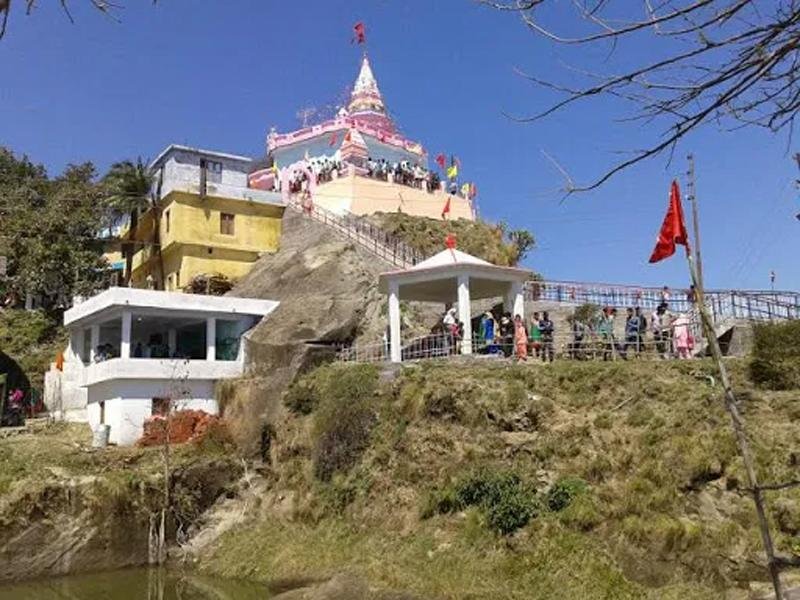
Sukrala Mata Temple is one of the most revered Shakti shrines in the Duggar region of Jammu and Kashmir. Situated on a forested hill near Billawar in Kathua district, the temple attracts devotees from Jammu, Kathua, Udhampur, Basohli, Punjab, Himachal Pradesh and other parts of North India.
The shrine is dedicated to Mata Sukrala, also lovingly called Mal Devi, Mal Mata, Maa Sukrala, Sukrala Devi and Shri Mata Sukrala Devi.
Within local religious tradition, the goddess is regarded as a manifestation of Sharda Devi, the divine form associated with wisdom, learning, speech and sacred knowledge.
For many Dogra families, Mata Sukrala is worshipped as a Kuldevi or ancestral family goddess. Devotees visit the shrine during important stages of life, including marriage, childbirth, education, employment, house construction, family ceremonies and the fulfilment of a religious vow.
The temple stands on a hillock approximately 9.6 kilometres from Billawar and around 75 kilometres from Kathua, although practical road distance may vary according to the visitor’s starting point and chosen route.
The hill is situated at an elevation of roughly 3,500 feet above sea level.
The surrounding landscape contains wooded slopes, village settlements, mountain roads and views across the lower Himalayan region.
The final approach requires pilgrims to climb several flights of steps. The number of steps is commonly described locally as being around 150, although the exact count can vary depending upon where the visitor begins and which path or entrance is used.
The temple is therefore road-accessible but not completely step-free.
Senior citizens, visitors with knee problems, people with reduced mobility and families carrying small children should plan the final ascent carefully.
Sukrala Mata Temple is especially important during the two annual Navratri periods.
Thousands of devotees travel to the hilltop shrine to offer prayers, participate in havan, receive darshan and attend community meals or langars.
Sundays and Tuesdays are also regarded as important worship days and may bring larger crowds than ordinary weekdays.
Travellers searching for hotels near Sukrala Mata Temple, homestays near Billawar, pilgrimage accommodation near Mal Mata Shrine, family rooms near Sukrala Devi or places to stay in Kathua district can use MudrasStays to plan a convenient and spiritually meaningful journey.
## Spiritual Importance of Sukrala Mata
Mata Sukrala represents Shakti, the divine energy through which creation, protection and transformation become possible.
Within Hindu philosophy, Shakti is not merely physical strength.
She is the active power of consciousness.
She is present in courage, compassion, wisdom, motherhood, discipline, creativity and the ability to overcome destructive forces.
Lord Shiva represents pure consciousness, while Shakti represents the energy through which consciousness expresses itself in the world.
Mata Sukrala is worshipped as both protective and compassionate.
Her Mahishasuramardini form represents courage and the destruction of harmful forces.
Her relationship with Sharda Devi represents wisdom, learning and spiritual understanding.
Her position as a family Kuldevi represents continuity between generations.
For devotees, these identities are not contradictory.
The same goddess can appear as a loving mother, a guardian of families, a giver of knowledge and a warrior who defeats evil.
Pilgrims pray for peace, family welfare, courage, education, protection, responsible decision-making and strength during difficult circumstances.
Some families seek blessings before a wedding or after the birth of a child.
Students may pray for concentration and success in education.
Professionals may seek clarity before beginning new work.
Travellers may offer prayers for a safe journey.
Families who regard Mata Sukrala as their Kuldevi may return regularly to maintain their ancestral relationship with the shrine.
Such prayers belong to personal faith.
The temple should not be promoted as guaranteeing fertility, marriage, employment, financial gain, recovery from illness or the fulfilment of every wish.
Spiritual worship can provide emotional confidence and a sense of support, while medical, legal, financial and personal concerns should continue to receive appropriate practical attention.
## Mata Sukrala as Mal Devi
The goddess is widely known as Mal Devi or Mal Mata.
The exact linguistic origin of the name is interpreted differently within local tradition.
Some narratives connect it with the Malti or jasmine tree associated with the discovery of the sacred image.
Others treat Mal Devi as the established local name of the goddess within the Dogra religious tradition.
The name should not be confused with the ordinary meaning of “mal” in modern Hindi.
Within this shrine tradition, Mal Mata is a respected divine title.
Devotional songs, local narratives and family prayers frequently use the names Sukrala Mata and Mal Mata interchangeably.
The use of a regional name demonstrates how a universal divine principle becomes connected with a specific landscape and community.
Durga may be worshipped across India, but at Billawar she is approached through the distinctive identity of Sukrala Mata.
## Relationship with Sharda Devi
Kathua district’s official description identifies Mal Devi as a reincarnation or manifestation of Sharda Devi.
Sharda is a revered form of the Goddess associated with wisdom, learning, speech, music and sacred knowledge.
The historical Sharda tradition is especially important in the cultural memory of Kashmir and the northwestern Himalayas.
Sharda is closely connected with Saraswati, although regional traditions may preserve their own names, images and sacred stories.
The relationship between Sukrala Mata and Sharda Devi gives the shrine an important intellectual and spiritual dimension.
Devotion is not limited to asking for material assistance.
Pilgrims may pray for wisdom, correct judgement, disciplined study and the ability to use knowledge responsibly.
Students and teachers can understand the goddess as a reminder that education should lead to humility and service rather than pride.
The description of Mata Sukrala as a manifestation of Sharda belongs to regional Hindu faith.
It should not be presented as a biological reincarnation or a historically documented transfer of one physical image from a different shrine.
The relationship is theological and devotional.
## Mata Sukrala and the Duggar Region
The Duggar region includes Jammu and adjoining areas historically shaped by Dogra language, culture, kingdoms and religious traditions.
Sacred geography has played an important role in Dogra family life.
Village deities, Nag shrines, Shiva temples, Goddess temples and Kuldevi traditions connect communities with particular mountains, rivers and ancestral territories.
Mata Sukrala holds a prominent place within this cultural world.
Many families regard her as an ancestral protector.
They may visit after major family events or maintain specific customs involving offerings, fasting, songs and annual pilgrimage.
These traditions vary between families.
Visitors should not assume that every devotee performs the same ritual.
The shrine’s importance extends beyond one caste, village or family group.
People from several communities visit the temple and participate in its festivals.
## Sukrala Mata as Kuldevi
A Kuldevi is a family or lineage goddess traditionally worshipped across generations.
The relationship is inherited through family memory, oral traditions, rituals and pilgrimage.
A Kuldevi is not understood simply as a private household deity.
She represents protection, continuity, ethical responsibility and the relationship between ancestors and descendants.
Families who worship Mata Sukrala as their Kuldevi may visit before or after weddings, during the birth of a child or when beginning an important responsibility.
Some families perform a first visit with a newly married couple.
Others bring young children for blessings.
Customs regarding food, fasting, hair ceremonies, offerings and family participation differ.
Pilgrims should follow their own family tradition and seek guidance from recognised priests where necessary.
Commercial intermediaries should not pressure visitors into costly rituals by claiming that misfortune will follow if a particular ceremony is not purchased.
Faith should not be used to create fear.
## The Sacred Shila
The principal sacred form of Mata Sukrala is described as a shila or natural stone slab.
Within Hindu tradition, a shila can become the focus of divine worship when it is understood as carrying the presence of a deity.
Such sacred forms differ from conventional sculptures created entirely by an artist.
A shila may retain its natural stone identity while being adorned with clothing, jewellery, flowers and symbolic features.
At Sukrala, the sacred stone is associated with Mata Mal Devi.
Official descriptions state that the shila is seated upon a brass lion whose head is mounted or decorated with silver.
The arrangement creates a powerful image of the goddess and her vahana.
The stone form should not be approached as an ordinary geological specimen.
Visitors must not touch, test, scratch, measure or attempt to examine it closely without permission.
The sacred image should be experienced through darshan according to the instructions of the priests and shrine management.
Photography within the sanctum may be restricted.
Phones should remain silent and should not delay the queue.
## The Brass Lion
The lion is the traditional vehicle or vahana of Goddess Durga in many Hindu traditions.
It represents courage, royal authority, strength and disciplined power.
A lion possesses immense force, yet the goddess remains seated above it.
This symbolism indicates that true spiritual strength controls power rather than being controlled by it.
At Sukrala Mata Temple, the shila is described as resting upon a brass lion with a silver-mounted head.
The lion visually connects Mal Devi with Durga and Mahishasuramardini.
For devotees, the image represents protection from fear and the ability to confront difficulty with courage.
The lion should not be treated as an object for touching, climbing or posing.
Its sacred and artistic value requires respectful distance.
## Mahishasuramardini
Behind the principal shila is an image of Mahishasuramardini, the form of the Goddess who defeats Mahishasura.
The name combines Mahisha, the buffalo demon, and Mardini, the one who destroys or overcomes.
According to Hindu sacred tradition, Mahishasura obtained great power and disturbed the balance of the world.
The gods combined their energies, and the Goddess manifested as Durga.
She received weapons and divine powers and fought the demon.
The battle symbolises the victory of dharma over destructive pride, uncontrolled desire and the misuse of strength.
At Sukrala Mata Temple, the Mahishasuramardini image is described as standing upon or over Mahishasura.
The goddess is shown with four arms, with a sword in one hand.
The image presents a fierce aspect of Shakti, yet the purpose of her power is protection rather than uncontrolled violence.
Mahishasura can be understood symbolically as arrogance, greed, cruelty or ignorance.
The Goddess represents the courage required to overcome these forces both in society and within oneself.
The story belongs to Hindu mythology and should not be presented as a modern historical battle.
Its enduring value lies in its moral and spiritual meaning.
## The Four-Armed Goddess
The image behind the shila is described as chaturbhuja, meaning four-armed.
Multiple arms in Hindu iconography represent the deity’s ability to perform several cosmic functions simultaneously.
They should not be interpreted as a literal anatomical claim.
Each hand can carry a weapon, gesture or sacred symbol expressing one aspect of divine power.
A sword represents the ability to cut through ignorance, confusion and falsehood.
Other attributes may represent protection, blessing, discipline and spiritual authority.
Visitors should avoid confidently identifying every object without clear visibility or expert guidance.
Festival decoration, clothing and garlands may temporarily cover parts of the image.
## Meaning of the Name Sukrala
The precise origin of the name Sukrala is not universally established.
Regional writers sometimes connect it with names such as Sharikalaya or with Sharda-related traditions.
Other explanations arise through local pronunciation and the historical name of the village.
These interpretations should be presented as cultural traditions rather than settled linguistic fact.
The name today is inseparable from Mata Sukrala and the hilltop shrine.
For devotees, saying “Sukrala” refers not only to a place but to the living presence of the Goddess.
## History of Sukrala Mata Temple
The exact beginning of worship at Sukrala is difficult to establish through the information ordinarily available to visitors.
Official district material describes the temple as historic and records the belief that it was built by Madho Singh, an exiled prince of Chamba.
Regional histories also preserve traditions involving Pandit Trilochan Dutt, Shiv Nandan and rulers of Jammu.
These accounts should not all be combined into one rigid chronological narrative.
The shrine may have developed through several stages.
A sacred shila may have been worshipped before the construction of the present temple.
A local priestly tradition may have established regular rituals.
A ruler may have financed a permanent building.
Later patrons may have installed or decorated sacred images.
Modern committees and shrine authorities may have added steps, railings, accommodation and crowd-management facilities.
The visible temple should therefore be understood as a living religious complex shaped by generations of worship and reconstruction.
## Madho Singh of Chamba Tradition
Official Kathua district information states that the shrine is believed to have been built by Madho Singh, an exiled prince of Chamba in present-day Himachal Pradesh.
Regional oral tradition gives a more elaborate version.
According to the story, Madho Singh travelled through the forested Sukrala region after losing or being separated from his kingdom.
During a hunting expedition, he killed several wild animals within a landscape considered sacred to the Goddess.
He then became seriously ill.
A devotee or spiritual intermediary explained that his suffering was connected with the destruction of wildlife in the Goddess’s domain.
Madho Singh was advised to seek forgiveness and construct a temple.
The prince promised to honour the Goddess but was initially unable to fulfil the vow.
Later events reminded him of his promise, and he eventually returned or sent resources to build the shrine.
Different versions include restoration of his kingdom, imprisonment, illness and divine intervention.
The details belong to regional religious storytelling rather than independently verified court history.
The spiritual message is more important than literal chronology.
Power does not permit uncontrolled destruction.
A ruler remains accountable for harm caused to animals and the natural environment.
A promise made during hardship should not be forgotten after fortune improves.
Repentance must be expressed through responsible action.
The legend gives Sukrala Mata Temple an early message of environmental protection.
The surrounding forest should be respected as part of the sacred landscape.
## Pandit Trilochan Dutt Tradition
Another important narrative concerns Pandit Trilochan Dutt, remembered as a devoted scholar or saint associated with the Basohli and Billawar region.
According to tradition, he travelled for education and worship and developed deep devotion to the Goddess.
Some versions connect his studies with Durga Saptashati, Sharda traditions, Kashi and other sacred centres.
The Goddess is believed to have appeared before him and offered blessings.
Rather than asking for personal wealth or power, he prayed that a descendant would serve the Goddess and participate in the revelation of her sacred presence in the Billawar region.
This story belongs to devotional biography.
Its central message concerns selflessness.
A genuine devotee does not use spiritual practice only for personal gain.
Knowledge and blessings should serve future generations and the wider community.
## Shiv Nandan and the Discovery of the Sacred Image
Regional tradition continues through a descendant commonly named Shiv Nandan or Mahadev.
He is remembered as a learned Brahmin and devoted worshipper.
According to the story, the Goddess appeared in a dream and revealed that her sacred form lay beneath or near a Malti tree within the forest above Billawar.
Shiv Nandan searched for the location.
After receiving further guidance through a dream or divine signs, he discovered the sacred shila.
Different versions describe a spring, tree, stone and other natural signs connected with the manifestation.
The story should be understood as local sacred tradition, not an archaeological excavation report.
Its meaning lies in the belief that the divine presence was revealed through devotion, patience and the natural landscape.
The Goddess was not discovered in a royal palace.
She appeared within forest, stone, water and vegetation.
This gives the hill and its ecology a sacred role.
## The Split-Rock Tradition
A local story also refers to a large rock on the route between Billawar and Sukrala.
According to tradition, the rock divided to create a path for the devotee travelling to worship the Goddess.
Such stories are common within pilgrimage landscapes where unusual geological forms become connected with divine assistance.
The formation should not be damaged, widened or tested.
Visitors should understand it as part of local oral memory.
The story symbolises the belief that sincere devotion can create a path through apparently impossible obstacles.
## History and Faith
The stories of Madho Singh, Trilochan Dutt and Shiv Nandan should be presented with respect and clarity.
They form the living sacred history of the shrine.
They do not necessarily provide a scientifically dated chronology of the present building.
Religious tradition and archaeological history answer different questions.
Tradition explains why the place matters to devotees.
Historical research examines inscriptions, architecture, documents and material evidence.
Both can be discussed without forcing one to replace the other.
## Temple Architecture
Sukrala Mata Temple stands prominently on the hilltop above the surrounding slopes.
The principal temple is known for its tall, light-coloured or whitewashed structure, rising clearly against the forest and sky.
The complex includes the main sanctum, entrance areas, steps, railings, covered spaces, bells, prayer areas and facilities added to serve pilgrims.
Colours, paintwork, flooring and decorative elements may change as the shrine undergoes maintenance.
The temple should not be dated simply from its current plaster or colour.
Living shrines require repeated repair because of rain, heat, winter moisture, crowd pressure and structural wear.
The most important architectural experience is the relationship between the temple and the hill.
Pilgrims climb gradually towards the sanctum.
The ascent creates a transition from ordinary travel to sacred space.
Each flight of steps brings the visitor closer to the Goddess and farther from the noise of the road.
## The Hilltop Setting
The shrine’s location at approximately 3,500 feet gives it a peaceful middle-hill environment.
The surrounding landscape may include pine, shrubs, village vegetation and broad views of the Billawar region.
Visibility depends upon cloud, season, haze and weather.
Visitors should not expect the same view on every day.
During clear weather, the elevated position creates a sense of distance from the plains.
During rain or mist, the temple may appear enclosed within cloud and forest.
The hill itself forms part of the pilgrimage.
The ascent encourages visitors to slow down, breathe carefully and approach the temple with attention.
## The Final Steps
Pilgrims must climb several flights of steps from the road or parking area to the main shrine.
Some regional accounts describe approximately 150 steps.
The effective effort depends upon the visitor’s starting point, the current drop-off area and crowd-control arrangements.
Shops selling prasad, flowers and devotional items may line parts of the approach.
Railings provide assistance along some sections.
Senior citizens should climb slowly and rest where permitted.
People with heart, breathing, knee or balance difficulties should consult their own health requirements before attempting the ascent.
A walking stick can be useful.
Children should remain supervised and should not run on the stairs.
During rain, the steps can become slippery.
## Temple Bells
Bells form an important part of the temple atmosphere.
Devotees ring a bell before or after darshan to announce their presence and focus the mind.
The sound symbolically separates sacred attention from ordinary distraction.
Bells should be rung respectfully rather than continuously or forcefully.
Children should not swing from bells or pull decorative chains.
During crowded periods, prolonged ringing can obstruct movement and disturb elderly visitors.
## Darshan Inside the Temple
The sanctum can become crowded, particularly during Navratri, Tuesdays, Sundays and public holidays.
Visitors should keep offerings organised and follow the queue.
Large bags should be left in a safe and authorised location where possible.
Phones should remain silent.
Photography should only be undertaken when permitted.
Devotees should not push towards the sacred image or remain in front of the sanctum after completing darshan.
A short, attentive prayer is more meaningful than creating inconvenience for others.
## Navratri at Sukrala Mata Temple
Navratri is the most important festival period at Sukrala Mata Temple.
The word Navratri means nine nights.
The festival honours different forms of the Goddess and celebrates the victory of divine energy over destructive forces.
Two major Navratri periods are observed each year.
Chaitra Navratri generally falls in March or April.
Sharad Navratri generally falls in September or October.
Both periods can attract large numbers of devotees.
Official district information states that pilgrimage numbers may exceed 50,000 during Navratri.
The temple is decorated with flowers, lights, cloth and devotional symbols.
Havan, bhajan, jagran, community meals and special worship may be organised according to annual arrangements.
Roads, parking areas and steps become crowded.
Visitors should expect waiting time and follow police or shrine-management instructions.
Families should keep children close.
Groups should agree upon a meeting point before entering the queue.
Senior citizens may prefer early-morning hours or a weekday during the festival.
Accommodation near Billawar and the shrine should be booked well in advance.
The exact Navratri programme, temple timing and traffic plan should be confirmed each year.
## Chaitra Navratri
Chaitra Navratri marks a spring period of Goddess worship.
Weather is often pleasant, although rain and sudden temperature changes remain possible.
The surrounding hills may appear fresh and green.
Pilgrims may combine darshan with family religious ceremonies and community gatherings.
Because the festival coincides with a popular travel season, transport and lodging can become busy.
## Sharad Navratri
Sharad Navratri takes place after the principal summer and monsoon period.
The weather can be comfortable, and the hill landscape may remain green.
The festival culminates around Durga Ashtami, Navami and Vijayadashami according to regional practice.
These dates can create the heaviest crowds.
Visitors seeking a quieter experience should choose an earlier weekday or visit outside the festival.
## Tuesdays and Sundays
Tuesdays are traditionally associated with the Goddess in many North Indian communities.
Sundays are also important at Sukrala Mata Temple according to regional practice.
These days may bring additional families, local pilgrims and organised groups.
Parking and queue time can therefore be greater than on ordinary weekdays.
Travellers with flexible plans should consider visiting on a weekday morning.
## Havan, Bhajan and Jagran
Devotional programmes may include havan, bhajan and jagran.
A havan is a sacred fire ceremony involving mantra and approved offerings.
Bhajans are devotional songs.
A jagran is an extended or overnight gathering of Goddess worship, music and recitation.
These programmes should be organised only through authorised temple or shrine-management arrangements.
Independent fires, loudspeaker systems and large gatherings should not be established without permission.
Fire safety is particularly important within a hilltop complex receiving large crowds.
## Langar and Community Service
Langar or bhandara may be organised during Navratri and other busy periods.
Community meals represent equality, service and the sharing of food.
Visitors should accept only what they can eat.
Food waste should be minimised.
Disposable plates, cups and bottles must be placed in designated bins.
Volunteers should maintain cleanliness around the steps and forested slopes.
Serving food is a form of devotion, but responsible waste management is equally sacred.
## Best Time to Visit Sukrala Mata Temple
The temple can generally be visited throughout the year, subject to road, weather and local arrangements.
### Spring
Spring is one of the best periods for visiting.
Temperatures are generally comfortable, vegetation becomes fresh and Chaitra Navratri creates a vibrant devotional atmosphere.
Rain remains possible.
Visitors should carry a light waterproof layer and wear footwear with good grip.
### Summer
The hill is cooler than the plains of Kathua and Jammu, but summer afternoons can still become warm.
Morning and evening visits are preferable.
Travellers should carry drinking water, sun protection and light clothing.
The steps can feel tiring in strong heat.
Senior citizens and small children should avoid the hottest part of the day.
### Monsoon
The monsoon makes the landscape green but creates the greatest road and walking risks.
Heavy rain can cause falling stones, landslides, slippery steps, potholes and reduced visibility.
Water may flow across the mountain road.
Visitors should check current conditions before departure.
Travel should be postponed during severe weather warnings.
The forest and temple slopes should not be entered through unauthorised shortcuts.
### Autumn
Autumn is among the most comfortable seasons.
Rain generally reduces, the landscape remains attractive and Sharad Navratri brings major religious activity.
Festival visitors should book accommodation and transport early.
Those seeking quiet darshan can visit after Navratri on an ordinary weekday.
### Winter
Winter is cool and peaceful.
Morning and evening temperatures can become cold.
Frost or rain may make the steps slippery.
The shrine lies at a moderate elevation, so regular heavy snowfall should not be expected or guaranteed.
Nearby higher areas can experience colder conditions.
Visitors should carry warm layers and confirm road access after severe weather.
## Reaching Sukrala Mata Temple from Billawar
Billawar is the closest practical town and the principal accommodation and transport base.
The shrine lies approximately 9.6 kilometres away.
A local taxi, private vehicle or shared transport can be used according to availability.
The final road climbs towards the temple village and parking area.
Travel time depends upon road condition, traffic and festival arrangements.
During Navratri, vehicles may be stopped at designated parking points.
Visitors should follow official diversions rather than attempting to drive into narrow approach areas.
## Reaching Billawar
Billawar is connected by road with Jammu, Kathua, Udhampur, Pathankot and Basohli.
Bus availability and frequency should be checked for the relevant day.
Public transport may require a change at Billawar before proceeding to Sukrala.
Families and groups generally find a prearranged taxi more convenient.
Visitors should complete the final hill journey during daylight when possible.
## Reaching from Kathua
Official district information places Sukrala Mata Temple approximately 75 kilometres from Kathua, while some modern route estimates may be slightly higher.
The difference depends upon the road, starting neighbourhood and current alignment.
Kathua provides railway access, hotels, hospitals, markets and developed transport services.
Travellers arriving by train can stay in Kathua or continue to Billawar by road.
For early darshan, staying in Billawar is more practical.
## Reaching from Jammu
Jammu lies considerably farther from the shrine.
A same-day trip is possible by private vehicle, but it creates a long road journey.
Visitors should begin early and allow time for traffic, mountain roads, darshan and return travel.
A night in Billawar or Kathua provides a more relaxed pilgrimage.
Jammu remains the principal airport gateway and offers the widest accommodation selection.
## Reaching from Udhampur
Billawar has road connectivity with Udhampur.
The route should be confirmed locally because hill roads, construction and weather can affect travel time.
Travellers combining Sukrala Mata with Krimchi, Sudh Mahadev or Patnitop should use a multi-day itinerary rather than attempting every destination in one day.
## Reaching from Pathankot
Pathankot is an important railway, highway and accommodation hub in neighbouring Punjab.
Road travel continues into Kathua district and towards Billawar.
The exact route should be planned with a driver familiar with the region.
Pathankot can be useful for visitors arriving from Punjab, Delhi, Himachal Pradesh or Jammu-bound rail services.
## Reaching by Train
Kathua Railway Station is the nearest principal railway gateway officially identified for the district.
Pathankot stations may also be practical for certain trains and routes.
Visitors should compare actual train schedules rather than selecting a station only by map distance.
A road transfer is required from the station to Billawar and Sukrala.
Late-night arrivals should stay in Kathua or Pathankot rather than beginning an unfamiliar hill journey immediately.
## Reaching by Air
Jammu Airport is the nearest commercial airport officially identified for Kathua district.
The onward journey requires a substantial road transfer.
Flight delays, traffic and weather should be considered.
Travellers should not schedule temple darshan immediately before a tightly timed flight.
## Accessibility for Senior Citizens
Sukrala Mata Temple requires a stair climb, so it is not completely barrier-free.
Senior citizens should begin during cooler hours and climb at a comfortable pace.
Family assistance, railings and a walking stick can improve safety.
People with serious mobility limitations should confirm whether any updated assisted access, palanquin service or nearer drop-off arrangement is officially available.
Such services should not be assumed without verification.
The busiest Navratri periods may be unsuitable for visitors who cannot tolerate long queues or dense crowds.
A quiet weekday morning is generally more comfortable.
## Visiting with Children
Children can participate meaningfully in the pilgrimage when supervised carefully.
Parents can explain the Goddess through themes of courage, wisdom and protection.
The Mahishasuramardini story should be presented as a sacred lesson about defeating arrogance and harmful conduct rather than as entertainment centred on violence.
Children should not run on the stairs, climb railings, pull bells or leave the queue.
Water, simple snacks and weather-appropriate clothing should be carried.
All packaging must be disposed of responsibly.
## Temple Etiquette
Visitors should dress modestly and remove footwear wherever directed.
The sanctum, shila, lion, Mahishasuramardini image, priests and private rituals should only be photographed with permission.
Crowd barriers should not be crossed.
Offerings should be made through authorised counters or priests.
Plastic packaging should be minimised.
Visitors should not tie synthetic cloth randomly to trees or railings.
Religious faith does not justify damaging the forest or temple infrastructure.
Donations should be made through recognised channels.
Unauthorised individuals promising special access or guaranteed results should be avoided.
## Responsible Forest and Hill Travel
The forested setting is part of the sacred identity of Sukrala Mata Temple.
Visitors should not cut branches, pick plants or disturb wildlife.
The Madho Singh legend itself warns against the careless killing of animals within the Goddess’s landscape.
Feeding monkeys or other animals can create aggression and litter.
Open fires, smoking and discarded incense can increase forest-fire risk.
Waste should be carried back or placed in designated bins.
Plastic bottles and food wrappers must not be thrown down the hill.
A clean pilgrimage route is a direct expression of respect for the Goddess.
## Mahabilvakeshwar Temple in Billawar
Mahabilvakeshwar Temple is one of the most important nearby Shiva shrines.
It stands within Billawar town and was historically known as Hari Hara Temple.
The temple is associated with the abundance of bilva trees in the region.
Bilva leaves are traditionally offered to Lord Shiva.
The shrine contains images associated with Shiva, Brahma, Vishnu, Ganesha and Bhairava.
A combined pilgrimage to Sukrala Mata and Mahabilvakeshwar creates a meaningful Shakti–Shiva circuit.
Visitors can seek the blessings of Mata Sukrala on the hill and then explore Billawar’s historic Shiva tradition.
## Billawar Town
Billawar is the principal service centre for the shrine.
The town lies beside the Naaz and Bhinni streams and has a long regional history.
It offers markets, small hotels, guesthouses, food, pharmacies and local transport.
Travellers should spend time understanding Billawar rather than treating it only as a transit point.
Local shops, restaurants and accommodation providers support the pilgrimage economy.
## Machhedi
Machhedi is a higher hill destination located approximately 30 kilometres from Billawar according to district information.
It is known for forests, cooler weather and mountain scenery.
The route and road condition should be checked before travel.
Machhedi should not be added casually to a short temple visit, especially during monsoon or winter.
A separate day is more appropriate.
## Sarthal
Sarthal is a high meadow destination in the wider Kathua district, situated at approximately 7,000 feet.
It is surrounded by mountains and can remain affected by snow for extended periods.
Sarthal is not immediately beside Sukrala Mata Temple.
It requires a longer mountain journey, often planned through Bani.
Visitors should treat it as a separate nature itinerary rather than a short nearby stop.
Current road access, weather and accommodation must be confirmed.
## Basohli
Basohli is a historic town on the Ravi River known for Basohli painting, royal history and the wider Ranjit Sagar reservoir landscape.
It can be included within a longer Kathua district itinerary.
The road sequence from Billawar should be planned carefully.
A journey combining Sukrala Mata, Billawar and Basohli is better divided across two or more days.
## Ranjit Sagar Dam and Atal Setu
The Ranjit Sagar reservoir and Atal Setu provide dramatic water and mountain views within the wider Basohli region.
Dam and bridge areas may have security, traffic and photography restrictions.
Visitors should use recognised viewpoints and obey every barrier.
The reservoir should not be approached through unsafe slopes or unauthorised boating arrangements.
## Mata Bala Sundri Temple
Mata Bala Sundri Temple near Nagri-Parole is another important Goddess shrine in Kathua district.
It has its own sacred-image tradition and Navratri fair.
Sukrala Mata and Bala Sundri are separate temples located on different routes.
A multi-day Shakti pilgrimage can include both, but visitors should not confuse their legends or locations.
## Airwan Temple
Airwan is an important Shiva pilgrimage destination near Parole in Kathua district.
It is known for sacred water structures and fairs associated with Shivratri and Baisakhi.
The site requires a separate road journey from Billawar.
A wider itinerary can connect Sukrala Mata, Bala Sundri and Airwan, allowing travellers to experience both Shakti and Shiva traditions across Kathua district.
## Suggested One-Day Sukrala Mata Itinerary
Begin with an early departure from Billawar.
Reach the temple before the largest daytime crowd.
Climb the steps slowly and attend darshan.
Observe the sacred shila, brass lion and Mahishasuramardini image according to temple rules.
Spend time in quiet prayer without blocking the sanctum.
Return to Billawar for breakfast or lunch.
Visit Mahabilvakeshwar Temple during the afternoon.
Explore the local market and return to accommodation before evening.
## Suggested Two-Day Pilgrimage Itinerary
On the first day, arrive in Billawar and check into a hotel, guesthouse or homestay.
Visit Mahabilvakeshwar Temple and explore the town.
On the second morning, visit Sukrala Mata Temple for darshan.
After returning, continue towards Kathua, Basohli or another destination according to the onward route.
This itinerary is suitable for families and senior citizens because it reduces same-day road fatigue.
## Suggested Three-Day Kathua Spiritual Circuit
The first day can focus on Billawar and Mahabilvakeshwar Temple.
The second day can be dedicated to Sukrala Mata Temple.
The third day can include Mata Bala Sundri and Airwan Temple or travel towards Basohli.
Travellers interested in mountain scenery can replace the third-day temple circuit with a carefully planned journey towards Machhedi or another verified destination.
## Accommodation Near Sukrala Mata Temple
Accommodation immediately beside the shrine may include basic guesthouses, dharamshalas and limited local rooms.
Availability and standards can vary.
Navratri creates very high demand.
Visitors should confirm booking, bathroom type, hot water, meals, parking, electricity and actual distance from the steps.
A property described as being near Sukrala Mata may still be several kilometres away or situated on a different section of the hill road.
## Dharamshalas Near the Shrine
Dharamshalas are intended to provide economical pilgrimage accommodation.
Facilities may be simple and may include shared rooms or common bathrooms.
Guests should not expect hotel-style luxury.
Current booking procedures, donation arrangements and availability should be verified through recognised management channels.
During Navratri, rooms may be allocated according to special rules or group requirements.
## Guesthouses and Hotels in Billawar
Billawar is the most practical accommodation base.
The town has government rest facilities, guesthouses and private hotels according to district information.
Visitors should confirm whether a property can arrange an early taxi to the shrine.
Room cooling is important during warm months.
Hot water and adequate blankets should be verified during winter.
Parking should be checked for families arriving by private vehicle.
## Homestays Around Billawar
A verified homestay can provide home-cooked meals, local guidance and a quieter experience.
Hosts may help with temple timings, road conditions and local transport.
Facilities vary considerably.
Guests should ask about attached bathrooms, electricity, mobile connectivity, meals and vehicle access.
Local accommodation allows pilgrimage income to reach families within the region.
## Hotels in Kathua
Kathua offers a broader selection of hotels, railway access, restaurants, hospitals and markets.
It is a suitable arrival or departure base.
The long road journey to Sukrala Mata makes Kathua less convenient than Billawar for early darshan.
Travellers staying in Kathua should begin early and arrange a dependable vehicle.
## Hotels in Pathankot
Pathankot has extensive railway, hotel and transport facilities.
It can be useful for travellers arriving from Punjab, Delhi and Himachal Pradesh.
The road journey to Sukrala requires careful planning and should not be underestimated.
## Hotels in Jammu
Jammu offers the widest accommodation range and the nearest major airport.
It is best used as a gateway or as part of a wider Jammu-region itinerary.
A direct day trip to Sukrala Mata is possible but tiring.
An overnight stop in Billawar or Kathua is more suitable for pilgrims seeking a relaxed visit.
## Choosing the Right Stay
Pilgrims focused primarily on Sukrala Mata Temple should stay in Billawar or a verified property near the shrine route.
Families should check room size, meals, bathrooms and safe parking.
Senior citizens should prioritise ground-floor rooms, minimal stairs and dependable transport.
Couples may prefer quiet homestays or clean guesthouses away from festival congestion.
Solo pilgrims should choose populated accommodation with confirmed return transport.
Groups should verify multiple rooms, vegetarian meals, driver accommodation and bus parking.
Navratri visitors should book well in advance.
Summer guests should confirm fans or air-conditioning.
Winter travellers should verify hot water and blankets.
Monsoon visitors should ask specifically about road condition and landslide risk.
## Book Hotels Near Sukrala Mata Temple with MudrasStays
MudrasStays helps pilgrims, families and spiritual travellers discover hotels, homestays, guesthouses and pilgrimage accommodation near Sukrala Mata Temple, Billawar, Kathua and adjoining destinations.
The platform is designed specifically for travellers searching for places to stay near temples, Kuldevi shrines and sacred destinations.
Visitors can compare accommodation according to practical road distance from the temple, room category, budget, group size and required facilities.
Booking closer to Billawar makes it easier to attend peaceful morning darshan and reduces unnecessary travel before climbing the temple steps.
Solo pilgrims can search for economical guesthouses and simple local rooms.
Couples can explore quiet homestays within the Billawar region.
Families can choose hotels offering meals, parking and comfortable room capacity.
Senior citizens can prioritise accessible properties with dependable taxi arrangements.
Pilgrimage groups can identify stays providing multiple rooms, vegetarian food and parking for larger vehicles.
Navratri visitors can reserve accommodation early and avoid uncertain last-minute availability.
Travellers combining Sukrala Mata with Mahabilvakeshwar Temple, Basohli, Bala Sundri, Airwan or other Kathua attractions can select different accommodation bases according to the actual road sequence.
MudrasStays helps pilgrims avoid choosing a hotel that appears close in straight-line distance but requires unnecessary backtracking through mountain roads.
## Responsible Pilgrimage
Sukrala Mata Temple is an active place of worship within a sensitive hill and forest environment.
Visitors should dress respectfully and follow the designated queue.
The sacred shila, brass lion, Mahishasuramardini image, priests and private rituals should only be photographed with permission.
No one should touch or test the sacred image.
Offerings should be submitted through authorised arrangements.
Plastic flowers, bags, bottles and food wrappers must not be thrown on the hill.
Incense, lamps and havan fires should remain under authorised supervision.
Trees should not be covered with synthetic cloth or damaged by nails.
Animals should not be fed irresponsibly.
Children must remain supervised on the steps and near railings.
Donations should be made through recognised counters.
Visitors should not pay unauthorised persons for promises of guaranteed darshan, cures or wish fulfilment.
## Respecting Billawar’s Local Community
Sukrala is a living village and pilgrimage area.
Residents use the same roads, water sources and markets as visitors.
Vehicles must not block homes, shops, bus routes or emergency access.
Private land should not be entered without permission.
Residents should not be photographed casually.
Local drivers, shopkeepers, priests, food providers and accommodation hosts should be treated fairly.
Purchasing local goods and staying in locally managed accommodation can help pilgrimage tourism support the surrounding community.
## A Sacred Hill of Shakti in the Duggar Region
Sukrala Mata Temple represents a powerful meeting of Shakti worship, ancestral faith, sacred stone, forest landscape and Dogra cultural identity.
Mata Sukrala’s relationship with Sharda Devi connects courage with wisdom.
Her identity as Mal Mata preserves a distinctive regional devotional tradition.
The sacred shila expresses divine presence through natural stone.
The brass lion represents controlled strength and protection.
The Mahishasuramardini image represents the victory of dharma over arrogance and destructive power.
The sword symbolises the cutting away of ignorance.
The Kuldevi tradition connects present-day families with their ancestors.
The story of Trilochan Dutt emphasises selfless devotion.
The story of Shiv Nandan connects the Goddess with dreams, forest and sacred discovery.
The Madho Singh tradition teaches responsibility towards wildlife, promises and repentance.
The hilltop steps turn physical ascent into spiritual preparation.
Navratri brings thousands of devotees together in collective worship.
Langar expresses equality and service.
The forested setting reminds visitors that nature itself is part of the Goddess’s domain.
For Shakti devotees, Sukrala Mata Temple is a place to seek courage, wisdom and protection.
For families, it is a destination where ancestral tradition can be shared with younger generations.
For couples, it offers an opportunity to begin or strengthen family life through prayer and responsibility.
For students, the Sharda connection gives the pilgrimage a meaningful relationship with learning.
For senior citizens, road access makes the shrine manageable when the final steps are approached slowly.
For cultural travellers, the temple provides insight into Dogra Kuldevi traditions and the sacred geography of Billawar.
For photographers, the white temple, hill steps, flags and surrounding forest offer memorable images when worship and privacy are respected.
For spiritual travellers, the complete experience demonstrates that courage and wisdom must remain united.
Sukrala Mata Temple should not be treated merely as a brief hilltop stop or a place for making demands from the Goddess.
Its deeper significance lies in gratitude, discipline, ancestral memory and ethical conduct.
Climb the steps patiently.
Enter the sanctum with attention.
Observe the sacred shila without turning darshan into a photography session.
Respect the forest described in the shrine’s own legends.
Participate in community service without creating waste.
Carry the values of courage, wisdom and responsibility beyond the temple.
Plan your pilgrimage to Sukrala Mata Temple with MudrasStays and experience one of the most important Shakti destinations in Kathua district.
Seek the blessings of Mata Mal Devi, learn about her connection with Sharda Devi and experience the devotional atmosphere of the Sukrala hill.
Combine your journey with Mahabilvakeshwar Temple, Billawar town, Basohli, Mata Bala Sundri Temple, Airwan Temple and the wider spiritual destinations of Kathua.
Book hotels near Sukrala Mata Temple, discover homestays near Billawar and explore suitable pilgrimage accommodation around Kathua, Pathankot and Jammu through MudrasStays.
Stay closer to the shrine, attend peaceful morning darshan and reduce unnecessary travel through hill roads.
MudrasStays connects pilgrims, families and spiritual travellers with suitable accommodation near temples, Kuldevi shrines and sacred destinations across India.
Begin your Sukrala Mata Temple journey with a comfortable stay and experience a meaningful pilgrimage centred on Shakti, Sharda, ancestral devotion and the sacred forested landscape of Billawar.