
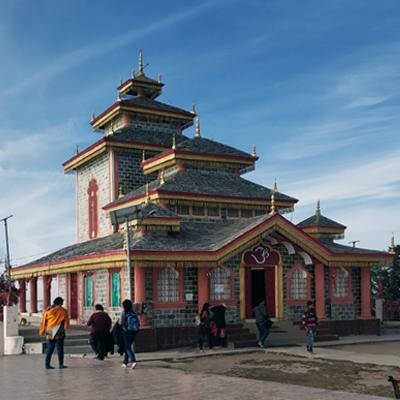
Surkanda Devi Temple is one of the most revered hilltop Shakti shrines in Uttarakhand and an important pilgrimage destination near Dhanaulti, Kanatal and Kaddukhal in the Tehri Garhwal district. Dedicated to Goddess Surkanda Devi, worshipped as a manifestation of Goddess Sati and the Divine Mother, the temple stands on a high mountain summit at an elevation of approximately 2,750 metres above sea level.
Surrounded by dense Himalayan forests, mist-covered ridges and expansive views of the Garhwal mountains, Surkanda Devi Temple offers a distinctive combination of pilgrimage, nature, trekking and mountain travel. Devotees visit the shrine to seek the blessings of Maa Surkanda for protection, courage, family welfare, prosperity and spiritual strength.
The temple is approximately 8 kilometres from Dhanaulti and is approached through Kaddukhal, a small roadside settlement on the Mussoorie–Chamba route. The traditional pilgrimage involves a steep uphill walk of approximately 2.5 kilometres from Kaddukhal to the temple summit.
A ropeway now offers an alternative approach for visitors who may find the full climb difficult. Its operation can depend on weather, maintenance, seasonal conditions and crowd management, so travellers should confirm current timings and ticket arrangements before departure.
Whether visitors reach the shrine on foot or by ropeway, the final arrival at the summit provides a memorable experience. The temple appears above the forest line, surrounded by open sky, mountain winds and wide views across Tehri Garhwal.
Surkanda Devi Temple is regarded in local and state tourism traditions as an important Shakti Peeth. According to Hindu sacred belief, the shrine is connected with the story of Goddess Sati, Lord Shiva and the formation of the Shakti Peethas.
Goddess Sati was the daughter of King Daksha and the consort of Lord Shiva. According to the religious narrative, Daksha organised a major yajna but did not invite Shiva. Sati attended the ceremony and became deeply distressed when her father insulted her husband.
Unable to bear the dishonour directed towards Lord Shiva, Sati entered the sacrificial fire. Shiva, overcome with grief, carried her body and performed the Tandava, the powerful cosmic dance associated with destruction and transformation.
To restore balance, Lord Vishnu used his Sudarshan Chakra, and different parts of Sati’s body are believed to have fallen at sacred locations across the Indian subcontinent. These destinations became centres of Shakti worship known as Shakti Peethas.
According to the established religious tradition of Surkanda Devi Temple, the head of Goddess Sati fell at this mountain location. The site was therefore associated with the word “Sir,” meaning head, and earlier names such as Sirkanda or Sirkhanda are traditionally linked with the present name Surkanda.
This account belongs to Hindu mythology and local religious tradition rather than modern documentary history. Its significance comes from the faith of generations of devotees who regard the mountain as a living centre of divine feminine energy.
Maa Surkanda is worshipped as a protective form of the Divine Mother. Devotees approach her with prayers relating to courage, family harmony, children, education, employment, marriage and relief from difficult circumstances.
Some pilgrims visit before beginning a major journey or new phase of life. Others return to express gratitude after experiencing what they regard as the fulfilment of a prayer.
Such experiences should be understood as matters of personal belief rather than guaranteed outcomes. The temple offers spiritual hope, emotional strength and a sacred environment for prayer.
The physical climb towards Surkanda Devi Temple adds an important dimension to the pilgrimage. Walking uphill requires patience, steady effort and preparation, encouraging visitors to leave behind the speed and distraction of ordinary travel.
The traditional trail begins at Kaddukhal and rises through forested mountain terrain. Depending on the exact route and prevailing conditions, visitors may encounter paved sections, stone steps, slopes and resting points.
The climb can feel demanding because of the gradient and altitude, even though the total distance is comparatively short. Travellers should proceed at a comfortable pace and avoid competing with faster walkers.
Comfortable walking shoes with dependable grip are strongly recommended. Slippers and smooth-soled footwear may be unsuitable, particularly during rain, frost or snow.
Visitors should carry drinking water, light snacks, essential medication, sun protection and a small first-aid kit. Heavy luggage should be avoided because every unnecessary item makes the uphill journey more difficult.
The forest surrounding the route contains Himalayan vegetation and provides shade across parts of the climb. The appearance of the landscape changes according to the season.
Spring brings fresh growth and flowering plants. Summer offers green forest scenery and relief from the heat of the plains. The monsoon fills the mountain with clouds and mist, while autumn may provide clearer skies and distant views.
Winter can transform the region through frost and occasional snowfall. Snow should never be assumed or guaranteed for any particular date, and trail conditions must be confirmed before travelling.
Visitors undertaking the walk should begin early enough to complete both ascent and descent during daylight. Mountain weather can change rapidly, and fog may reduce visibility.
Families should supervise children carefully, especially near steep slopes and crowded sections. Senior citizens and travellers with knee, heart, breathing or mobility limitations should assess the climb realistically.
The ropeway has significantly improved access for pilgrims unable to complete the full traditional route. It connects the Kaddukhal side with the upper temple area and reduces the physical effort required to reach the shrine.
The ride is short and offers views across the forested slopes. However, visitors may still need to walk or climb a limited distance between the road, ropeway stations and temple courtyard.
Ropeway service may stop temporarily because of high winds, thunderstorms, technical inspection, maintenance or operational restrictions. Travellers should therefore keep enough time in their itinerary and avoid planning tightly connected departures.
Queues can become long during weekends, summer holidays, Navratri and Ganga Dussehra. Families with children and senior citizens should arrive early and remain prepared for waiting periods.
Current ropeway fares and timings should be checked directly with the operator because they may change. Tickets should be purchased only through authorised channels.
Even when using the ropeway, warm clothing and proper footwear remain important because the summit is exposed to wind and changing weather.
The architecture of Surkanda Devi Temple reflects the traditional mountain style of Uttarakhand. The structure includes stone walls, tiered sloping roofs, colourful detailing and sacred symbols associated with Shakti worship.
The multi-level roof form is practical for a region experiencing rain, wind and winter weather. Golden and red decorative elements create a strong contrast with the grey stone walls and the surrounding green or snow-covered landscape.
The main temple stands within a paved courtyard from which visitors can observe the mountain scenery. Smaller structures, bells, flags and religious objects contribute to the sacred atmosphere.
The principal sanctum is the centre of worship. Devotees may offer flowers, coconuts, sweets, incense, red cloth and other traditional materials permitted by the temple authorities.
Visitors should follow the directions of priests and temple volunteers regarding the order of darshan, offerings and movement through the shrine.
The temple may become crowded during important religious occasions, requiring visitors to move through the sanctum quickly. Patience and cooperation help ensure that every pilgrim receives an opportunity for darshan.
Photography inside the principal sanctum or of the deity should only be undertaken when clearly permitted. Visitors should not block the entrance, courtyard or queue for photographs.
Temple bells, flags and sacred objects should not be removed or rearranged. They represent religious offerings rather than decorative accessories.
One of the strongest attractions of Surkanda Devi Temple is the panoramic landscape visible from the summit. During clear weather, visitors may see extensive views across the Garhwal Himalayas, surrounding valleys and distant settlements.
The Tehri district administration records views towards places including Dehradun, Rishikesh, Chakrata, Pratapnagar and Chandrabadni from the wider summit region.
Mountain visibility depends entirely on weather. Clouds, mist, rainfall and atmospheric haze can hide the distant landscape even when conditions at Kaddukhal appear clear.
Early morning generally provides a better chance of open views than late afternoon. Autumn and clear winter days may also offer excellent visibility.
However, the destination remains beautiful even when the mountains are hidden. Moving clouds, forested slopes and changing light create a quiet and atmospheric experience around the shrine.
The summit can become cold and windy without warning. Travellers should carry a jacket, shawl or windproof outer layer even during summer.
Loose scarves, hats and lightweight belongings should be secured during strong winds. Visitors should remain away from exposed edges and follow all barriers and warning signs.
Ganga Dussehra is the most important annual festival celebrated at Surkanda Devi Temple. The festival generally occurs during May or June according to the Hindu lunar calendar.
During Ganga Dussehra, large numbers of devotees travel to Kaddukhal and climb or use the ropeway to reach the temple. Special prayers, offerings, devotional singing and community activities may be organised.
The usually quiet summit becomes a vibrant centre of faith. Bells, chants, religious flags and the movement of pilgrims create a powerful festival atmosphere.
Travellers planning to visit during Ganga Dussehra should reserve accommodation well in advance. Hotels, resorts and homestays in Dhanaulti, Kanatal, Kaddukhal and nearby destinations may experience high demand.
Road traffic and parking around Kaddukhal can become difficult. Visitors should follow instructions issued by local police, administration and temple organisers.
Ropeway queues may be significantly longer during the festival. Pilgrims capable of walking should still assess the trail and weather before choosing the traditional route.
Families with children, senior citizens and larger groups should remain together and identify a meeting point in case members become separated.
Ganga Dussehra is primarily a religious event. Photography, content creation and sightseeing should not interfere with the prayers and movement of devotees.
Navratri is another important period for visiting Surkanda Devi Temple. Both Chaitra Navratri and Sharad Navratri are dedicated to the worship of different forms of the Divine Mother.
The temple may be decorated with flowers, red cloth, flags and lamps. Devotees may observe fasting, recite prayers and offer special pujas.
Navratri dates change every year according to the Hindu calendar. Travellers should confirm the exact dates and expect larger crowds.
Visitors seeking a quieter pilgrimage should select an ordinary weekday outside the main festival periods. Early morning remains the most peaceful time for darshan.
Spring is one of the most pleasant seasons for visiting Surkanda Devi Temple. The weather is generally comfortable, forest vegetation becomes fresh and the walk from Kaddukhal can be enjoyable.
Morning and evening temperatures may remain cold because of the temple’s elevation, so layered clothing is useful.
Summer is popular among families escaping the heat of the plains. Dhanaulti and Kanatal receive larger numbers of visitors during school holidays and weekends.
The temple summit is generally cooler than lower towns, although direct sunlight can still feel strong. Visitors should carry water and sun protection.
Accommodation rates can rise during peak summer periods. Advance booking is advisable, especially for weekends.
The monsoon creates a lush green and misty landscape. Forests become dense, clouds move across the summit and the temple may appear surrounded by fog.
Although visually beautiful, monsoon travel requires serious caution. Heavy rain can cause landslides, falling stones, slippery paths and road delays.
The trek should not be attempted during severe rainfall or thunderstorms. Ropeway operations may also be suspended because of wind or weather.
Visitors should check official road and weather advisories before leaving their accommodation. Flexible travel plans are essential.
Autumn is among the most favourable periods for visiting. The post-monsoon landscape remains green, rainfall usually reduces and mountain views may improve.
The weather is suitable for walking, photography and combining the temple with nearby destinations.
Winter provides a quiet and atmospheric pilgrimage. Clear days can offer impressive views, while cold weather reduces the number of casual visitors.
Snowfall may occasionally occur around Surkanda Devi Temple, Dhanaulti and Kanatal. It cannot be guaranteed for a specific date.
Snow, ice or frost may make the trail and roads slippery. Travellers should confirm access conditions and carry suitable footwear, thermals, gloves, caps and warm jackets.
Winter accommodation should be selected carefully. Guests should verify room heating, hot water, warm bedding, road access and power backup.
Dhanaulti is the most widely recognised nearby hill destination and one of the best bases for visiting Surkanda Devi Temple. It is located approximately 8 kilometres from the shrine region.
The town is known for forest scenery, eco-parks, mountain roads, resorts, cottages and peaceful surroundings. It is quieter than central Mussoorie and suitable for couples, families and nature travellers.
Staying in Dhanaulti allows visitors to reach Kaddukhal early and complete the temple visit before larger groups arrive.
Accommodation includes hotels, resorts, wooden cottages, camps and homestays. Travellers should confirm actual road access because properties using the Dhanaulti name may be distributed across a wide area.
Kanatal is another popular base near Surkanda Devi Temple. It offers mountain-view resorts, cottages, camps, boutique stays and homestays.
Kanatal is suitable for travellers combining pilgrimage with relaxation, nature walks and a quieter hill holiday.
Visitors should check the practical driving time between their chosen Kanatal property and Kaddukhal. A property may appear close on a map but lie on a different slope or connecting road.
Kaddukhal provides the closest practical road base for the temple. Small guesthouses, shops and local accommodation may be available in the surrounding area.
Staying near Kaddukhal is particularly useful for pilgrims wishing to begin the trek early, attend festival worship or avoid repeated travel from Dhanaulti.
Facilities may be simpler than those available in large resorts. Guests should confirm room condition, bathrooms, meals, hot water, parking and mobile connectivity before booking.
Chamba is another useful town for visitors approaching from New Tehri or Rishikesh. It offers hotels, markets, transport and essential services.
A Chamba stay can support a wider itinerary including Surkanda Devi Temple, Kanatal, Dhanaulti and Tehri Lake.
Mussoorie can also serve as a base, although it lies farther away and may involve traffic, especially during weekends and holidays.
Travellers staying in Mussoorie should leave early and account for the winding road journey through the Dhanaulti side.
Central Mussoorie offers a wider selection of hotels, restaurants and tourist facilities, but visitors whose principal purpose is Surkanda Devi darshan may find Dhanaulti or Kanatal more convenient.
New Tehri and Tehri Lake can be included in a longer itinerary. New Tehri offers hotels, markets and views of the reservoir and surrounding hills.
Travellers interested in both pilgrimage and leisure can visit Surkanda Devi Temple and reserve another day for Tehri Lake.
Water-based activities should only be undertaken through authorised operators and according to current safety regulations.
Surkanda Devi Temple forms part of a wider Shakti pilgrimage landscape within Tehri Garhwal.
Chandrabadni Temple is another important hilltop shrine associated with Goddess Sati. It stands on Chandrakoot Mountain near the Devprayag region.
Kunjapuri Devi Temple is situated above Narendranagar and is known for Goddess worship and panoramic sunrise views.
Surkanda Devi, Chandrabadni and Kunjapuri are traditionally described as forming a sacred Shakti triangle within Tehri Garhwal.
Completing all three temples requires multiple days because they are situated in different mountain regions.
A practical pilgrimage can begin with Kunjapuri near Rishikesh or Narendranagar, continue towards Surkanda Devi through Dhanaulti and later proceed towards Chandrabadni and Devprayag.
The route can be reversed depending on the traveller’s starting point and onward destination.
MudrasStays can help pilgrims compare accommodation near each temple and avoid unnecessary backtracking on mountain roads.
A one-day Surkanda Devi itinerary can begin with an early arrival at Kaddukhal. Visitors can choose the traditional trek or ropeway according to their fitness and current operating conditions.
After darshan, travellers can return to Kaddukhal and continue to Dhanaulti for lunch, an eco-park visit or a relaxed forest walk.
The evening can be spent at a hotel, resort or homestay in Dhanaulti or Kanatal.
A two-day itinerary allows a more relaxed experience. On the first day, travellers can arrive in Dhanaulti or Kanatal, check into their accommodation and explore the surrounding forests and viewpoints.
The second day can begin with an early visit to Surkanda Devi Temple. After returning, visitors can rest before continuing towards Chamba, Mussoorie or another destination.
A three-day itinerary can include Surkanda Devi Temple, Dhanaulti and Kanatal, followed by Chamba and Tehri Lake.
A longer Shakti pilgrimage can include Kunjapuri Devi Temple, Surkanda Devi Temple and Chandrabadni Temple over three or more days.
Travellers should not try to cover all three shrines in a single day. Mountain travel is tiring, and each temple deserves sufficient time for darshan and reflection.
Accommodation near Surkanda Devi Temple includes hotels, resorts, cottages, camps, guesthouses and homestays across Kaddukhal, Dhanaulti, Kanatal and Chamba.
The right location depends on the traveller’s budget, preferred comfort level and wider itinerary.
Pilgrims prioritising early darshan should stay close to Kaddukhal or on the nearest section of the Dhanaulti–Chamba road.
Couples may prefer private cottages, boutique resorts or mountain-view rooms around Kanatal and Dhanaulti.
Families may select hotels offering meals, parking, larger rooms and safe outdoor areas.
Senior citizens should choose accommodation with direct vehicle access, minimal stairs, reliable heating and clear information about the ropeway.
Solo pilgrims and trekkers can use budget guesthouses or simple homestays close to the traditional trail.
Pilgrimage groups should confirm multiple-room availability, vegetarian meals, driver accommodation and parking for larger vehicles.
Guests should verify actual driving time to Kaddukhal rather than relying only on the destination name shown in the property listing.
Mountain properties may be located on narrow approach roads or steep slopes. The final road condition should be confirmed before booking.
Mobile connectivity and Wi-Fi quality may vary. Travellers requiring internet for work should check directly with the property.
Power interruptions may occur during bad weather, so power backup should be confirmed where essential.
MudrasStays helps devotees discover hotels, resorts, cottages, guesthouses and homestays near Surkanda Devi Temple, Dhanaulti, Kanatal and Kaddukhal.
The platform is designed specifically for travellers searching for suitable places to stay near temples and spiritual destinations across India.
Visitors can compare properties according to practical distance from the temple approach, room type, budget, group size and required facilities.
Booking a nearby stay makes it easier to arrive early, avoid traffic and experience the temple during quieter morning hours.
Families can search for properties offering meals, parking and comfortable rooms.
Couples can discover peaceful cottages and mountain-view stays.
Solo pilgrims can choose affordable homestays and guesthouses near the route.
Senior citizens can prioritise accommodation with accessible rooms and convenient transport to the ropeway.
Pilgrimage groups can identify properties capable of arranging several rooms, vegetarian food and vehicle parking.
Travellers planning the Tehri Shakti triangle can use MudrasStays to organise separate stays near Surkanda Devi, Kunjapuri and Chandrabadni.
Visitors combining pilgrimage with Tehri Lake, Dhanaulti or Mussoorie can select accommodation according to the direction of their complete journey.
Responsible travel is essential because Surkanda Devi Temple stands within a sensitive high-altitude forest environment.
Visitors should carry back plastic bottles, food wrappers, disposable plates and all other waste.
Nothing should be thrown down the mountain slope or hidden beneath rocks.
Religious offerings should be placed only in designated areas.
Synthetic cloth, plastic flags and packaging should not be tied randomly to trees or railings.
The forest is vulnerable to fire. Smoking, open flames and careless incense disposal should be avoided.
Travellers should remain on the recognised walking trail. Shortcuts damage vegetation, increase erosion and can lead visitors into unsafe terrain.
Loud music should not be played along the trail or near the temple. The natural silence and devotional atmosphere should be preserved.
Birds and wildlife should not be fed or disturbed.
At the shrine, visitors should dress respectfully and follow instructions regarding footwear and photography.
The principal deity, sanctum and private rituals should not be photographed without permission.
Drone operation should never be assumed to be allowed. It may require aviation, local and religious approvals and can disturb pilgrims and wildlife.
Visitors should support local shops, guides, homestays, drivers and food providers fairly. Responsible spending helps pilgrimage tourism benefit the communities maintaining the destination.
Surkanda Devi Temple represents a powerful meeting of Shakti worship, mountain pilgrimage and Himalayan nature.
The story of Goddess Sati connects the shrine with the wider sacred geography of the Shakti Peethas.
The steep approach represents effort, patience and spiritual discipline.
The ropeway provides improved access for devotees who may otherwise be unable to complete the climb.
The forest creates a peaceful transition from the road to the temple.
The summit offers space, wind and wide mountain views that encourage visitors to pause and reflect.
Ganga Dussehra connects the temple with living community traditions and attracts pilgrims from across Uttarakhand.
For devotees of the Divine Mother, Surkanda Devi Temple is a place to seek strength, courage and protection.
For families, it offers a meaningful pilgrimage that can be combined with a comfortable hill holiday.
For senior citizens, ropeway access makes the temple more approachable when services are operating.
For trekkers, the traditional route provides a short but rewarding mountain climb.
For nature lovers, the surrounding forests, birds, mist and Himalayan views create a memorable environment.
For photographers, the tiered temple, mountain sky and changing weather provide striking visual opportunities when religious dignity is respected.
For couples, nearby cottages and resorts offer a peaceful mountain retreat combined with Devi darshan.
For spiritual travellers, the summit provides an opportunity for silence, prayer and separation from everyday distraction.
Surkanda Devi Temple should not be treated only as a quick sightseeing stop from Mussoorie or Dhanaulti. Visitors should allow sufficient time for the road journey, trek or ropeway, darshan and weather-related delays.
Staying close to Kaddukhal, Dhanaulti or Kanatal allows travellers to begin early and experience the shrine without rushing.
Plan your pilgrimage to Surkanda Devi Temple with MudrasStays and experience one of the most revered hilltop Shakti Peethas in Tehri Garhwal.
Seek the blessings of Maa Surkanda, walk through the Himalayan forest or travel by ropeway, and experience panoramic views from the sacred summit.
Combine your journey with Dhanaulti, Kanatal, Chamba, Tehri Lake, Kunjapuri Devi Temple, Chandrabadni Temple and the other spiritual destinations of Uttarakhand.
Book hotels near Surkanda Devi Temple, discover cottages and resorts in Dhanaulti, find homestays near Kaddukhal and explore mountain accommodation in Kanatal through MudrasStays.
Stay closer to your place of worship, reach the temple early and reduce unnecessary travel on winding mountain roads.
MudrasStays connects pilgrims, families and spiritual travellers with suitable accommodation near temples and sacred destinations across India.
Begin your Surkanda Devi Temple journey with a comfortable stay and experience a meaningful pilgrimage centred on Maa Sati, Shakti worship, Garhwali culture and the natural beauty of the Himalayas.