
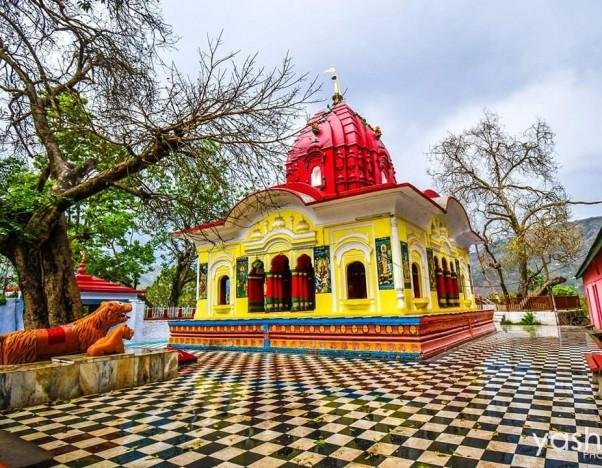
Tarna Devi Temple is one of the most important hilltop shrines in Mandi, Himachal Pradesh. Situated on Tarna Hill above the historic town, the temple is dedicated to Goddess Shyama Kali, a powerful manifestation of the Divine Mother associated with courage, protection and the destruction of harmful forces.
The shrine is also known as Tarna Mata Temple, Tarna Devi Mandir, Shyama Kali Temple, Tarna Shyama Kali Temple and Tarna Kali Temple. Its elevated location, seventeenth-century royal history, colourful architecture, sacred paintings and panoramic views over Mandi make it one of the town’s principal spiritual and cultural attractions.
Official heritage records associate the present temple with Raja Shyam Sen, the ruler of Mandi during the seventeenth century. The temple stands within a city already famous for its large number of Shiva shrines, riverside ghats and living deity traditions.
Mandi is often called Chhoti Kashi because of its concentration of historic temples and its relationship with the Beas River. Within this predominantly Shaivite sacred landscape, Tarna Devi represents the protective power of Shakti overlooking the town from above.
The temple can be approached in two principal ways. Pilgrims may climb the traditional staircase from the central Mandi side, commonly described as containing more than 305 steps, or travel towards the upper hill by a motorable road and complete the remaining short approach on foot.
The staircase creates a traditional pilgrimage experience in which devotees gradually leave the market and busy streets below before reaching the quieter hilltop courtyard.
The road approach is more practical for families, senior citizens and travellers with limited time or mobility. However, parking space, the nearest drop-off point and traffic arrangements may vary, especially during Navratri, weekends and major local events.
Visitors should confirm current access through their hotel, homestay host, taxi driver or temple representative.
Tarna Devi Temple is suitable for Devi devotees, families, couples, senior citizens, solo pilgrims, photographers, heritage travellers and visitors exploring the temple circuit of Mandi.
Its location within the town makes it considerably easier to visit than remote mountain shrines such as Shikari Devi, Kamrunag or Prashar Rishi Temple.
A visit to Tarna Devi can be combined naturally with Bhutnath Temple, Panchvaktra Mahadev Temple, Triloknath Temple, Ardhanarishwar Temple, Mahamrityunjaya Temple, Bhimakali Temple, the historic Ghanta Ghar and the old market areas of Mandi.
Travellers searching for hotels near Tarna Devi Temple, homestays in Mandi, places to stay near Mandi temples or pilgrimage accommodation in Chhoti Kashi can use MudrasStays to plan a convenient and spiritually focused journey.
## Spiritual Importance of Maa Shyama Kali
Maa Shyama Kali is worshipped as a powerful form of the Divine Mother.
The word “Shyama” can refer to a dark or deep-coloured divine form. Kali represents time, transformation, protection and the destruction of ignorance and destructive power.
Her fierce appearance should not be understood as uncontrolled anger.
Within Shakta philosophy, the intensity of Kali represents the strength required to defeat forces that cause fear, injustice, exploitation and spiritual confusion.
For devotees, Maa Shyama Kali is both a fierce guardian and a compassionate mother.
She may appear terrifying to harmful forces while remaining loving and protective towards sincere worshippers.
People visit Tarna Devi Temple to pray for courage, family welfare, good health, children, employment, education, protection during journeys and strength during difficult circumstances.
Some devotees visit before beginning a new phase of life, marriage, business, examination or important responsibility.
Others return after experiencing what they regard as the fulfilment of a prayer.
These experiences belong to personal faith and should not be presented as guaranteed results.
The temple offers a sacred environment for prayer, confidence and emotional strength, while medical, legal, financial and personal concerns should continue to receive appropriate practical attention.
## Shyama Kali and the Divine Mother
Shyama Kali belongs to the wider Hindu understanding of Shakti, the active divine energy through which the universe is created, sustained and transformed.
Shiva represents pure consciousness, while Shakti represents the energy through which consciousness becomes action and experience.
Kali reveals the aspect of Shakti that removes illusion and confronts destructive tendencies directly.
She is frequently shown with dark skin, an extended tongue, powerful weapons and symbols connected with the impermanence of worldly pride.
These features have philosophical meaning.
The dark form can represent the limitless reality into which all colours and distinctions ultimately disappear.
Her weapons represent the destruction of ignorance and harmful behaviour.
Her appearance reminds the devotee that time eventually overcomes wealth, power, beauty and status.
Kali therefore encourages courage, honesty and freedom from false pride.
At Tarna Devi Temple, the goddess is worshipped within a gentler hilltop environment surrounded by trees, courtyard space and extensive views over Mandi.
The contrast between her fierce spiritual symbolism and the peaceful location is part of the shrine’s distinctive character.
## The Tradition of Raja Shyam Sen
The present Tarna Devi Temple is associated with Raja Shyam Sen, who ruled Mandi during the seventeenth century.
Regional tradition describes him as a devoted worshipper of Goddess Kali.
One popular account says that Raja Shyam Sen entered into conflict with the neighbouring kingdom of Suket after being insulted or challenged by its ruler.
Before proceeding into battle, he prayed to Maa Kali and sought her protection.
After achieving victory, he is believed to have constructed the temple on Tarna Hill and established the goddess as a powerful guardian of Mandi.
The precise details of the conflict differ between narrators and later accounts. The story should therefore be understood as regional royal and religious tradition rather than a complete military record.
Its cultural meaning is nevertheless important.
The temple represented royal gratitude, victory and the belief that the ruler’s authority remained under the protection of the Divine Mother.
By placing the shrine on a hill above the capital, the ruler created a visible spiritual landmark overlooking the town and surrounding valleys.
The goddess was not hidden inside the royal palace. Her temple occupied a position from which the whole settlement could be symbolically protected.
## Raja Balbir Sen and the Vow to the Goddess
Another important tradition connects Tarna Devi Temple with Raja Balbir Sen of Mandi during the nineteenth century.
According to regional accounts, the ruler was imprisoned during a period of conflict involving Sikh forces and the political instability of the wider region.
While in captivity, Raja Balbir Sen is believed to have prayed to Maa Shyama Kali for freedom and the restoration of his kingdom.
One version says that he vowed to decorate the temple interior with gold if his prayer was fulfilled.
After his release and return to Mandi, the ruler is believed to have honoured this vow by supporting the decoration or renovation of the shrine.
This narrative belongs to regional devotional history. Accounts differ regarding the exact political circumstances, miraculous events and details of the vow.
The story should not be used to claim that prayer guarantees release from legal or political difficulty.
Its importance lies in the continuing relationship between the rulers of Mandi and the hilltop goddess.
Raja Shyam Sen is remembered through the foundation of the shrine, while Raja Balbir Sen is associated with later devotion and embellishment.
Together, these traditions show how Tarna Devi remained important to the royal identity of Mandi over several generations.
## Earlier Tara Tradition
A heritage record of the National Mission on Monuments and Antiquities notes that the location may earlier have been associated with Tara, a tantric Buddhist goddess, and connects the name Tarna or Tarana with that earlier divine form.
This interpretation introduces an important layer to the cultural history of the hill.
Tara is revered within several Buddhist traditions as a compassionate and protective female deity. She is associated with liberation from fear, danger and suffering.
The Himalayan region has long supported interaction between Hindu, Buddhist and local religious traditions.
Mandi also stood on older routes of trade and cultural exchange connecting the plains, Kullu, Ladakh and Tibet.
It is therefore possible for a sacred hill to carry several layers of religious identity over time.
The present active shrine is dedicated to Shyama Kali and should be approached as a Hindu Devi temple.
The earlier Tara association should not be presented as proof that the current worshippers misunderstand the temple.
Sacred sites frequently evolve as communities, rulers and religious traditions change.
The similarity between Tara and Kali as protective feminine powers may also have helped the site maintain a continuous association with the Divine Mother.
Visitors interested in history should recognise this layered identity without forcing a conflict between Buddhist and Hindu traditions.
## Meaning of the Name Tarna
The name Tarna or Tarana has been interpreted in several ways.
One explanation connects it with the earlier worship of Tara.
Another devotional interpretation associates “tarna” with helping devotees cross difficulty or the ocean of worldly existence.
In Hindu spiritual language, crossing the ocean of existence symbolises liberation from fear, attachment, ignorance and repeated suffering.
Under this interpretation, Maa Tarna is the goddess who helps devotees pass safely through hardship.
The exact linguistic origin of the name may not be settled conclusively.
Both historical and devotional explanations form part of the temple’s wider identity.
Visitors should avoid presenting one interpretation as unquestionable fact when records and oral traditions preserve several possibilities.
## Temple Architecture
Tarna Devi Temple has a compact square plan and is associated with the Nagara tradition of North Indian temple architecture.
The central shrine rises through a prominent red-painted tower or dome-like shikhara above the sanctum.
The lower structure has arched openings, projecting roof forms, painted walls and a raised platform surrounded by a paved courtyard.
Stone masonry and lime plaster form important parts of the construction.
The present exterior is generally painted in bright combinations of yellow, white, red and green. The exact colour scheme may change after maintenance or repainting.
The colourful appearance makes the shrine immediately recognisable against the trees and hill landscape.
The central red tower draws the eye upward, while the broad courtyard provides space for circumambulation, worship and quiet observation.
Unlike the unpainted stone temples beside the rivers in old Mandi, Tarna Devi presents a more vibrant and visually decorative architectural character.
The current temple should be understood as a living structure that has undergone renovation, plastering, repainting and repair.
Weather, visitor movement and continued worship require periodic maintenance.
The presence of a newer painted surface does not erase the seventeenth-century origin of the shrine.
## Nagara-Style Elements
The Nagara tradition is generally associated with a rising tower above the sanctum of a North Indian Hindu temple.
At Tarna Devi, the central upper structure creates a strong vertical focus.
The tower symbolically marks the location of the garbhagriha, the innermost sacred chamber containing the principal divine presence.
In Hindu temple symbolism, the rising tower can represent a sacred mountain connecting the human world with the divine realm.
This symbolism is especially meaningful at Tarna because the shrine itself stands on a hill.
The natural elevation and architectural tower work together.
The devotee first climbs the physical hill and then approaches a temple whose form directs attention further upward.
The combination creates a layered spiritual journey from market to staircase, staircase to courtyard and courtyard to sanctum.
## Paintings of Deities and Gurus
The temple is known for paintings depicting gods, goddesses and respected spiritual figures.
These images decorate parts of the walls and contribute to the shrine’s distinctive visual identity.
Paintings in a temple serve several purposes.
They create beauty, preserve religious narratives and introduce devotees to a larger sacred universe beyond the principal deity.
Images connected with Shiva, Kali, other goddesses and spiritual teachers may be visible according to the current condition and arrangement of the temple.
Visitors should not touch painted surfaces or lean against the walls.
Moisture, pressure and repeated handling can cause paint to fade or separate from the plaster.
Flash photography should be avoided unless clearly permitted.
A wall painting is not merely a colourful background for portraits. It forms part of the sacred and artistic environment of the temple.
Restoration may occasionally change the appearance of individual paintings.
Visitors should accept temporary restrictions when conservation work is underway.
## Sacred Images in the Sanctum
Regional descriptions refer to a powerful form of Shyama Kali within the sanctum and additional imagery associated with Mahishasuramardini.
Mahishasuramardini means “the destroyer of Mahishasura.”
According to the Devi Mahatmya, Mahishasura was a destructive being whose powers threatened the balance of the world.
The energies of the gods combined to manifest Goddess Durga, who defeated him and restored order.
The story symbolises the victory of courage, wisdom and disciplined power over arrogance and harmful behaviour.
Some descriptions of Tarna Devi also refer to a three-faced or multiple-aspect representation of the goddess.
The exact current arrangement of images, masks, ornaments and coverings should be confirmed within the temple.
Sacred images may be dressed differently according to the season, festival or ritual calendar.
Photography inside the sanctum should never be assumed to be permitted.
Visitors should follow the instructions of the priest, remove footwear and complete darshan without blocking other devotees.
## The Hilltop Courtyard
The courtyard around Tarna Devi Temple is one of the most attractive parts of the complex.
Its open paved surface allows visitors to walk around the shrine, sit quietly and observe the town below.
Large trees provide shade and strengthen the peaceful character of the hilltop.
The courtyard may contain patterned tiles, railings, bells, flags and smaller sacred features.
Lion figures may appear near the approach or entrance, reflecting the association of the Divine Mother with courage and royal power.
The space becomes especially atmospheric during morning and evening worship.
Visitors should keep the courtyard clean and avoid eating directly beside the sanctum.
Children should not climb on railings, sacred figures or trees.
The courtyard is a place of worship and reflection, not a picnic or recreational playground.
## Views of Mandi Town
Tarna Hill provides extensive views across Mandi town and the surrounding valleys.
Visitors may observe densely built neighbourhoods, roads, river corridors, hills and mountain ridges from the upper area.
The viewpoint helps travellers understand why the temple is often described as watching over the town.
Mandi developed around the Beas River and several tributary valleys. From above, its relationship with the surrounding hills becomes easier to appreciate.
Visibility depends upon weather, haze and cloud cover.
Monsoon clouds may hide distant slopes, while winter and post-monsoon mornings can offer clearer views.
Visitors should remain within safe boundaries.
Leaning over railings, standing on walls or moving onto unstable slopes for photographs is dangerous.
The spiritual importance of the temple should remain central even when the viewpoint attracts visitors primarily interested in scenery.
## Mandi as Chhoti Kashi
Mandi is known as Chhoti Kashi because of its numerous temples, riverside ghats and strong Shaivite traditions.
The old town contains several historic temples dedicated to different forms of Lord Shiva.
Bhutnath Temple stands close to the central market and plays a major role in the International Mandi Shivratri festival.
Panchvaktra Mahadev Temple stands near the confluence of the Beas and Suketi rivers and is dedicated to the five-faced form of Shiva.
Triloknath Temple in Purani Mandi represents Shiva as the lord of the three worlds.
Ardhanarishwar Temple presents Shiva and Shakti united in one divine form.
Mahamrityunjaya Temple contains an unusual meditative representation of Shiva.
Within this landscape, Tarna Devi provides the protective Shakti presence overlooking the Shaivite city.
A meaningful Mandi pilgrimage should therefore include both riverside Shiva temples and the hilltop Goddess shrine.
## Connection Between Kali and Shiva
Kali and Shiva are closely connected within Hindu philosophy.
Shiva represents pure awareness and stillness.
Kali represents dynamic time, transformation and active power.
A famous sacred image shows Kali standing upon the body of Shiva.
According to one religious narrative, the goddess entered an intense state during battle and continued her powerful dance after destructive forces had been defeated.
To stop the uncontrolled movement, Shiva lay in her path.
When Kali stepped upon him, she recognised her consort and became calm.
The image should not be interpreted as hostility between the goddess and Shiva.
It represents the balance between energy and awareness.
Power without consciousness can become uncontrolled, while consciousness without energy remains inactive.
Mandi’s sacred landscape expresses the same relationship geographically.
Shiva temples stand beside the rivers and within the town, while Shyama Kali looks over them from Tarna Hill.
## Navratri at Tarna Devi Temple
Navratri is one of the most important periods for worshipping Maa Shyama Kali.
Both Chaitra Navratri and Sharad Navratri honour different manifestations of the Divine Mother through prayer, fasting, lamps and devotional recitation.
The temple may receive significantly more devotees during these periods.
Special decoration, extended worship and additional offerings may take place according to annual arrangements.
Visitors should expect crowding on Ashtami, Navami and weekends falling within Navratri.
Parking near the upper road may become limited.
The staircase can also become busy.
Families should keep children and senior citizens close.
Offerings may include flowers, coconuts, sweets, incense and red cloth according to temple customs.
Excessive plastic-wrapped material should be avoided.
The exact festival schedule and darshan timings should be confirmed locally.
## Kali Worship and Amavasya
Certain devotees consider Amavasya and other lunar dates important for Kali worship.
Any specialised ritual should be arranged only through an authorised priest.
Visitors should avoid practitioners or intermediaries making guaranteed claims relating to control over another person, legal victory, financial gain or supernatural harm.
The spiritual purpose of Kali worship centres on courage, truth, self-discipline and the removal of ignorance.
The temple should not be promoted through fear-based or sensational claims.
## Mandi Shivratri
The International Mandi Shivratri festival is one of the most important cultural and religious events in Himachal Pradesh.
Numerous local gods and goddesses arrive in Mandi with palanquins, musicians, priests and village communities.
Lord Madhav Rai and Baba Bhutnath hold central importance within the festival tradition.
Tarna Devi remains an important permanent spiritual landmark of the town during this period, although the exact ceremonial programme and participation of individual deities should be confirmed for the relevant year.
Hotels in Mandi can fill quickly during Shivratri.
Roads, parking areas and markets may become crowded.
Visitors planning Tarna Devi darshan during the festival should allow additional time and follow traffic instructions.
The festival provides an excellent opportunity to understand Mandi’s living devta culture, but religious processions should not be obstructed for photography.
## Best Time to Visit Tarna Devi Temple
Tarna Devi Temple can generally be visited throughout the year.
### Spring
Spring is one of the most comfortable seasons for visiting Mandi.
Daytime temperatures are pleasant, trees develop fresh leaves and the hilltop environment becomes suitable for climbing the stairs.
Chaitra Navratri may bring additional religious activity.
Morning and evening can remain cool, so a light layer is useful.
### Summer
Summer can become warm in Mandi because the town lies at a lower elevation than high mountain destinations.
The staircase is best climbed during the early morning or late afternoon.
Midday heat can make the ascent tiring.
Visitors should carry drinking water, use sun protection and take breaks when necessary.
The road approach may be more suitable for senior citizens and small children during hot weather.
### Monsoon
The monsoon makes the hills green and creates dramatic views of clouds over Mandi.
Rain can also make the staircase, courtyard and approach road slippery.
Drainage, fallen leaves and moss may reduce grip.
Visitors should wear suitable footwear and avoid rushing on the descent.
Heavy rainfall can affect regional roads through landslides and falling stones.
Travel should be postponed during severe weather warnings.
### Autumn
Autumn is among the best periods for a Tarna Devi pilgrimage.
Rain generally reduces, the town remains green and visibility may improve.
Sharad Navratri gives the season special religious importance.
Rooms and transport should be reserved early during festival dates.
### Winter
Winter provides a quiet temple experience with cooler and sometimes very cold mornings.
Mandi town generally remains more accessible than high-altitude pilgrimage destinations, although fog, frost or regional weather disruption can occur.
Snowfall at Tarna Temple should not be guaranteed for a particular date.
Visitors should carry warm layers and complete the staircase carefully when surfaces are damp or frosty.
## Morning Darshan
Morning is one of the best times to visit Tarna Devi Temple.
The hill is quieter, the staircase is cooler and the light over Mandi is soft.
Devotees can attend darshan before visiting the temples and markets of the old town.
An early visit is particularly useful during summer, Navratri and busy weekends.
Temple timings may change according to the season and festival calendar.
Travellers should confirm current opening arrangements through local sources rather than depending completely on an old listing.
## Evening Darshan
Evening creates a peaceful atmosphere as lights begin appearing across Mandi town below.
Temple bells, devotional lamps and the cooling hill air give the shrine a different character from the daytime visit.
Visitors planning evening darshan should descend carefully and ensure that the staircase remains adequately lit.
Senior citizens may prefer returning by vehicle.
People staying in Mandi can attend evening worship without planning a long onward journey through mountain roads.
## Climbing the Traditional Steps
The traditional staircase is commonly described as containing more than 305 steps from the main bazaar side.
The climb is manageable for many visitors but can become tiring during hot weather or for people unaccustomed to stairs.
Pilgrims should climb at a steady pace and avoid competition.
Short breaks are preferable to reaching exhaustion.
Comfortable shoes with dependable grip are recommended.
Older visitors can use a walking stick or railing where available.
People with heart, respiratory, knee or mobility conditions should assess the staircase realistically and use the road approach when appropriate.
The descent can place greater strain on the knees than the climb.
Visitors should remain cautious, particularly after rain.
## Road Access
A road reaches the Tarna Hill area, allowing visitors to approach the temple by taxi or private vehicle.
The exact parking and drop-off arrangement may change.
Narrow sections, local traffic and festival congestion should be expected.
Large vehicles may not be able to reach the same point as smaller cars.
Visitors should avoid blocking residential entrances and turning areas.
Local taxis are often the most practical choice because drivers understand the hill road and parking arrangements.
Even when travelling by road, a short walk or a few steps may remain necessary.
Wheelchair access should be confirmed directly before travel rather than assumed.
## Accessibility for Families and Senior Citizens
Tarna Devi Temple is comparatively accessible because it lies within Mandi town and has a road approach.
Families can choose between the traditional staircase and vehicle access according to the age and fitness of group members.
Senior citizens should use the road wherever practical and avoid unnecessary strain.
Visitors should check whether the nearest drop-off still requires steps.
People using wheelchairs or walking aids should ask their accommodation provider to verify the latest physical access.
The old temple platform and sanctum may have thresholds or narrow entrances.
Darshan from an appropriate outer point may be more comfortable for visitors unable to enter the sanctum.
## Reaching Tarna Devi Temple
Mandi is well connected by road with Chandigarh, Delhi, Bilaspur, Sundernagar, Kullu, Manali, Dharamshala and Shimla through regional highways and mountain roads.
Tarna Hill rises directly above the town.
Visitors staying in central Mandi can use the staircase route or hire a local taxi.
Travellers arriving by long-distance bus can check into accommodation before visiting, particularly when carrying luggage.
The hill should not be climbed with heavy suitcases or large backpacks.
The nearest commonly used airport depends upon route and flight availability, while rail access generally involves a substantial onward road journey.
For most pilgrims, road transport remains the practical mode of reaching Mandi.
## Bhutnath Temple
Bhutnath Temple is one of the principal Shiva shrines in central Mandi.
It is closely associated with the city’s Shivratri traditions and lies near the historic market area.
A combined Tarna Devi and Bhutnath itinerary creates a meaningful Shiva–Shakti pilgrimage.
Visitors can begin with morning darshan at Tarna and continue downhill towards Bhutnath and the central market.
## Panchvaktra Mahadev Temple
Panchvaktra Mahadev Temple stands near the confluence of the Beas and Suketi rivers.
The temple is dedicated to the five-faced form of Lord Shiva.
Its stone architecture, riverside setting and spiritual symbolism make it one of Mandi’s most important historic shrines.
Visitors should remain cautious near the river, especially during the monsoon or periods of high water.
## Triloknath Temple
Triloknath Temple in Purani Mandi is dedicated to Lord Shiva as master of the three worlds.
Its historic architecture and sacred imagery make it an important part of the Mandi temple circuit.
The route between Purani Mandi, Tarna Hill and the central market should be planned according to traffic and available time.
## Ardhanarishwar Temple
Ardhanarishwar Temple represents Shiva and Parvati united within one divine form.
The image expresses the inseparability of consciousness and energy, masculine and feminine, stillness and action.
A visit creates a meaningful philosophical connection with Tarna Devi’s Shakti worship.
## Mahamrityunjaya Temple
Mahamrityunjaya Temple contains a distinctive representation of Lord Shiva seated in meditation.
Devotees may pray for courage, spiritual strength and wellbeing.
Healing or protection claims should be understood as matters of faith and not as alternatives to medical care.
## Bhimakali Temple
Bhimakali Temple at Bheuli stands near the Beas River and is another important Goddess shrine in Mandi.
A combined Tarna Devi and Bhimakali visit allows travellers to explore two different expressions of Shakti worship within the town.
The riverside location requires caution during periods of high water.
## Prashar Rishi Temple
Prashar Rishi Temple and Lake lie considerably farther from Mandi at high altitude.
The destination requires a dedicated mountain-road journey or trek and should not be treated as a brief addition to a Tarna Devi visit.
Travellers should allocate a separate day and verify weather and road conditions.
## Rewalsar
Rewalsar is a multi-faith pilgrimage destination associated with Hinduism, Buddhism and Sikhism.
It contains a sacred lake, temples, monasteries and a gurdwara.
Rewalsar requires a separate road journey from Mandi and is best included within a two- or three-day itinerary.
## Suggested One-Day Mandi Temple Itinerary
Begin with morning darshan at Tarna Devi Temple.
Use the staircase for a traditional pilgrimage experience or take a taxi according to fitness.
Spend time in the courtyard and observe the panoramic views.
Descend towards the central town and visit Bhutnath Temple.
Continue to Panchvaktra Mahadev Temple and Triloknath Temple according to current access and available time.
The evening can include Ghanta Ghar, Indira Market or another peaceful temple visit.
## Suggested Two-Day Itinerary
On the first day, visit Tarna Devi Temple, Bhutnath Temple and the old town.
Stay overnight in Mandi.
On the second day, explore Panchvaktra Mahadev, Triloknath, Ardhanarishwar, Mahamrityunjaya and Bhimakali Temple.
This itinerary provides a deeper understanding of why Mandi is called Chhoti Kashi.
## Suggested Three-Day Spiritual Journey
The first day can focus on Tarna Devi and central Mandi temples.
The second day can include Rewalsar and nearby sacred sites.
The third day can be dedicated to Prashar Rishi Temple when weather and road conditions are suitable.
Kamrunag and Shikari Devi require separate plans and should not be compressed into the same itinerary.
## Where to Stay Near Tarna Devi Temple
Mandi town offers hotels, guesthouses, homestays, lodges and budget accommodation.
The best property depends upon whether the visitor prefers proximity to the hill, the main market, the bus stand or the highway.
### Hotels in Central Mandi
Central properties provide convenient access to Bhutnath Temple, Ghanta Ghar, Indira Market and the Tarna staircase.
The streets may be busy, and parking can be limited.
Guests travelling by private car should confirm parking before booking.
### Stays Near Tarna Hill
Accommodation on or near the Tarna side can reduce travel time to the temple.
Hill properties may offer views but can involve steep approach roads or steps.
Families and senior citizens should verify vehicle access.
### Hotels Near the Bus Stand and Highway
Properties near major road connections suit travellers arriving late or continuing towards Kullu, Manali, Bilaspur or Dharamshala.
They may require a short taxi journey for temple visits.
### Homestays in Mandi
Homestays can provide local food, practical guidance and a quieter experience.
Hosts may assist with temple timings, taxis and itinerary planning.
Guests should confirm attached bathrooms, parking, hot water, meals and the actual distance to Tarna Hill.
## Choosing the Right Accommodation
Pilgrims focused on Tarna Devi and the old temples should stay in or near central Mandi.
Families should check room size, meal availability and parking.
Senior citizens should prioritise lifts, ground-floor rooms and easy taxi access.
Couples may prefer quiet hill-facing homestays or comfortable hotels away from market noise.
Solo pilgrims can choose affordable guesthouses with dependable local transport.
Pilgrimage groups should confirm multiple rooms, vegetarian food, driver accommodation and bus or vehicle parking.
Visitors attending Shivratri or Navratri should book well in advance.
Monsoon travellers should ask whether the property approach is vulnerable to drainage problems, landslides or falling stones.
## Book Stays Near Tarna Devi Temple with MudrasStays
MudrasStays helps pilgrims, families and spiritual travellers discover hotels, homestays, guesthouses and pilgrimage accommodation near Tarna Devi Temple and the sacred sites of Mandi.
Visitors can compare properties according to practical distance from Tarna Hill, room type, budget, group size and required facilities.
Booking in Mandi allows devotees to attend peaceful morning or evening darshan and explore the city’s complete temple circuit without unnecessary travel.
Solo pilgrims can search for affordable guesthouses near the central town.
Couples can explore quiet homestays and hill-view rooms.
Families can select hotels offering meals, parking and comfortable room capacity.
Senior citizens can prioritise accessible properties with reliable taxi arrangements.
Pilgrimage groups can identify accommodation providing multiple rooms, vegetarian food and suitable parking.
Travellers combining Tarna Devi with Prashar, Rewalsar, Kamrunag, Shikari Devi or Karsog can select different bases according to the actual road sequence.
MudrasStays helps travellers avoid booking a general highway hotel without considering its practical distance from the temples they intend to visit.
## Responsible Temple Travel
Tarna Devi Temple is an active place of worship and an important part of Mandi’s heritage.
Visitors should remove footwear wherever instructed and dress respectfully.
Photography of the principal deity, sanctum, priests and private rituals should only be undertaken with permission.
Paintings and plastered walls should not be touched, scratched or used to support luggage.
Incense and lamps should be used only in designated areas.
Plastic bottles, wrappers and puja packaging must be carried away.
Visitors should not tie synthetic cloth or plastic material randomly to trees and railings.
Loud music and disruptive video recording are inappropriate.
Children should be supervised around stairs, railings and the hill edge.
Vehicles should not block narrow roads, residential entrances or emergency access.
Local taxi drivers, guides, shops, priests and accommodation providers should be treated fairly.
Responsible pilgrimage protects both the shrine and the community surrounding it.
## The Protective Goddess Above Chhoti Kashi
Tarna Devi Temple represents a powerful meeting of Shakti worship, Mandi’s royal history, hilltop architecture and living community faith.
Maa Shyama Kali represents courage, transformation and protection.
The tradition of Raja Shyam Sen connects the shrine with the seventeenth-century kingdom of Mandi.
The story of Raja Balbir Sen preserves the continuing royal devotion associated with the goddess.
The earlier Tara interpretation reflects the layered religious history of the Himalayan region.
The Nagara-style temple and colourful painted exterior create a distinctive architectural identity.
The sacred paintings connect the sanctum with a wider world of gods, goddesses and spiritual teachers.
The staircase transforms the journey from the market into a physical act of pilgrimage.
The hilltop view expresses the belief that Maa Tarna watches over Mandi.
The surrounding Shiva temples reveal the balance between Shiva and Shakti within Chhoti Kashi.
For Devi devotees, the shrine is a place to seek courage and maternal protection.
For families, it provides an accessible pilgrimage within Mandi town.
For senior citizens, the road approach makes darshan easier than at remote hilltop temples.
For heritage travellers, the temple preserves the royal and religious history of Mandi.
For photographers, its red tower, colourful courtyard, trees and city views provide memorable compositions when religious dignity is respected.
For spiritual travellers, the movement from the crowded bazaar to the peaceful hilltop creates a meaningful transition from activity to reflection.
Tarna Devi Temple should not be treated merely as a viewpoint above Mandi.
Its real importance lies in the continuing worship of Maa Shyama Kali and the relationship between the goddess, the royal history of Mandi and the people who continue to seek her blessings.
Plan your pilgrimage to Tarna Devi Temple with MudrasStays and experience one of the most important Shakti shrines in Mandi district.
Seek the blessings of Maa Shyama Kali, climb the traditional steps or use the hill road, observe the sacred paintings and experience panoramic views across historic Mandi.
Combine your journey with Bhutnath Temple, Panchvaktra Mahadev Temple, Triloknath Temple, Ardhanarishwar Temple, Mahamrityunjaya Temple, Bhimakali Temple, Prashar Rishi Temple and Rewalsar.
Book hotels near Tarna Devi Temple, discover homestays in Mandi and explore comfortable pilgrimage accommodation near the temples of Chhoti Kashi through MudrasStays.
Stay closer to your spiritual destinations, attend peaceful morning darshan and reduce unnecessary travel through busy town roads.
MudrasStays connects pilgrims, families and cultural travellers with suitable accommodation near temples and sacred destinations across India.
Begin your Tarna Devi Temple journey with a comfortable stay and experience a meaningful pilgrimage centred on Maa Shyama Kali, Mandi’s royal heritage, hilltop spirituality and the sacred traditions of Chhoti Kashi.