
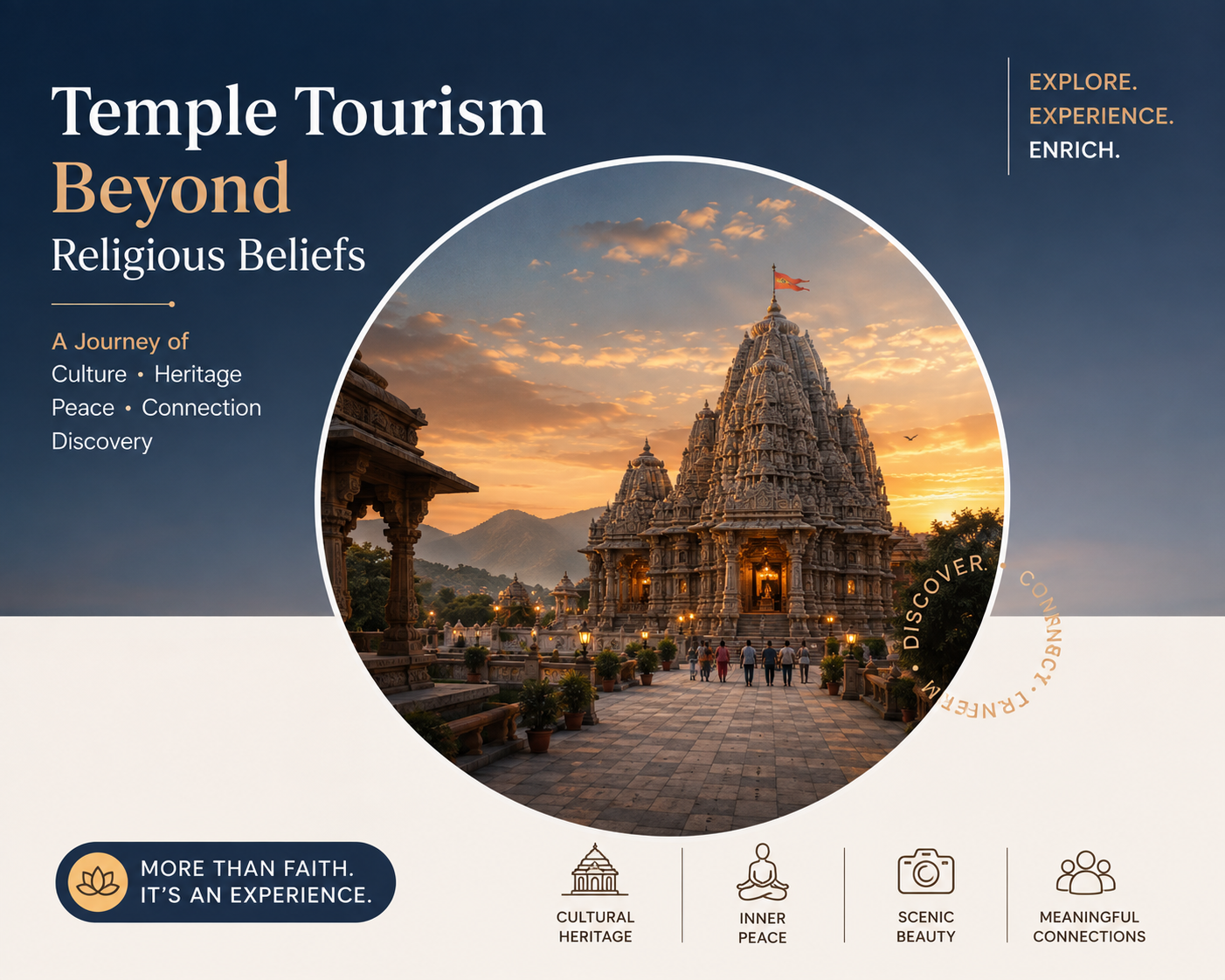
Temple tourism in India has traditionally been associated with faith, devotion, and pilgrimage. Millions of devotees visit sacred temples every year to seek blessings, participate in rituals, fulfill vows, and celebrate important religious festivals. However, modern temple tourism has evolved into something much broader than religious practice alone.
Today, India's temples attract people from different backgrounds, cultures, nationalities, and belief systems. Some visitors come for spiritual peace, others admire the remarkable architecture, while many travel to understand India's history, traditions, craftsmanship, music, festivals, local cuisine, and cultural heritage. A temple visit has become an opportunity to experience centuries of civilization preserved within sacred spaces.
From the magnificent gopurams of Meenakshi Temple and Brihadeeswara Temple in South India to the Himalayan shrines of Kedarnath and Badrinath, the ghats surrounding Kashi Vishwanath, the coastal beauty of Somnath and Dwarkadhish Temple, the grandeur of Jagannath Puri, and the spiritual atmosphere of Mahakaleshwar, every destination tells a story that extends far beyond worship.
Temple tourism today represents a unique blend of spirituality, heritage, education, architecture, local traditions, community life, and responsible travel. It allows visitors to experience India's cultural diversity while supporting local economies and preserving historical landmarks for future generations.
Temples Are Living Heritage Sites
Unlike many historical monuments that serve primarily as museums, most Indian temples remain active places of worship while also preserving centuries of history.
A single temple often represents:
- Ancient architecture.
- Historical events.
- Religious traditions.
- Regional craftsmanship.
- Local folklore.
- Community identity.
Visitors therefore experience both a functioning spiritual center and a remarkable piece of India's cultural heritage.
Architecture Attracts Visitors from Around the World
India's temples showcase some of the world's finest examples of architecture and engineering. Every region has developed its own architectural style over centuries.
Travelers admire:
- Intricately carved pillars.
- Stone sculptures.
- Towering gopurams.
- Massive temple complexes.
- Beautiful mandapas.
- Ancient inscriptions.
- Detailed ceilings.
- Traditional craftsmanship.
Many visitors travel specifically to appreciate these artistic achievements regardless of their religious background.
Temples Preserve India's History
Many temples have witnessed the rise and fall of kingdoms, dynasties, and civilizations. They preserve valuable information about India's political, social, and cultural development.
Temple inscriptions often record:
- Royal donations.
- Historical events.
- Ancient languages.
- Trade relationships.
- Religious practices.
- Community life.
For historians and researchers, temples are important sources of historical knowledge.
Temple Tourism Encourages Cultural Learning
Every pilgrimage introduces travelers to unique local customs and traditions.
Visitors experience:
- Traditional music.
- Classical dance.
- Local festivals.
- Regional rituals.
- Traditional attire.
- Temple cuisine.
- Ancient ceremonies.
These experiences help preserve India's rich cultural diversity while allowing travelers to appreciate traditions beyond their own regions.
Temple Festivals Bring Communities Together
Temple festivals are not only religious events but also important cultural celebrations.
Major festivals such as Rath Yatra, Navratri, Maha Shivaratri, Brahmotsavam, Janmashtami, Kumbh celebrations, and numerous regional temple festivals attract people from diverse communities.
These festivals often include:
- Traditional processions.
- Music performances.
- Cultural programs.
- Community meals.
- Artisan markets.
- Local handicrafts.
They strengthen community bonds while preserving regional traditions.
Temple Tourism Supports Heritage Conservation
Increased visitor interest encourages the preservation of historic temples and surrounding heritage areas.
Tourism supports:
- Restoration projects.
- Infrastructure improvements.
- Visitor facilities.
- Cultural documentation.
- Heritage awareness.
- Local conservation efforts.
Responsible tourism contributes to protecting these important cultural landmarks for future generations.
Photography and Art Inspire Many Visitors
Temple architecture provides extraordinary opportunities for photographers, artists, architects, and designers.
Visitors often admire:
- Stone carvings.
- Temple towers.
- Symmetrical layouts.
- Courtyards.
- Sculptural details.
- Natural lighting.
- Sacred water bodies.
Many temples inspire creative professionals who study historical architecture and traditional Indian design.
Temple Tourism Promotes Local Handicrafts
Markets surrounding temples often feature products made by local artisans.
Visitors purchase:
- Handmade souvenirs.
- Traditional textiles.
- Religious artifacts.
- Brassware.
- Wood carvings.
- Paintings.
- Local handicrafts.
These purchases help preserve traditional crafts while supporting local livelihoods.
Regional Cuisine Becomes Part of the Journey
Temple tourism also introduces travelers to India's diverse culinary traditions.
Many destinations are famous for:
- Temple prasadam.
- Traditional sweets.
- Vegetarian cuisine.
- Regional snacks.
- Seasonal delicacies.
- Community dining traditions.
Food becomes an important cultural experience alongside the spiritual journey.
Temple Tourism Encourages Slow Travel
Unlike fast-paced vacations, temple journeys often encourage visitors to spend time understanding a destination rather than rushing between attractions.
Travelers may explore:
- Temple complexes.
- River ghats.
- Ancient streets.
- Local museums.
- Traditional markets.
- Nearby heritage monuments.
This slower approach creates more meaningful travel experiences.
Temple Tourism Benefits Local Communities
The impact of temple tourism extends beyond visitors.
Pilgrimage destinations generate employment for:
- Hotels.
- Guest houses.
- Restaurants.
- Taxi operators.
- Tour guides.
- Shop owners.
- Street vendors.
- Artisans.
As tourism grows, local communities benefit from increased business opportunities and improved infrastructure.
Families Experience Shared Cultural Learning
Temple travel offers valuable educational experiences for children and young adults.
Families can learn together about:
- Indian history.
- Architecture.
- Regional traditions.
- Ancient stories.
- Local customs.
- Cultural diversity.
These journeys create lasting memories while strengthening intergenerational understanding of India's heritage.
International Visitors Are Increasingly Interested
Many international travelers visit Indian temples not only for religious reasons but also to understand India's civilization, philosophy, architecture, and living traditions.
They often combine temple visits with:
- Historical tours.
- Cultural festivals.
- Yoga retreats.
- Meditation programs.
- Heritage walks.
- Regional sightseeing.
Temple tourism therefore contributes to India's broader cultural tourism appeal.
Responsible Temple Tourism Matters
Respectful behavior is essential regardless of personal beliefs.
Visitors should:
- Follow temple rules.
- Dress appropriately.
- Maintain cleanliness.
- Respect local customs.
- Observe photography guidelines.
- Support sustainable tourism practices.
Responsible tourism ensures that sacred places remain welcoming and well-preserved for future generations.
Comfortable Accommodation Enhances the Experience
Whether visitors are travelling for spiritual reasons, architecture, history, or cultural exploration, comfortable accommodation allows them to spend more time appreciating the destination.
Hotels located near temples offer several advantages:
- Easy access to attractions.
- Reduced transportation time.
- Convenient exploration of local markets.
- More flexible sightseeing.
- Comfort after long days of walking.
Accommodation becomes an important part of the overall travel experience rather than simply a place to stay overnight.
How Mudras Stays Supports Modern Temple Tourism
As temple tourism continues to grow beyond traditional pilgrimage, travelers increasingly look for accommodation that is convenient, reliable, and located close to important spiritual destinations.
Mudras Stays focuses specifically on temple travel by helping visitors discover accommodation near major pilgrimage centers across India.
The platform helps travelers explore:
- Hotels near temples.
- Budget and premium accommodation.
- Family-friendly stays.
- Senior citizen-friendly hotels.
- Verified accommodation partners.
- Destination-focused travel planning.
Whether the purpose of travel is religious, cultural, architectural, or educational, convenient accommodation allows visitors to experience more of the destination at a comfortable pace.
Temple Tourism Will Continue to Evolve
As infrastructure improves and travelers become increasingly interested in meaningful experiences, temple tourism will continue expanding beyond traditional pilgrimage.
Future travelers are likely to seek journeys that combine:
- Spiritual reflection.
- Cultural understanding.
- Historical exploration.
- Local experiences.
- Responsible tourism.
- Comfortable travel planning.
India's temples will continue serving as places of faith while also acting as gateways to understanding the country's remarkable history, art, architecture, and living traditions.
Frequently Asked Questions
Is temple tourism only for religious devotees?
No. Many travelers visit temples to appreciate architecture, history, culture, festivals, art, local traditions, and heritage, regardless of their personal religious beliefs.
Why are Indian temples important from a cultural perspective?
Temples preserve centuries of history, architecture, sculpture, inscriptions, music, festivals, craftsmanship, and community traditions, making them valuable cultural landmarks.
Can international tourists enjoy temple tourism?
Yes. Many international visitors explore Indian temples to learn about architecture, philosophy, culture, history, and local traditions while respecting religious practices.
How does temple tourism benefit local communities?
Temple tourism supports hotels, restaurants, transport providers, artisans, guides, shops, and other local businesses, creating employment and encouraging regional economic development.
What should visitors remember while visiting temples?
Visitors should follow temple guidelines, dress appropriately, respect local customs, maintain cleanliness, observe photography restrictions, and behave respectfully toward worshippers.
Why is accommodation important during temple tourism?
Comfortable accommodation near temples reduces travel time, allows easier exploration, provides convenient access to cultural attractions, and improves the overall visitor experience.
How does Mudras Stays support temple tourism?
Mudras Stays specializes in accommodation near major temples, helping travelers find convenient hotels whether they are visiting for pilgrimage, heritage, architecture, or cultural exploration.
Can families use temple tourism as an educational experience?
Yes. Temple visits help children and adults learn about Indian history, architecture, traditions, festivals, mythology, and regional culture while creating meaningful family memories.
Why is temple tourism growing in modern India?
Improved infrastructure, digital travel planning, better accommodation, rising interest in cultural experiences, and increased accessibility have all contributed to its continued growth.
What makes temple tourism unique compared to other forms of travel?
Temple tourism combines spirituality, history, architecture, local traditions, festivals, cuisine, community experiences, and cultural learning, offering visitors a rich and meaningful journey beyond conventional sightseeing.