
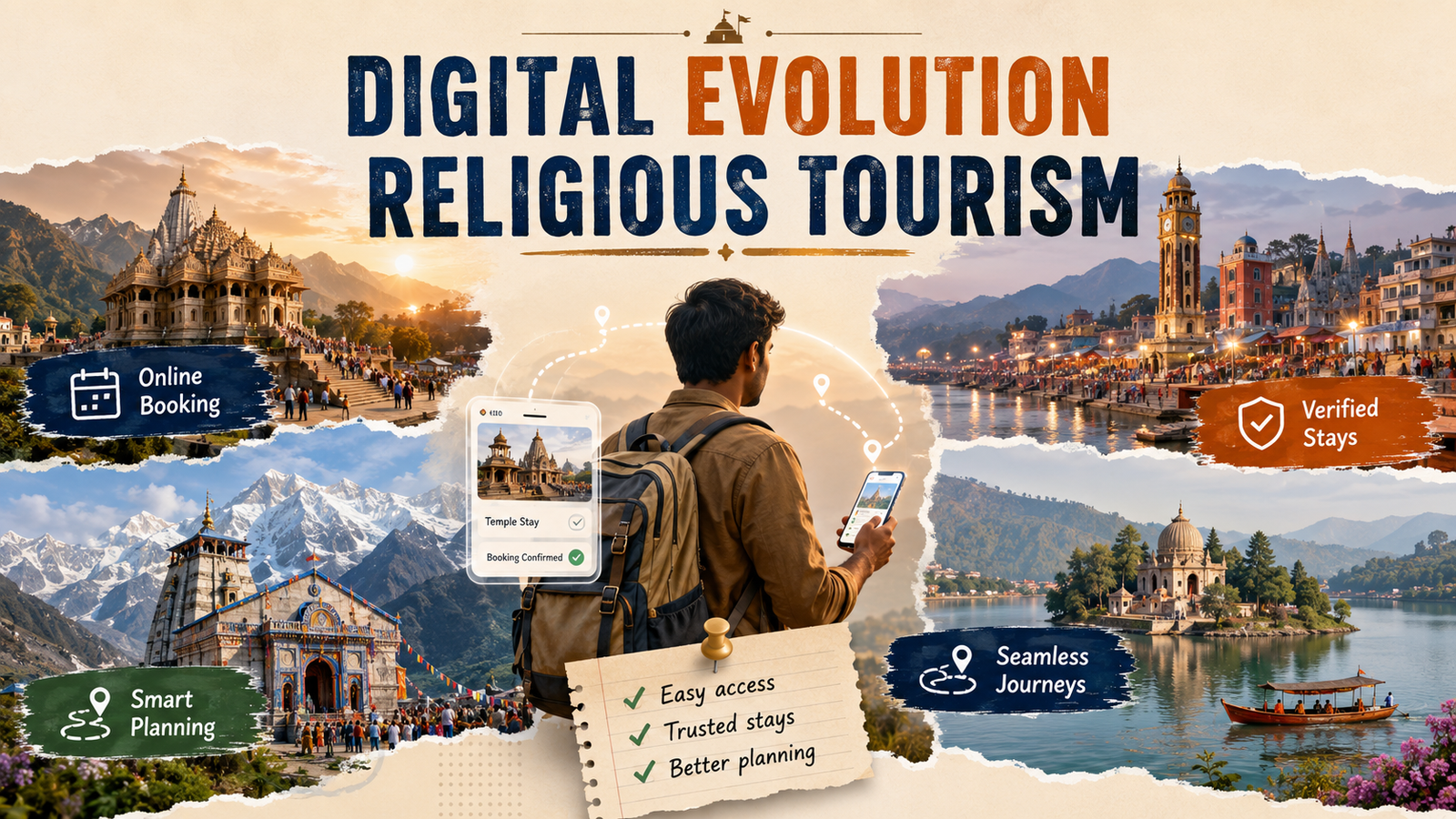
Religious Tourism is Entering the Digital Age
Religious tourism has always been one of India's oldest and most significant forms of travel. For centuries, devotees have travelled long distances to seek blessings, participate in festivals, perform religious rituals, and experience the spiritual atmosphere of sacred destinations. While the purpose of these journeys has remained unchanged, the way pilgrims prepare, travel, and manage their journeys has changed dramatically over the past decade.
Earlier, planning a pilgrimage often meant depending on travel agents, recommendations from relatives, printed guidebooks, and local information after reaching the destination. Finding suitable accommodation near temples, arranging transportation, understanding temple timings, and managing travel schedules often required considerable effort. Today, technology has transformed every stage of this process.
From researching pilgrimage destinations and booking hotels online to using digital maps, mobile payments, online darshan information, and real-time travel updates, modern technology has simplified religious tourism without affecting its spiritual significance. Instead of replacing traditions, digital innovation supports devotees by reducing travel-related stress and helping them spend more time focusing on worship and family.
The future of religious tourism lies in combining India's timeless spiritual heritage with modern technology that makes every pilgrimage safer, smarter, and more convenient.
Changing Expectations of Modern Pilgrims
Today's pilgrims expect much more than basic transportation and accommodation. Modern travelers want information, convenience, flexibility, and reliable services throughout their journey.
Before leaving home, many devotees now expect to:
- Research temple destinations online.
- Compare accommodation options.
- Read genuine guest reviews.
- Book hotels instantly.
- Plan transportation.
- Check weather forecasts.
- Review temple timings.
- Create complete travel itineraries.
These expectations have encouraged the travel industry to adopt digital solutions specifically designed for pilgrimage tourism.
Online Hotel Booking Has Changed Temple Travel
One of the biggest changes in religious tourism has been the shift from offline accommodation booking to digital hotel reservations.
Instead of arriving at a temple town and searching for available rooms, pilgrims can now:
- Compare multiple hotels.
- View room photographs.
- Read guest experiences.
- Check amenities.
- Compare prices.
- Reserve accommodation before travelling.
Advance hotel booking provides peace of mind while allowing devotees to organize the rest of their pilgrimage more efficiently.
Digital Maps Simplify Navigation
Visiting an unfamiliar temple destination was once challenging, particularly for first-time travelers.
Today, digital navigation tools help pilgrims:
- Locate temples.
- Navigate hotel locations.
- Find nearby restaurants.
- Locate parking areas.
- Identify medical facilities.
- Discover local attractions.
These tools reduce confusion and save valuable travel time.
Digital Payments Make Travel Easier
Cashless payments have become a standard part of modern travel across India.
Pilgrims increasingly use:
- UPI transactions.
- Mobile wallets.
- Online hotel payments.
- Digital transportation bookings.
- QR code payments.
- Electronic invoices.
Digital payments improve convenience while reducing the need to carry large amounts of cash during long journeys.
Technology Supports Better Travel Decisions
Modern travel platforms provide far more information than traditional booking methods ever could.
Before selecting accommodation, travelers can evaluate:
- Guest ratings.
- Hotel photographs.
- Location accuracy.
- Distance from the temple.
- Available facilities.
- Recent visitor reviews.
Having access to this information allows devotees to make better-informed decisions before confirming their bookings.
Digital Planning Creates Better Pilgrimages
Instead of planning individual parts of a journey separately, today's pilgrims increasingly organize complete itineraries digitally.
Planning may include:
- Accommodation booking.
- Transportation reservations.
- Temple schedules.
- Festival calendars.
- Nearby attractions.
- Restaurant recommendations.
- Emergency contacts.
- Budget management.
Organized planning reduces uncertainty while creating a smoother travel experience.
Artificial Intelligence Will Continue Improving Religious Tourism
Artificial intelligence is beginning to transform travel planning across multiple industries, including pilgrimage tourism.
Future AI-based services may include:
- Personalized temple itineraries.
- Accommodation recommendations.
- Weather-based travel suggestions.
- Traffic-aware route planning.
- Real-time travel alerts.
- Multilingual customer assistance.
- Smart budgeting tools.
- Customized family travel recommendations.
AI will continue simplifying pilgrimage planning while preserving the spiritual purpose of religious travel.
Digital Solutions Benefit Families and Senior Citizens
Technology has made temple travel significantly easier for families travelling with children and elderly parents.
Digital platforms help travelers:
- Choose nearby accommodation.
- Compare accessible hotels.
- Locate medical facilities.
- Plan shorter travel routes.
- Reserve transportation in advance.
- Reduce unnecessary walking.
These improvements contribute to more comfortable multi-generational pilgrimages.
Verified Reviews Build Trust
One of the biggest advantages of digital tourism platforms is transparency.
Guest reviews help pilgrims understand:
- Actual hotel quality.
- Cleanliness.
- Hospitality.
- Temple proximity.
- Food quality.
- Overall guest satisfaction.
This information helps travelers avoid unsuitable accommodation and make confident booking decisions.
The Rise of Specialized Religious Travel Platforms
While general hotel booking websites have improved travel planning, religious tourism has unique requirements that standard travel platforms do not always address.
Pilgrims usually prioritize:
- Hotels close to temples.
- Easy access to darshan.
- Family-friendly accommodation.
- Senior citizen-friendly facilities.
- Reliable local information.
- Destination-specific travel support.
These needs have encouraged the development of platforms dedicated exclusively to temple tourism.
The Future of Religious Tourism Will Be More Connected
The coming years are expected to bring even greater integration between technology and pilgrimage travel.
Future developments may include:
- Integrated temple travel apps.
- Smart accommodation recommendations.
- Digital pilgrimage passes.
- AI-powered customer assistance.
- Improved regional travel connectivity.
- Smart city infrastructure around temple towns.
- Better crowd management systems.
- Enhanced digital visitor services.
These innovations will help devotees enjoy smoother journeys while preserving the authenticity of India's spiritual traditions.
How Mudras Stays is Contributing to the Digital Transformation of Temple Tourism
Temple travelers often spend hours searching through unrelated hotel listings on general booking platforms before finding suitable accommodation near a temple. This process becomes even more challenging when planning family pilgrimages or multi-destination temple tours.
Mudras Stays has been developed specifically for temple travelers. Instead of functioning as a generic hotel booking website, it focuses exclusively on accommodation near India's major pilgrimage destinations, making religious travel simpler and more efficient.
Mudras Stays helps devotees discover:
- Hotels near famous temples.
- Verified accommodation partners.
- Budget and premium stays.
- Family-friendly hotels.
- Senior citizen-friendly accommodation.
- Destination-focused listings.
- Convenient temple access.
- Easy online booking.
- Reliable pilgrimage planning support.
- A growing network of temple destinations across India.
By combining digital convenience with temple-specific travel expertise, Mudras Stays represents an important step toward the future of religious tourism in India.
Frequently Asked Questions
How has technology changed religious tourism?
Technology has simplified hotel bookings, transportation planning, digital payments, navigation, weather updates, travel research, and itinerary management, making pilgrimages much easier to organize.
Why are online hotel bookings becoming popular among pilgrims?
Online booking allows devotees to compare hotels, read verified reviews, check amenities, confirm reservations in advance, and avoid last-minute accommodation problems.
What role does artificial intelligence play in future pilgrimage travel?
AI is expected to provide personalized itineraries, accommodation recommendations, travel alerts, weather guidance, multilingual support, and smarter pilgrimage planning.
Why are specialized temple booking platforms important?
They focus specifically on hotels near temples and the unique requirements of pilgrims, making accommodation selection faster and more relevant than general booking websites.
Can digital technology improve family pilgrimages?
Yes. Families can organize accommodation, transportation, temple schedules, budgets, and travel plans before departure, creating a smoother and more comfortable experience.
Can Mudras Stays help simplify digital temple travel?
Yes. Mudras Stays specializes in accommodation near major pilgrimage destinations, helping devotees find suitable hotels while simplifying the entire booking process.
Does Mudras Stays offer accommodation for different budgets?
Yes. Travelers can choose from budget hotels, guest houses, boutique properties, premium hotels, and luxury stays according to their travel preferences.
Will religious tourism continue becoming more digital?
Yes. Continued improvements in mobile technology, AI, online payments, transportation, and digital infrastructure are expected to make pilgrimage planning increasingly efficient.
How do verified guest reviews help pilgrims?
Verified reviews provide honest information about hotel cleanliness, hospitality, amenities, location, and overall guest experience, helping travelers make informed booking decisions.
Who can benefit from digital religious tourism solutions?
Digital travel tools benefit solo pilgrims, families, senior citizens, first-time devotees, international visitors, religious tour groups, and anyone seeking a convenient, organized, and stress-free pilgrimage across India.