
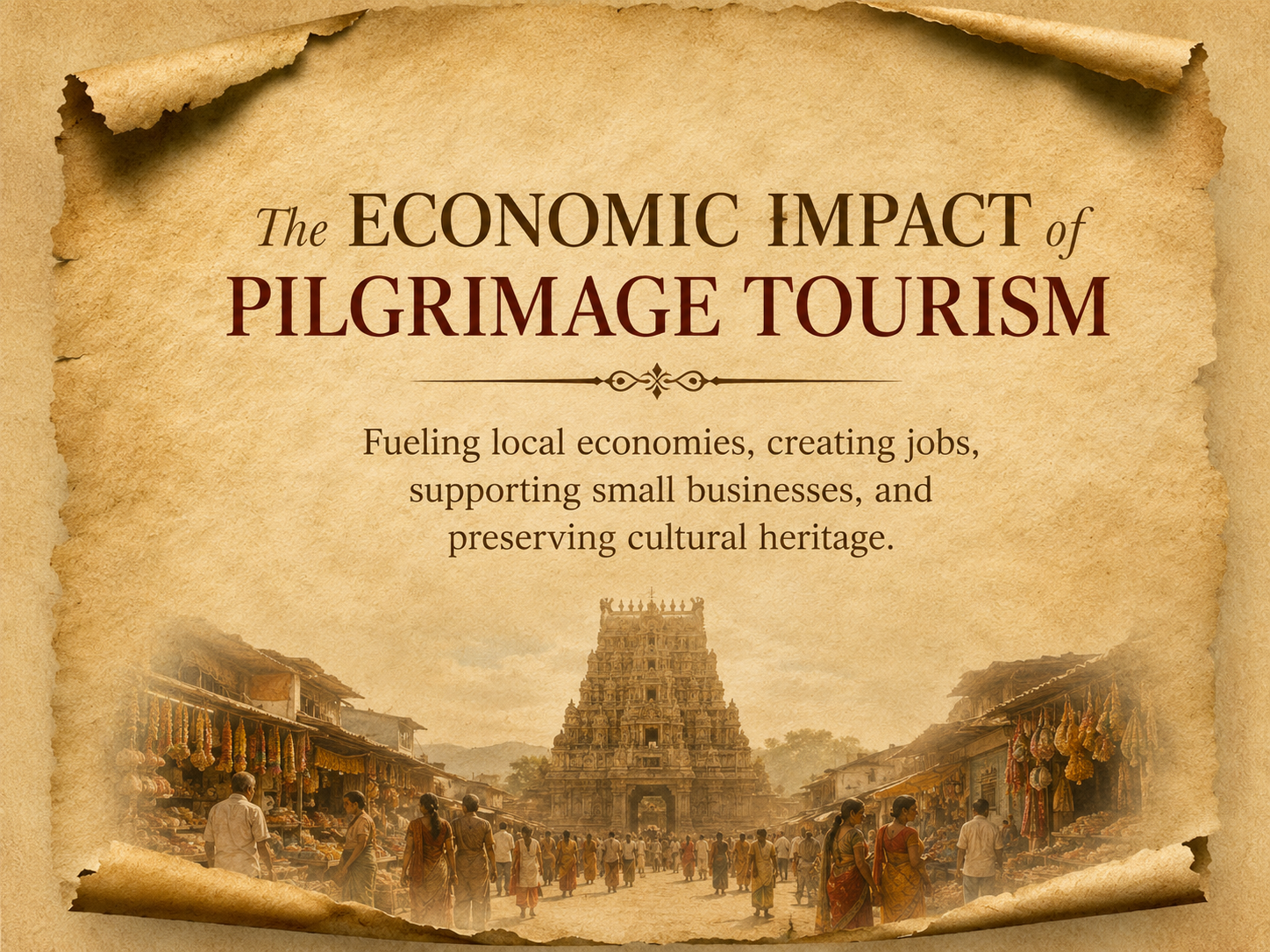
Pilgrimage Tourism is More Than a Spiritual Journey
Pilgrimage tourism is one of the most deeply rooted forms of travel in India. For generations, devotees have travelled across states and regions to visit temples, sacred rivers, pilgrimage circuits, monasteries, shrines, and other religious destinations. From Kedarnath and Badrinath in the Himalayas to Tirupati and Rameswaram in South India, and from Dwarka and Somnath in the west to Jagannath Puri in the east, religious journeys create enormous movement of people throughout the country.
While the spiritual importance of these journeys is clear, their economic significance is equally substantial. Every pilgrimage generates spending on accommodation, transportation, meals, shopping, guides, taxis, local services, and countless supporting activities. When multiplied across millions of travelers, this spending creates an economic ecosystem that supports businesses and livelihoods far beyond temple premises.
India's broader travel and tourism sector is already a major contributor to economic activity and employment. Pilgrimage tourism forms an important part of the country's domestic travel landscape, particularly because religious journeys take place across large metropolitan cities, smaller towns, rural regions, mountainous destinations, and locations that might otherwise receive limited tourism demand.
The true economic impact of pilgrimage tourism should therefore be understood not simply through hotel bookings or temple donations. Its influence extends across hospitality, transportation, retail, food services, construction, infrastructure, employment, technology, local entrepreneurship, and regional development.
Religious Travel Creates a Large Visitor Economy
Whenever a pilgrim visits a destination, their spending creates demand across multiple categories. A traveler may initially visit for darshan, but the economic journey begins much earlier and continues until they return home.
A typical pilgrimage can generate spending on:
- Flights, trains, buses, or private transportation.
- Hotels, guest houses, homestays, and other accommodation.
- Local taxis, autos, and transfers.
- Restaurants and food outlets.
- Religious offerings and devotional products.
- Local shopping and handicrafts.
- Guides and travel assistance.
- Parking and local transport services.
- Mobile connectivity and digital services.
- Nearby sightseeing and attractions.
This means that the economic value of one temple visitor can spread across dozens of businesses before, during, and after the actual temple visit.
Domestic Travel is Especially Important
Pilgrimage tourism is strongly connected to India's domestic travel economy. Unlike some tourism categories that depend heavily on international visitors, temple destinations attract people from every region of the country throughout the year.
Families may travel from Delhi to Ujjain, Maharashtra to Tirupati, Bengaluru to Rameswaram, Gujarat to Kedarnath, or West Bengal to Puri. These journeys generate interstate economic activity while distributing tourism expenditure across a wide range of destinations.
This domestic nature of religious tourism creates an important advantage. Temple destinations are not dependent on a single international market or seasonal foreign tourist flow. Their visitor base often consists of families, senior citizens, religious groups, solo devotees, tour operators, and increasingly younger spiritual travelers.
Hotels and Accommodation Benefit Directly
Accommodation is one of the clearest beneficiaries of pilgrimage tourism. Temple destinations require a wide variety of stays because devotees travel with very different budgets and expectations.
Demand may support:
- Budget hotels.
- Guest houses.
- Homestays.
- Family hotels.
- Boutique properties.
- Premium hotels.
- Resorts.
- Group accommodation.
This creates opportunities for both large hospitality companies and independent local hotel owners.
Religious tourism can be particularly valuable for smaller properties located close to temple premises. A well-managed hotel near a major shrine may receive steady demand because visitors value convenience, accessibility, cleanliness, and proximity to darshan routes.
Temple Tourism Supports Local Employment
The economic importance of pilgrimage tourism extends directly into employment.
Every functioning tourism destination requires people to operate hotels, restaurants, transport networks, shops, travel services, housekeeping operations, security facilities, and numerous other services.
Employment linked to temple tourism may include:
- Hotel managers.
- Reception staff.
- Housekeeping teams.
- Drivers.
- Restaurant workers.
- Local guides.
- Tour coordinators.
- Retail employees.
- Small shop owners.
- Parking attendants.
- Local artisans.
- Maintenance workers.
These jobs are especially important in smaller pilgrimage towns where alternative employment opportunities may be limited.
Small Businesses Often Benefit the Most
One of the distinctive features of pilgrimage tourism is its strong connection with local entrepreneurship.
Large tourism destinations may attract national hotel chains and established travel companies, but a significant proportion of pilgrimage spending still reaches small and locally operated businesses.
These can include:
- Flower sellers.
- Prasad shops.
- Religious souvenir stores.
- Local restaurants.
- Tea stalls.
- Taxi operators.
- Auto-rickshaw drivers.
- Local guides.
- Handicraft sellers.
- Independent hotels.
- Homestay owners.
A steady flow of pilgrims can therefore support thousands of micro and small businesses around major temple destinations.
Local Food Economies Grow Around Pilgrimage Centers
Food is another important economic category connected to religious tourism.
Pilgrims often prefer vegetarian meals, regional cuisine, traditional sweets, prasad, and simple food suitable for long journeys. This creates demand for local restaurants, food stalls, bakeries, sweet shops, catering businesses, and suppliers.
Temple towns often develop their own food identity. Visitors remember destinations not only for darshan but also for distinctive local dishes, sweets, snacks, and traditional preparations.
This gives local food businesses an opportunity to become part of the destination experience while creating employment and supporting agricultural supply chains.
Transportation Becomes an Important Economic Driver
Pilgrimage tourism creates demand across every level of transportation.
Long-distance travelers may use:
- Flights.
- Trains.
- Intercity buses.
- Private vehicles.
- Tour coaches.
After reaching the destination, travelers may require:
- Taxis.
- Auto-rickshaws.
- Shared vehicles.
- Local buses.
- Hotel transfers.
- Special pilgrimage transport.
This creates income for drivers, transport companies, fuel stations, vehicle operators, maintenance businesses, and supporting services throughout the travel route.
Pilgrimage Circuits Multiply Visitor Spending
The economic impact becomes even greater when travelers visit multiple destinations during one journey.
Popular pilgrimage circuits include:
- Char Dham Yatra.
- Jyotirlinga circuits.
- Shakti Peetha journeys.
- Krishna pilgrimage circuits.
- South India temple tours.
- Ramayana-related destinations.
- Multi-temple state itineraries.
Instead of spending money in one town, travelers spend across several destinations on hotels, meals, transport, shopping, and other services.
This helps distribute tourism income across a broader geographic area.
Festival Tourism Creates Powerful Demand Peaks
Temple festivals significantly increase economic activity in pilgrimage towns.
Events such as Maha Shivaratri, Navratri, Rath Yatra, Janmashtami, Brahmotsavam, Kartik celebrations, Kumbh gatherings, and other regional festivals can bring large numbers of devotees within a relatively short period.
During these periods, demand may increase for:
- Hotel rooms.
- Transportation.
- Restaurants.
- Temporary accommodation.
- Retail products.
- Religious merchandise.
- Event-related services.
- Local guides.
This seasonal surge can create significant revenue opportunities for local businesses.
Infrastructure Investment Benefits More Than Pilgrims
Growing pilgrimage tourism frequently encourages investment in public infrastructure.
Improvements may include:
- Better roads.
- Improved railway stations.
- Airport connectivity.
- Pedestrian pathways.
- Parking facilities.
- Public toilets.
- Street lighting.
- Signage.
- Waste management.
- Emergency services.
Although these improvements may initially be designed to serve pilgrims, local residents also benefit from stronger infrastructure.
Better transportation can improve access to employment and education, while upgraded public spaces and sanitation can improve everyday living conditions.
Religious Tourism Can Support Regional Development
One of the most significant economic benefits of pilgrimage tourism is its ability to bring travel expenditure into destinations outside India's largest commercial cities.
Many important pilgrimage centers are located in small towns, rural regions, coastal settlements, mountainous areas, and historically significant communities.
When visitor demand increases, local economies may attract:
- New hotels.
- Restaurants.
- Transportation businesses.
- Retail investment.
- Tour operators.
- Infrastructure development.
- Digital services.
This can reduce the concentration of tourism spending in major metropolitan areas and create economic activity in destinations that might otherwise receive limited investment.
Local Artisans and Traditional Products Benefit
Pilgrims often purchase souvenirs, religious items, handicrafts, textiles, traditional clothing, artwork, and locally produced goods.
This creates important opportunities for artisans and local manufacturers.
Products connected to temple destinations may include:
- Religious idols.
- Prayer materials.
- Handcrafted decorations.
- Traditional textiles.
- Regional sweets.
- Local handicrafts.
- Spiritual books.
When travelers purchase locally produced items, more tourism expenditure remains within the regional economy.
The Multiplier Effect Makes Tourism Spending More Powerful
Tourism spending does not stop with the first transaction.
Consider a family that books a local hotel. The hotel uses that revenue to pay employees, purchase food supplies, maintain the building, hire laundry services, pay transportation providers, and purchase other products.
Those employees and suppliers then spend part of their income within the local economy.
This creates what economists describe as indirect and induced economic effects. In simple terms, the money initially spent by tourists continues circulating through other businesses and households.
This is why the total economic impact of tourism can be considerably larger than direct visitor spending alone.
Digital Booking is Bringing More Local Hotels Online
Digital transformation is creating another important economic opportunity for temple destinations.
Many small hotels, homestays, and guest houses have traditionally depended on walk-in guests, telephone bookings, or offline travel agents.
Online booking allows these properties to reach travelers before they arrive at the destination.
Digital visibility can help local accommodation providers:
- Reach travelers across India.
- Improve advance bookings.
- Reduce dependence on walk-ins.
- Communicate facilities more clearly.
- Manage demand more effectively.
- Build long-term guest relationships.
Specialized temple travel platforms can play an important role in bringing more local hospitality businesses into the digital tourism economy.
Better Accommodation Can Increase Visitor Spending
Comfortable accommodation may encourage travelers to stay longer at a destination rather than completing darshan and leaving immediately.
Longer stays can generate additional spending on:
- Hotels.
- Restaurants.
- Local sightseeing.
- Transportation.
- Shopping.
- Cultural activities.
Improving accommodation quality can therefore benefit the broader destination economy rather than hotels alone.
Senior Citizens Represent an Important Travel Segment
Senior citizens form a significant part of India's pilgrimage market. Many undertake spiritual journeys they have planned for years.
Making temple destinations more accessible can encourage longer stays and greater participation from elderly travelers.
Important improvements include:
- Senior-friendly hotels.
- Accessible transportation.
- Lift facilities.
- Reduced walking distances.
- Better medical support.
- Comfortable waiting areas.
Investment in accessibility strengthens both tourism demand and social inclusion.
Family Pilgrimages Strengthen the Hospitality Economy
Family groups often require multiple rooms, larger vehicles, more meals, and longer travel schedules than individual tourists.
This creates additional economic demand across accommodation, transport, restaurants, and retail.
Family-friendly pilgrimage destinations that offer clean accommodation, safe surroundings, nearby food options, and reliable transportation may therefore benefit from stronger repeat visitation and recommendations.
Religious Tourism Can Reduce Extreme Seasonality
Many leisure destinations depend heavily on a limited peak season. Pilgrimage destinations can sometimes benefit from a broader travel calendar because religious visits occur for many reasons throughout the year.
Different festivals, religious anniversaries, school holidays, family ceremonies, and personal spiritual journeys can create multiple periods of visitor demand.
A more balanced travel calendar helps hotels and local businesses maintain employment and revenue for a greater part of the year.
Temple Tourism Can Encourage Entrepreneurship
Growing visitor numbers often create new opportunities for local entrepreneurs.
Businesses may emerge in areas such as:
- Homestays.
- Taxi services.
- Tour operations.
- Restaurants.
- Travel technology.
- Guided experiences.
- Local retail.
- Handicrafts.
This entrepreneurial activity expands the local tourism ecosystem while providing residents with opportunities to participate directly in visitor spending.
The Importance of Sustainable Economic Growth
Growth in pilgrimage tourism creates opportunities, but unmanaged tourism can also place pressure on local infrastructure and natural resources.
Destinations experiencing rapid visitor growth must consider:
- Waste management.
- Water availability.
- Traffic congestion.
- Environmental protection.
- Responsible construction.
- Crowd management.
- Protection of cultural heritage.
The strongest long-term economic model is one where tourism growth benefits both visitors and local communities without damaging the spiritual, environmental, or cultural character of the destination.
Why Better Planning Creates Better Economic Outcomes
An organized destination can encourage visitors to stay longer, spend more confidently, and return in the future.
Reliable accommodation, transparent information, safe transportation, clean public spaces, and well-managed temple access all contribute to visitor satisfaction.
When travelers have positive experiences, they are more likely to recommend the destination to friends and family, creating additional tourism demand through word-of-mouth.
How Mudras Stays Supports the Temple Tourism Ecosystem
One of the challenges within pilgrimage tourism is connecting travelers with suitable local accommodation. Many independent hotels near temples provide valuable services but may not receive the same digital visibility as large hotel brands.
Mudras Stays focuses specifically on temple travel and helps create stronger connections between devotees and accommodation providers near India's spiritual destinations.
The platform helps travelers discover:
- Hotels close to major temples.
- Verified accommodation options.
- Budget and premium stays.
- Family-friendly properties.
- Senior citizen-friendly accommodation.
- Destination-focused hotel listings.
- Convenient temple access.
- Local hospitality options.
For travelers, this can simplify accommodation planning. For participating hospitality businesses, stronger digital visibility can potentially bring additional bookings and connect them with pilgrims actively searching for temple stays.
This type of specialized travel ecosystem can support a broader shift in pilgrimage tourism—from fragmented offline planning toward a more organized digital marketplace connecting travelers, hotels, local transport providers, and destination services.
Frequently Asked Questions
What is pilgrimage tourism?
Pilgrimage tourism refers to travel motivated primarily by religious, spiritual, or devotional purposes. It includes visits to temples, shrines, sacred rivers, pilgrimage circuits, festivals, and other religious destinations.
How does pilgrimage tourism contribute to local economies?
Pilgrims spend money on hotels, transportation, restaurants, shopping, religious products, guides, and local services. This creates income for businesses and employment for local communities.
Does temple tourism create employment?
Yes. Temple tourism supports employment across hotels, restaurants, transport services, retail shops, tour operations, housekeeping, security, maintenance, local guiding, and many other sectors.
Why are hotels important to the pilgrimage economy?
Accommodation allows travelers to stay longer at a destination, which can increase spending on meals, shopping, transportation, sightseeing, and other local services.
How do temple festivals affect local businesses?
Major festivals can create significant temporary increases in visitor demand. Hotels, restaurants, taxis, retailers, guides, and local vendors often experience higher business activity during these periods.
How does pilgrimage tourism support smaller towns?
Many sacred destinations are located outside major metropolitan areas. Pilgrimage tourism brings visitor spending into these communities and can encourage investment in hotels, transportation, retail, restaurants, and infrastructure.
Can digital hotel booking help local tourism businesses?
Yes. Digital platforms can help independent hotels and local accommodation providers reach travelers before they arrive, improve visibility, and generate more advance bookings.
What role does Mudras Stays play in pilgrimage tourism?
Mudras Stays focuses specifically on accommodation near temple destinations, helping devotees find suitable stays while creating greater digital visibility for hospitality businesses serving pilgrimage travelers.
Why is sustainable temple tourism important?
Rapid tourism growth can create pressure on traffic, water resources, waste management, natural environments, and heritage sites. Sustainable planning helps protect destinations while maintaining long-term economic benefits.
Will pilgrimage tourism continue to influence India's travel economy?
Religious travel is deeply established in Indian culture, and improvements in transport, accommodation, digital booking, and destination infrastructure are making pilgrimage journeys more accessible. These trends can continue supporting hospitality, transport, retail, and local economies across temple destinations.