
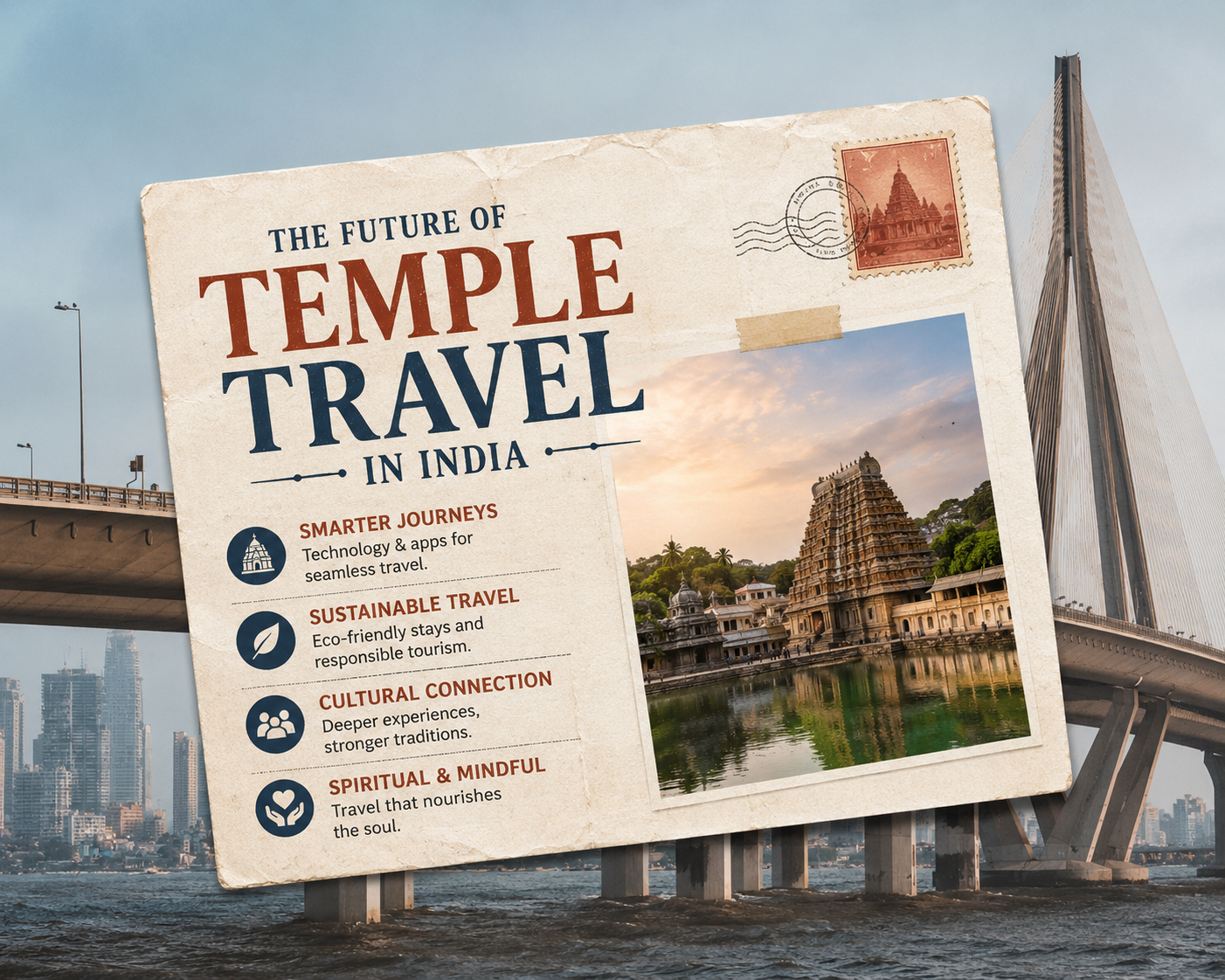
India's Temple Tourism is Entering a New Era
Temple travel has been an integral part of Indian culture for thousands of years. Pilgrimages have traditionally involved extensive planning, long journeys, handwritten travel itineraries, recommendations from friends and relatives, and considerable uncertainty regarding accommodation and transportation. While the spiritual purpose of visiting temples remains unchanged, the way devotees plan and experience these journeys is rapidly evolving.
Today, digital technology is transforming almost every stage of a pilgrimage. Travelers can research destinations online, reserve accommodation in advance, check temple timings, navigate unfamiliar cities, compare transportation options, read verified hotel reviews, and organize complete itineraries from a smartphone. These advancements are making temple travel more convenient, accessible, and comfortable for people of every age group.
The future of temple travel in India is not about replacing spirituality with technology. Instead, technology serves as a supportive tool that removes unnecessary travel difficulties, allowing devotees to focus more on prayer, devotion, family, and cultural experiences.
As India's religious tourism industry continues to expand, digital innovation, improved infrastructure, and specialized travel platforms will play an increasingly important role in creating better pilgrimage experiences.
The Growing Popularity of Temple Tourism
Temple tourism is one of the fastest-growing segments of India's travel industry. Every year, millions of domestic and international visitors travel to famous destinations such as Tirupati, Kedarnath, Badrinath, Kashi Vishwanath, Ayodhya, Vaishno Devi, Jagannath Puri, Somnath, Dwarkadhish Temple, Mahakaleshwar, Rameswaram, Meenakshi Temple, Sabarimala, and hundreds of other sacred sites.
Several factors are contributing to this growth:
- Improved road infrastructure.
- Better railway connectivity.
- Expansion of regional airports.
- Government investment in pilgrimage destinations.
- Growing interest in spiritual tourism.
- Increasing participation from younger travelers.
- Rise of family pilgrimages.
- Greater awareness through digital media.
As more people begin travelling for spiritual purposes, expectations regarding comfort, safety, and convenience continue to increase.
Technology is Making Pilgrimages Easier
Modern technology has simplified many aspects of temple travel that previously required considerable effort.
Today, devotees can:
- Book hotels online.
- Reserve train and flight tickets instantly.
- Navigate unfamiliar destinations using digital maps.
- Check live weather forecasts.
- View temple timings before arrival.
- Read verified guest reviews.
- Access digital payment options.
- Receive travel updates in real time.
These innovations reduce uncertainty and help pilgrims organize their journeys much more efficiently.
The Rise of Specialized Temple Travel Platforms
General hotel booking websites have made travel easier, but they often present thousands of unrelated accommodation options that require significant time to compare.
The future of temple tourism lies in specialized platforms designed specifically for pilgrims.
Such platforms focus on:
- Hotels located near temples.
- Verified accommodation partners.
- Temple-specific travel information.
- Pilgrimage-focused recommendations.
- Family-friendly properties.
- Senior citizen-friendly accommodation.
- Local transportation guidance.
- Destination-specific planning.
This specialized approach significantly simplifies the decision-making process for devotees.
Improved Accommodation Standards
Pilgrims today expect more than simply a room for the night. Comfortable accommodation has become an essential part of the overall travel experience.
Future temple hotels are expected to provide:
- Cleaner rooms.
- Better hygiene standards.
- Digital check-in services.
- Improved guest communication.
- Reliable Wi-Fi.
- Comfortable family rooms.
- Senior-friendly facilities.
- Sustainable hospitality practices.
These improvements help devotees enjoy a peaceful stay before and after temple visits.
Smart Planning Will Become Standard
Future pilgrims are increasingly likely to plan complete journeys digitally before leaving home.
Planning may include:
- Temple itinerary creation.
- Hotel reservations.
- Transportation bookings.
- Festival schedules.
- Restaurant recommendations.
- Parking information.
- Emergency contacts.
- Nearby attractions.
Having every detail organized in advance reduces uncertainty throughout the pilgrimage.
Digital Payments and Cashless Travel
Digital payment systems have already transformed travel across India.
Increasingly, pilgrims use:
- UPI payments.
- Digital wallets.
- Online hotel payments.
- Electronic ticketing.
- QR code transactions.
- Cashless transportation services.
Cashless travel improves convenience while reducing the need to carry large amounts of cash.
Artificial Intelligence Will Improve Travel Planning
Artificial intelligence is beginning to influence the travel industry in meaningful ways.
Future temple travelers may benefit from AI-powered services such as:
- Personalized travel recommendations.
- Suggested temple itineraries.
- Hotel recommendations based on travel preferences.
- Smart route planning.
- Weather-based travel suggestions.
- Automated customer support.
- Real-time travel notifications.
These technologies will reduce planning effort while improving the overall pilgrimage experience.
Better Travel for Families and Senior Citizens
Modern pilgrimage planning increasingly recognizes the importance of accessibility and family comfort.
Future accommodation will continue improving through:
- Barrier-free access.
- Larger family rooms.
- Improved elevators.
- Wheelchair-friendly facilities.
- Senior-friendly services.
- Child-friendly amenities.
These improvements will encourage more families to undertake comfortable multi-generational pilgrimages.
Sustainable Temple Tourism
As visitor numbers continue growing, sustainability will become increasingly important.
Future temple tourism will likely emphasize:
- Responsible waste management.
- Eco-friendly accommodation.
- Reduced plastic usage.
- Water conservation.
- Local community participation.
- Environmentally responsible travel practices.
Responsible tourism helps preserve India's sacred destinations for future generations.
Government Investment in Pilgrimage Infrastructure
Across India, government initiatives continue improving religious tourism infrastructure through:
- Improved highways.
- Railway modernization.
- Airport expansion.
- Pilgrimage corridor development.
- Better public amenities.
- Enhanced visitor facilities.
These investments are making temple travel faster, safer, and more comfortable every year.
Why Mudras Stays Represents the Future of Temple Travel
The future of temple tourism is not simply about booking hotels online. It is about creating an integrated pilgrimage experience where accommodation, location, convenience, and spiritual travel needs are considered together.
Unlike general hotel booking platforms, Mudras Stays has been created specifically for temple travelers. Instead of searching through thousands of unrelated city hotels, devotees can easily discover accommodation located near major pilgrimage destinations across India.
Mudras Stays offers:
- Hotels near famous temples.
- Verified accommodation partners.
- Budget and premium stays.
- Family-friendly hotels.
- Senior citizen-friendly accommodation.
- Destination-focused hotel listings.
- Convenient temple access.
- Simplified pilgrimage planning.
- Easy online booking.
- Growing coverage across India's spiritual destinations.
As temple tourism continues to evolve, specialized platforms like Mudras Stays will become an increasingly important part of planning comfortable, organized, and memorable pilgrimages.
Frequently Asked Questions
How is technology changing temple travel in India?
Technology has simplified hotel bookings, transportation reservations, navigation, digital payments, travel planning, weather tracking, and access to temple information, making pilgrimages much more convenient.
Will online booking become the standard for temple tourism?
Yes. As more pilgrims rely on smartphones and digital platforms, online hotel booking and digital travel planning are expected to become the preferred way to organize temple journeys.
Why are specialized temple booking platforms becoming popular?
Unlike general booking websites, specialized platforms focus specifically on accommodation near temples, helping devotees save time while finding more suitable hotels.
How will artificial intelligence improve future pilgrimages?
AI can provide personalized hotel recommendations, optimized travel routes, itinerary suggestions, weather alerts, customer support, and smarter pilgrimage planning.
What improvements can pilgrims expect from future temple hotels?
Future accommodations are expected to offer better hygiene, digital services, senior-friendly facilities, family rooms, sustainable practices, and improved guest experiences.
Can Mudras Stays help simplify temple travel?
Yes. Mudras Stays specializes in accommodation near major pilgrimage destinations, making it easier for devotees to find hotels that are convenient, comfortable, and designed for temple travel.
Does Mudras Stays offer hotels for different budgets?
Yes. Travelers can choose from budget hotels, guest houses, boutique properties, premium hotels, and luxury stays depending on their travel preferences and budget.
Will temple tourism continue growing in India?
Yes. Improved infrastructure, increasing spiritual tourism, better connectivity, government initiatives, and digital travel planning are expected to drive continued growth in temple tourism.
How can families benefit from digital pilgrimage planning?
Digital planning helps families organize hotels, transportation, temple schedules, budgets, and itineraries in advance, creating a smoother and more comfortable travel experience.
Who can benefit from modern temple travel solutions?
Modern digital travel tools benefit solo pilgrims, families, senior citizens, first-time devotees, international visitors, religious tour groups, and anyone seeking a well-organized and stress-free pilgrimage across India.