
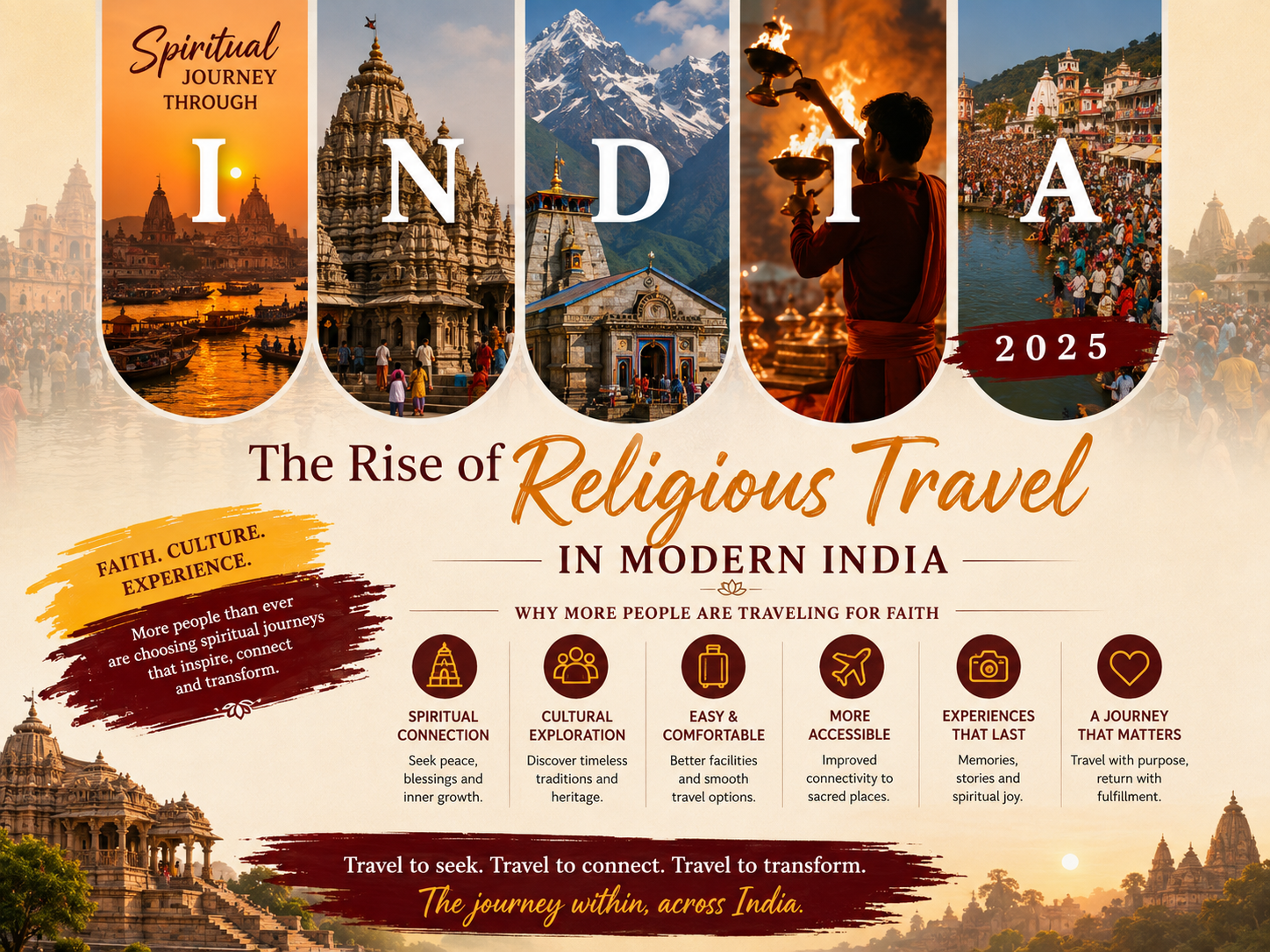
Religious travel has always been a central part of Indian culture, but in recent years it has evolved into one of the country's most dynamic tourism segments. Pilgrimage destinations that were once visited mainly by traditional devotees are now attracting families, younger travelers, senior citizens, international visitors, and people interested in spirituality, heritage, architecture, wellness, and culture.
From Kedarnath and Badrinath in the Himalayas to Tirupati in Andhra Pradesh, Rameswaram in Tamil Nadu, Somnath and Dwarka in Gujarat, Ujjain in Madhya Pradesh, Jagannath Puri in Odisha, Varanasi in Uttar Pradesh, and Vaishno Devi in Jammu and Kashmir, sacred destinations across India are witnessing growing travel demand.
This shift is not happening for a single reason. Better roads, improved airports, digital hotel booking, social media, increased disposable income, greater awareness of India's heritage, and renewed interest in spiritual experiences have all contributed to the growth of religious tourism.
Modern pilgrims are also travelling differently. They expect easier planning, dependable accommodation, better transport, clear information, and convenient access to temples. This has created new opportunities for specialized travel platforms such as Mudras Stays, which focuses specifically on accommodation near temples and pilgrimage destinations.
Religious Travel Has Always Been Part of Indian Life
Pilgrimage has been deeply embedded in Indian society for centuries. Families have traditionally travelled to sacred rivers, temples, monasteries, gurudwaras, shrines, and spiritual centers as part of religious practice.
Popular pilgrimage traditions include:
- Char Dham Yatra.
- Jyotirlinga visits.
- Shakti Peetha pilgrimages.
- Vaishno Devi Yatra.
- South India temple circuits.
- Krishna pilgrimage routes.
- Ramayana-related destinations.
- Kumbh and major festival travel.
What has changed today is the scale, frequency, and organization of these journeys.
Modern Pilgrims Are Travelling More Frequently
Religious travel is no longer limited to once-in-a-lifetime pilgrimages. Many travelers now undertake several spiritual journeys every year.
A family may visit Tirupati during one vacation, travel to Ujjain later in the year, and plan a Char Dham journey for the following season.
Several factors encourage more frequent temple travel:
- Improved transportation.
- Better accommodation.
- Online travel planning.
- Increasing household incomes.
- Shorter travel times.
- Greater destination awareness.
This shift is transforming pilgrimage from an occasional journey into a more regular part of domestic tourism.
Infrastructure Development is Making Temples More Accessible
Infrastructure improvements are one of the biggest drivers behind the growth of religious tourism.
New highways, railway connections, airports, ropeways, parking facilities, and improved local roads are making pilgrimage destinations easier to reach.
Better infrastructure provides:
- Shorter journey times.
- Safer road travel.
- Improved public transport.
- Better access for senior citizens.
- Greater connectivity between temple circuits.
Destinations that once required difficult travel are gradually becoming more accessible to larger groups of visitors.
Digital Travel Planning is Changing Pilgrimage Behaviour
Technology has significantly changed how religious travelers prepare for their journeys.
Devotees can now research destinations, compare hotels, check maps, review routes, read guest feedback, monitor weather, and organize transportation from their phones.
Digital planning allows travelers to:
- Book hotels near temples.
- Compare room prices.
- Check temple distances.
- Read guest reviews.
- Plan transportation.
- Save digital confirmations.
- Prepare travel itineraries.
This has reduced dependence on last-minute local arrangements and made pilgrimage planning more predictable.
Younger Travelers Are Participating in Spiritual Tourism
Religious travel is increasingly attracting younger generations.
Many young travelers view pilgrimage as a combination of spirituality, heritage exploration, photography, family time, and cultural learning.
Destinations such as Varanasi, Rishikesh, Kedarnath, Ujjain, Puri, and Rameswaram attract visitors who may be interested in both religious experiences and local culture.
Social media has also increased awareness of temple architecture, rituals, festivals, and scenic pilgrimage routes, encouraging younger travelers to explore destinations that previous generations may have visited mainly for religious reasons.
Family Pilgrimages Are Becoming More Organized
Religious journeys in India are often multi-generational experiences.
Parents, grandparents, children, and relatives frequently travel together, which creates demand for accommodation that supports different age groups.
Families increasingly look for:
- Spacious rooms.
- Hotels near temples.
- Safe surroundings.
- Nearby dining options.
- Parking.
- Reliable transport.
- Flexible accommodation choices.
This has increased demand for better organized pilgrimage hospitality.
Senior Citizens Remain a Major Religious Travel Segment
Senior citizens have always played an important role in pilgrimage tourism, but improvements in travel infrastructure and hospitality are making sacred destinations more accessible to elderly travelers.
Senior-friendly pilgrimage planning often includes:
- Hotels close to temples.
- Lift access.
- Ground-floor rooms.
- Comfortable transportation.
- Reduced walking distances.
- Nearby healthcare facilities.
Accommodation providers that understand these requirements are becoming increasingly important within temple tourism.
Temple Festivals are Driving Seasonal Tourism
Major temple festivals attract exceptionally large visitor numbers.
Important events include:
- Maha Shivaratri.
- Navratri.
- Rath Yatra.
- Janmashtami.
- Brahmotsavam.
- Kartik celebrations.
- Regional temple festivals.
These events create significant demand for hotels, transportation, restaurants, guides, shops, and local services.
Festival tourism also encourages travelers to plan earlier because accommodation near temples often becomes unavailable quickly during peak dates.
Spiritual Tourism is Expanding Beyond Traditional Pilgrimage
Modern spiritual travel often combines temple visits with wellness, meditation, yoga, cultural experiences, heritage walks, and local sightseeing.
Travelers may combine:
- Temple darshan.
- River ghats.
- Meditation retreats.
- Local markets.
- Heritage architecture.
- Regional cuisine.
- Nature experiences.
This broader travel pattern is helping pilgrimage destinations evolve into complete tourism ecosystems.
Religious Tourism Supports Local Economies
Temple tourism creates income opportunities for a wide range of local businesses.
Pilgrimage demand supports:
- Hotels and guest houses.
- Restaurants.
- Taxi operators.
- Local guides.
- Handicraft sellers.
- Religious shops.
- Street vendors.
- Tour operators.
As visitor numbers increase, local communities benefit from employment and business opportunities connected to religious tourism.
Independent Hotels are Becoming More Important
Many pilgrimage towns are dominated by independent hotels, guest houses, homestays, and family-run properties.
These businesses often provide local knowledge and convenient temple access but may have limited visibility on large booking platforms.
Specialized platforms can help connect these properties with travelers actively searching for temple accommodation.
This creates benefits for both devotees and local hospitality businesses.
Accommodation Expectations Are Changing
Modern pilgrims increasingly expect better standards from temple accommodation.
Common expectations include:
- Clean rooms.
- Reliable hot water.
- Comfortable bedding.
- Online booking.
- Transparent pricing.
- Helpful staff.
- Good accessibility.
- Safe surroundings.
Travelers may still choose budget accommodation, but affordability is increasingly expected to come with basic comfort and reliability.
Location Matters More Than Ever
With travelers becoming more informed, practical location has become a major hotel selection factor.
Devotees increasingly understand that staying close to a temple can reduce:
- Daily travel time.
- Transportation costs.
- Walking requirements.
- Festival congestion.
- Physical fatigue.
This makes hotels near temple premises especially attractive to families and senior citizens.
Verified and Relevant Accommodation is Becoming More Important
As online booking grows, travelers are also becoming more cautious about accommodation quality.
They increasingly look for:
- Recent guest reviews.
- Clear property photographs.
- Accurate location information.
- Transparent booking conditions.
- Reliable customer support.
For pilgrimage travel, relevance is equally important. A highly rated hotel may still be unsuitable if it is located far from the temple or difficult for elderly travelers to access.
The Role of Mudras Stays in Modern Temple Tourism
The growth of religious travel creates a need for platforms designed specifically around pilgrimage requirements.
Mudras Stays focuses on accommodation near temples and spiritual destinations rather than treating religious travelers as part of a general hotel booking category.
This temple-focused approach helps travelers explore:
- Hotels close to pilgrimage sites.
- Different accommodation categories.
- Family-friendly properties.
- Senior-friendly stays.
- Budget and premium options.
- Destination-relevant accommodation.
For travelers who may be unfamiliar with a temple town, this specialization can make accommodation planning more efficient and practical.
Why Specialized Platforms Matter as the Market Grows
As religious tourism expands, travelers will increasingly expect more than a generic list of hotels.
They will look for platforms that understand:
- Temple proximity.
- Pilgrimage seasons.
- Family requirements.
- Senior citizen needs.
- Local transportation.
- Festival demand.
Specialized travel platforms can provide greater relevance by focusing on these specific requirements.
Religious Travel is Becoming a Year-Round Tourism Segment
While festivals create major peaks, temple tourism increasingly continues throughout the year.
Improved infrastructure, better accommodation, flexible travel schedules, and digital booking encourage travelers to visit sacred destinations even outside traditional pilgrimage seasons.
This year-round demand helps local hospitality businesses operate more consistently and encourages continued investment in tourism infrastructure.
Multi-Temple Journeys Are Becoming Easier to Plan
Digital tools and improved connectivity have made multi-temple circuits more practical.
Travelers increasingly plan:
- Jyotirlinga circuits.
- Shakti Peetha journeys.
- Char Dham travel.
- South India temple tours.
- Krishna circuits.
- Regional pilgrimage routes.
These journeys create demand for coordinated accommodation across multiple destinations rather than a single hotel booking.
Temple Tourism is Becoming More Experience-Oriented
Today's travelers increasingly want to understand a destination rather than simply complete darshan and leave.
They may explore:
- Temple architecture.
- Local legends.
- Nearby markets.
- Traditional food.
- Riverfronts.
- Historic neighborhoods.
- Regional festivals.
This shift encourages longer stays and creates more opportunities for local tourism businesses.
What the Future of Religious Travel May Look Like
The future of religious tourism in India is likely to become increasingly organized, digital, accessible, and traveler-focused.
Important developments may include:
- Better pilgrimage infrastructure.
- More specialized accommodation platforms.
- Improved digital information.
- Greater accessibility for senior citizens.
- Better multi-destination planning.
- More transparent booking experiences.
The spiritual purpose of pilgrimage will remain unchanged, but the way devotees plan and experience their journeys will continue to evolve.
Frequently Asked Questions
Why is religious travel growing in India?
Growth is being supported by improved transport infrastructure, online booking, rising travel awareness, better accommodation, higher disposable incomes, and renewed interest in spiritual and cultural experiences.
Are younger travelers participating in temple tourism?
Yes. Younger travelers increasingly combine spirituality with culture, architecture, photography, heritage exploration, and family travel, making temple destinations relevant to a broader audience.
Why are hotels near temples becoming more important?
Nearby accommodation reduces travel time, lowers transportation dependence, makes darshan easier, and provides greater convenience for families and senior citizens.
How has technology changed religious travel?
Travelers can now research temples, compare hotels, check maps, plan routes, read reviews, monitor weather, and organize bookings before reaching the destination.
How does temple tourism benefit local communities?
Pilgrimage tourism supports hotels, restaurants, transport operators, guides, shops, vendors, and other local businesses, creating employment and income opportunities.
Why are family pilgrimages becoming more organized?
Families now have access to better travel information, online hotel booking, improved roads, more accommodation choices, and easier transportation planning.
What role does Mudras Stays play in temple tourism?
Mudras Stays focuses on accommodation near temple and pilgrimage destinations, helping travelers identify more relevant stays according to location, budget, family requirements, and travel needs.
Is religious tourism limited to traditional devotees?
No. Temple destinations increasingly attract spiritual seekers, heritage travelers, families, younger visitors, photographers, and tourists interested in architecture and culture.
Will religious tourism continue growing?
The long-term outlook remains positive as connectivity, accommodation, digital planning, and destination infrastructure continue improving across major pilgrimage regions.
Who can benefit from the growth of temple tourism?
Devotees, local communities, independent hotels, transport providers, travel agents, guides, restaurants, and regional tourism businesses can all benefit from a more organized religious travel ecosystem.