
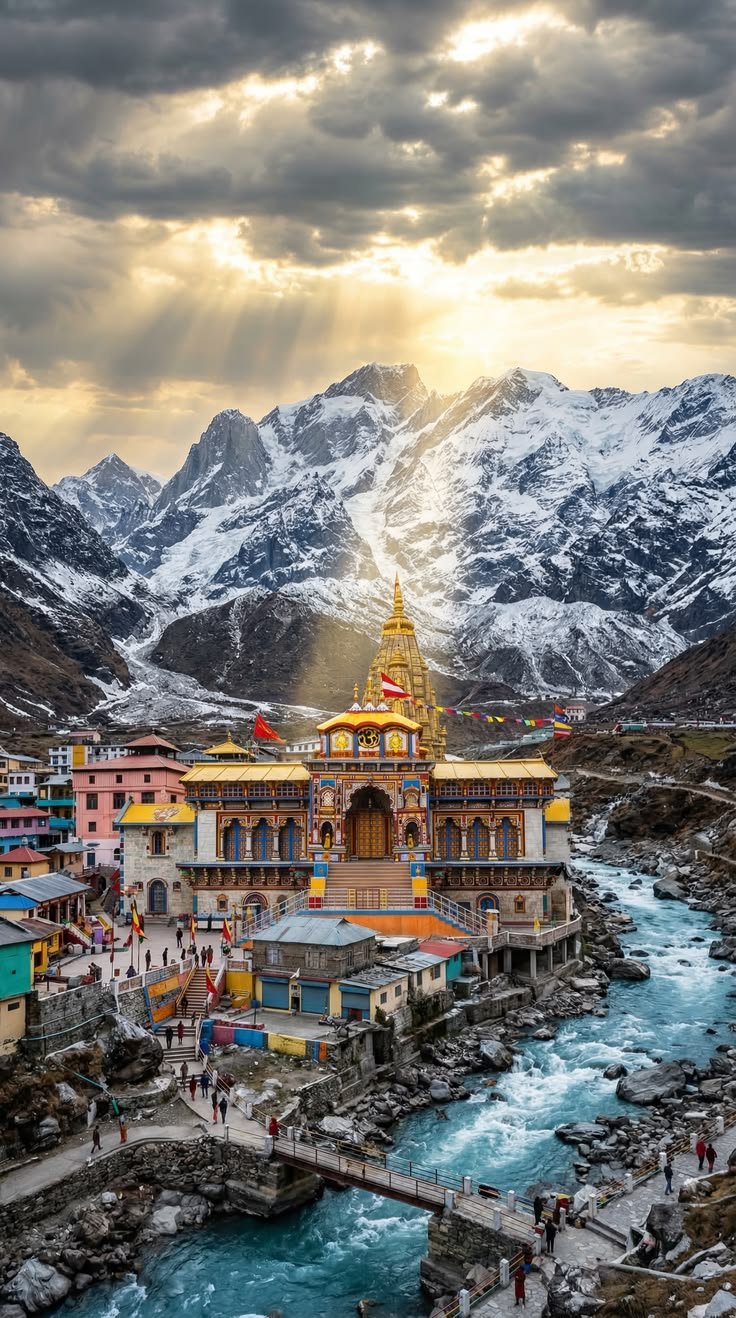
Nestled at an altitude of 3,133 meters in the Chamoli district of Uttarakhand, Badrinath is one of the most sacred pilgrimage destinations in India. As one of the four Char Dhams, this holy town attracts lakhs of devotees every year who come seeking the blessings of Lord Vishnu at the ancient Badrinath Temple.
Badrinath is more than just a spiritual destination. Surrounded by the majestic Nar and Narayana mountain ranges, with the Alaknanda River flowing alongside, it offers breathtaking natural beauty that leaves every traveller spellbound.
If you are planning your first trip to Badrinath, this comprehensive travel guide will help you prepare for an unforgettable journey.
How to Reach Badrinath
By Air: The nearest airport is Jolly Grant Airport in Dehradun, approximately 317 kilometres from Badrinath. From the airport, you can hire a taxi or take a shared cab to Badrinath. The drive takes around 10 to 12 hours through scenic mountain roads.
By Train: Rishikesh and Haridwar are the nearest railway stations. Rishikesh is about 297 kilometres away, while Haridwar is roughly 320 kilometres from Badrinath. Both stations are well-connected to major Indian cities like Delhi, Mumbai, and Kolkata.
By Road: Regular bus services run from Rishikesh, Haridwar, and Dehradun to Badrinath. You can also opt for private taxis or self-drive through the Rishikesh–Devprayag–Joshimath route. The road journey itself is a mesmerising experience, passing through beautiful valleys and river confluences.
By Helicopter: For those who want to skip the long road journey, helicopter services operate from Dehradun and Phata to Badrinath during the yatra season. This is especially popular among elderly pilgrims and families with limited time.
Best Time to Visit Badrinath
The Badrinath Temple opens its doors around late April or early May and closes in November, coinciding with the onset of winter. The best months to visit are May, June, September, and October. The monsoon months of July and August bring heavy rainfall and occasional landslides, making travel risky.
If you prefer pleasant weather and fewer crowds, plan your visit in September or October when the post-monsoon landscape is lush green and the skies are clear.
Must-Visit Places in and Around Badrinath
- Badrinath Temple: The centrepiece of your visit, dedicated to Lord Vishnu and believed to have been established by Adi Shankaracharya in the 8th century. Its colourful façade against the snow-clad peaks creates a stunning visual.
- Tapt Kund: A natural hot water spring located just below the temple where pilgrims take a holy dip before entering. The water remains warm throughout the year despite the freezing temperatures.
- Neelkanth Peak: Standing at 6,509 meters, this magnificent mountain is often called the "Queen of Garhwal" and provides a spectacular backdrop to the temple.
- Mana Village: Located just 3 kilometres away, this is the last Indian village before the Tibetan border. Visit Vyas Gufa, Ganesh Gufa, and Bhim Pul over the Saraswati River.
- Vasudhara Falls: Around 9 kilometres from Badrinath, this breathtaking 400-foot waterfall is reached via a scenic trek through beautiful meadows.
- Charan Paduka: Situated about 3 kilometres uphill from the temple, this sacred rock bears footprints believed to belong to Lord Vishnu and offers panoramic mountain views.
Where to Stay in Badrinath
Accommodation in Badrinath ranges from dharamshalas and guesthouses to comfortable hotels. During the peak pilgrimage season, rooms fill up quickly, so advance booking is highly recommended.
For travellers who value comfort, cleanliness, and a homely atmosphere, Mudras Stays offers curated local stays near major pilgrimage destinations. Staying with a local host gives you the warmth of Indian hospitality along with insider tips about the area.
Essential Tips for Your Badrinath Trip
- Carry warm clothing even during summer, as temperatures can drop significantly at night.
- Spend a night in Joshimath before travelling to Badrinath to help your body acclimatise to the high altitude.
- Keep your ID proof handy, as multiple checkpoints are present along the route.
- Carry basic medicines, sunscreen, and a first-aid kit.
- ATMs are limited, so carry sufficient cash.
- Start early for temple darshan to avoid long queues.
- Do not miss the evening aarti, which is a truly soul-stirring spiritual experience.
Frequently Asked Questions (FAQ)
Q: Is Badrinath open throughout the year?
A: No. Badrinath Temple opens around late April or early May and closes in November. The exact dates are announced according to the Hindu calendar.
Q: How many days are enough for a Badrinath trip?
A: Ideally, 2 to 3 days are enough to explore Badrinath along with nearby attractions such as Mana Village and Vasudhara Falls. If combined with the Char Dham Yatra, plan for 10 to 12 days.
Q: Is the road to Badrinath safe?
A: Yes, the road is generally well-maintained. However, landslides can occur during the monsoon, so it is advisable to check road conditions before travelling and avoid heavy rainfall.
Q: Can elderly people visit Badrinath?
A: Yes. Helicopter services and palki (palanquin) services are available for elderly pilgrims and travellers with mobility challenges.
Q: Do I need to register for the Badrinath Yatra?
A: Yes. Registration is mandatory and can be completed online through the official Uttarakhand Government Char Dham Yatra portal.