Triyuginarayan Aarti – Worship at the Sacred Wedding Place of Shiva and Parvati
The Triyuginarayan Aarti is a peaceful Himalayan worship ceremony performed at the ancient Triyuginarayan Temple in Uttarakhand’s Rudraprayag district. Dedicated primarily to Lord Vishnu, the temple is widely revered as the sacred location where Lord Shiva and Goddess Parvati were married in the presence of divine witnesses.
Unlike aarti ceremonies held in large city temples, worship at Triyuginarayan takes place in a quiet mountain village surrounded by forests, valleys and snow-covered Himalayan peaks. The ringing of bells, movement of the sacred lamp, chanting of mantras and glow of the Akhand Dhuni create an intimate and deeply spiritual atmosphere.
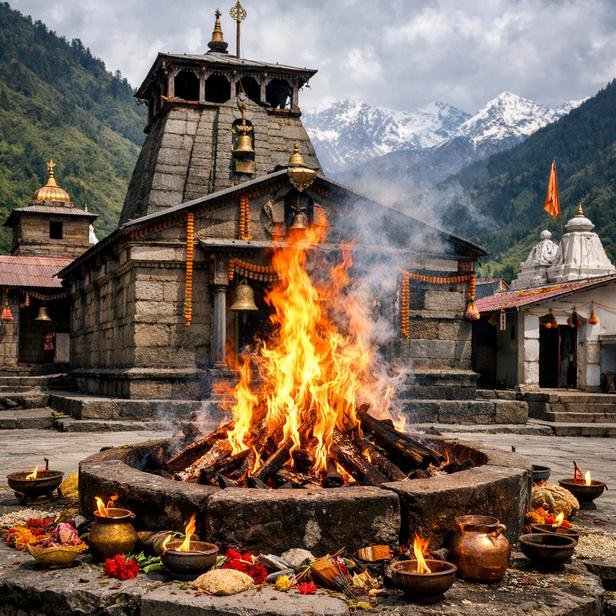
The eternal fire burning in the temple courtyard is believed to have been lit during the divine marriage of Shiva and Parvati. Devotees add sacrificial wood to the flame and respectfully receive a small quantity of its sacred ash as prasad. The Ministry of Tourism’s Incredible India portal describes the fire, Brahma Shila and sacred kunds as defining features of the temple. :contentReference[oaicite:1]{index=1}
The aarti is especially meaningful for married couples, people preparing for marriage and families praying for harmony. However, its spiritual message extends beyond relationships. Triyuginarayan worship represents commitment, patience, responsibility, devotion and the sacred nature of promises.
- The temple is connected with the marriage of Lord Shiva and Goddess Parvati.
- Lord Vishnu is worshipped as the principal deity of the shrine.
- The Akhand Dhuni burns continuously in front of the temple.
- Devotees pray for marital harmony, commitment and family stability.
- The temple courtyard contains sacred stones and holy water kunds.
- Morning and evening worship are conducted in a traditional Himalayan setting.
What Makes Triyuginarayan Aarti Special?
The greatest speciality of the Triyuginarayan Aarti is its close connection with the Akhand Dhuni. While most temple aartis centre entirely on the lamp offered inside the sanctum, worship here takes place alongside a sacred fire believed to have witnessed the divine wedding.
The aarti therefore carries the symbolism of both light and sacred commitment. The lamp offered before Lord Vishnu represents divine knowledge, while the eternal fire represents the continuity of love, duty and spiritual responsibility.
According to the traditional account associated with the temple, Lord Vishnu participated in the wedding arrangements, while Lord Brahma officiated at the ceremony. The sacred stone known as Brahma Shila, located near the fire, is believed to mark the place connected with the celestial marriage. These traditions remain central to the temple’s religious identity. :contentReference[oaicite:2]{index=2}
Important features of the aarti include:- Worship beside the continuously maintained Akhand Dhuni.
- Prayers for stable, respectful and harmonious relationships.
- Offerings made to Lord Vishnu, Shiva and Goddess Parvati.
- Traditional bells, lamps, incense and Sanskrit mantras.
- A quiet Himalayan environment suited to meditation.
- The presence of Brahma Shila near the sacred fire.
- Participation by pilgrims, families and newly married couples.
- Connection with the wider Kedarnath pilgrimage region.
Triyuginarayan Temple and Aarti Timings
Published schedules for Triyuginarayan Temple vary because local worship may begin before public visitor hours, while timings can also change according to weather, season and pilgrimage traffic.
The Government of India’s Incredible India portal currently lists public visiting hours from approximately 7:00 AM to 2:00 PM and again from 4:00 PM to 8:00 PM. :contentReference[oaicite:3]{index=3}
Other current pilgrimage guides report morning worship around 6:00 AM to 7:00 AM, followed by bhog around midday. Evening worship is generally conducted near sunset or during the later temple session. Since publicly available schedules do not agree on one fixed aarti time, visitors should confirm the day’s programme with the priest or local temple staff after reaching Triyuginarayan. :contentReference[oaicite:4]{index=4}
- Public morning darshan: Commonly listed from 7:00 AM to 2:00 PM.
- Morning worship: Often conducted around 6:00 AM to 7:00 AM.
- Midday bhog: Commonly performed around 12:00 PM to 1:00 PM.
- Afternoon interval: Public access may pause between the two sessions.
- Evening darshan: Commonly listed from 4:00 PM to 8:00 PM.
- Evening aarti: Usually performed during the evening session; confirm locally.
Snowfall, heavy rain, landslides, festivals and privately arranged marriage ceremonies may affect ordinary visitor movement. Reaching during daylight is advisable because the temple is located in a mountain village where weather and road conditions can change quickly.
Morning Aarti at Triyuginarayan Temple
The morning aarti begins the temple’s daily cycle of worship. The Himalayan surroundings are usually quiet, and the temple courtyard may be covered in soft sunlight, mist or cold mountain air depending on the season.
Priests prepare the shrine, offer incense and light the ceremonial lamp before Lord Vishnu. Mantras connected with Narayan, Shiva and Parvati may be recited while the temple bells announce the beginning of the day.
The morning ceremony is especially suitable for devotees who want to meditate beside the Akhand Dhuni without the larger flow of daytime visitors. Couples may sit quietly near the courtyard and pray for patience, understanding and mutual respect.
The morning aarti is recommended for:- Devotees seeking a quiet and meditative experience.
- Couples praying for a harmonious married life.
- Families travelling towards Kedarnath or Sonprayag.
- Visitors wishing to spend time beside the eternal fire.
- Pilgrims who prefer travelling on mountain roads during daylight.
- People performing a simple marriage-anniversary prayer.
Evening Aarti Beside the Akhand Dhuni
The evening aarti is performed as daylight begins to fade over the mountains. The temple’s stone structure, ringing bells and glowing sacred fire create an especially atmospheric setting.
During the ceremony, the priest offers an illuminated lamp before the deity while devotees stand with folded hands. Incense rises through the cold mountain air, and the light of the aarti merges visually with the flames of the Akhand Dhuni.
The evening ceremony encourages devotees to reflect on their relationships, responsibilities and conduct throughout the day. Couples often pray not only for happiness but also for the wisdom to remain patient during difficult situations.
- The setting becomes especially peaceful around sunset.
- The eternal fire appears brighter as natural light fades.
- Collective chanting creates a calm devotional atmosphere.
- The ceremony is meaningful for married and engaged couples.
- Visitors can offer gratitude before concluding their temple visit.
- Warm clothing is essential because temperatures fall quickly after sunset.
How the Triyuginarayan Aarti Is Performed
The exact ritual sequence may differ according to the priest, festival and number of devotees present. A regular ceremony generally includes preparation of the sanctum, invocation of the deities, offering of incense and movement of sacred lamps.
- The shrine of Lord Vishnu is prepared for worship.
- Flowers, tulsi, fruits or other accepted offerings are presented.
- Incense is offered before the deity.
- A ghee or oil lamp is lit by the priest.
- The lamp is moved ceremonially before Lord Narayan.
- Temple bells accompany the recitation of mantras.
- Shiva and Parvati may also be remembered in the prayers.
- Devotees join their hands and focus on the sacred flame.
- The blessing of the aarti is shared with those present.
- Prasad may be distributed according to temple arrangements.
The Akhand Dhuni – Eternal Fire of Divine Marriage
The Akhand Dhuni is the most recognisable spiritual feature of Triyuginarayan Temple. It burns inside a havan kund in front of the temple and is traditionally connected with the wedding of Shiva and Parvati.
Pilgrims respectfully place samidha, or sacrificial wood, into the fire. Some devotees receive a small quantity of ash, believing it carries blessings connected with marital harmony and the sacred union of the divine couple. Incredible India identifies the fire and its ash tradition as key elements of pilgrimage at the temple. :contentReference[oaicite:5]{index=5}
The Akhand Dhuni should not be treated as a decorative attraction. Visitors must follow the priest’s instructions, avoid touching the fire pit and never place plastic, packaging, oil containers or unauthorised materials into the flames.
Devotional meaning of the eternal fire:- Continuity of love through changing circumstances.
- Purification of ego, anger and misunderstanding.
- Witness to promises and sacred responsibilities.
- Commitment maintained through patience and effort.
- Divine light that remains present across generations.
- Transformation of individual desire into shared responsibility.
Brahma Shila and Its Connection with the Aarti
Brahma Shila is a sacred stone situated near the Akhand Dhuni. Temple tradition associates it with the place where the divine wedding ceremony was solemnised.
Devotees offer prayers near the stone before or after attending the aarti. Married couples may seek blessings for trust and stability, while unmarried devotees may pray for a respectful and compatible life partner.
Visitors should not sit, stand or place footwear on the sacred stone. Any circumambulation or offering should be performed according to the instructions given by temple priests.
The Sacred Kunds of Triyuginarayan
The temple complex is associated with sacred water bodies traditionally known as Brahma Kund, Vishnu Kund, Rudra Kund and Saraswati Kund. Incredible India states that a stream arising within the temple courtyard feeds sacred bathing ponds connected with the pilgrimage site. :contentReference[oaicite:6]{index=6}
Different traditions associate the kunds with purification, blessings, strength and spiritual knowledge. Devotees may respectfully touch or sprinkle the water according to local practice.
- Brahma Kund: Associated with blessings and the wedding tradition.
- Vishnu Kund: Connected with Lord Narayan and purification.
- Rudra Kund: Associated with Lord Shiva and inner strength.
- Saraswati Kund: Connected with knowledge and spiritual clarity.
Visitors should avoid using soap, shampoo or chemical products near the kunds. The water sources form part of a sensitive mountain environment and must be protected from litter and contamination.
Benefits Associated with Triyuginarayan Aarti
Devotees attend the aarti with prayers connected with relationships, family life and emotional stability. The deeper benefit of the ceremony lies in reflecting on the values represented by Shiva and Parvati’s sacred union.
- Marital harmony: Couples pray for understanding and mutual respect.
- Commitment: The eternal flame symbolises promises maintained over time.
- Patience: Devotees seek strength to handle relationship difficulties calmly.
- Family stability: Parents pray for peace and cooperation within the household.
- Emotional healing: The peaceful surroundings support personal reflection.
- Responsible partnership: Worship encourages both individuals to share duties.
- Spiritual companionship: Couples are reminded to grow together in faith and character.
- Hope for marriage: Unmarried devotees may pray for a suitable and respectful partner.
- Protection: Families seek divine guidance during uncertain periods.
- Gratitude: The aarti allows couples to appreciate their shared journey.
These benefits belong to personal faith and devotional practice. The ceremony should not be understood as a guaranteed solution to relationship, medical, financial or legal problems.
Why Couples Visit Triyuginarayan Temple
Triyuginarayan has become well known among couples because of its association with the divine marriage of Shiva and Parvati. Some visit before marriage, some solemnise a simple wedding near the temple and others return after marriage to offer gratitude.
The temple’s spiritual meaning does not promote grand display. Its central message is that a successful marriage depends on responsibility, endurance, mutual respect and the willingness to support one another.
Couples commonly visit for:- Prayers before marriage.
- Simple traditional wedding ceremonies.
- Marriage-anniversary worship.
- Blessings during a difficult phase in the relationship.
- Gratitude after overcoming a family challenge.
- Prayers for children and household stability.
Offerings for Triyuginarayan Aarti
Offerings should remain simple and must follow the instructions of the temple priest. Devotion and respectful conduct are more important than carrying a large quantity of ritual material.
- Fresh flowers and garlands.
- Tulsi leaves for Lord Vishnu, where accepted.
- Fruits or traditional sweets.
- Rice and other grains.
- Ghee for authorised temple worship.
- Samidha for the Akhand Dhuni, when permitted.
- Cloth or ceremonial items accepted by the temple.
- Voluntary donations through authorised arrangements.
- Prayer for family harmony and responsible conduct.
Do not place packaged food, synthetic cloth, plastic, chemicals or random materials in the sacred fire. Confirm the correct offering procedure before approaching the havan kund.
Marriage Ceremonies at Triyuginarayan
The temple is increasingly chosen for Hindu marriage ceremonies because of its religious association and Himalayan setting. Incredible India describes Triyuginarayan as an emerging spiritual wedding destination for couples seeking blessings in a sacred environment. :contentReference[oaicite:7]{index=7}
Couples planning a marriage at the temple must coordinate with the local priest, administration and service providers well in advance. A temple wedding should remain respectful, limited in scale and sensitive to the needs of ordinary pilgrims.
- Confirm the marriage date with the local priest.
- Check local registration and documentation requirements.
- Keep decoration simple and environmentally responsible.
- Avoid blocking public darshan routes.
- Do not use loud music near the sanctum.
- Arrange waste collection after the ceremony.
- Respect restrictions on fire, photography and drones.
- Prepare for cold weather and limited local infrastructure.
Best Time to Attend Triyuginarayan Aarti
- April to June: Pleasant weather and generally clearer mountain access.
- September to November: Clear views, reduced rainfall and comparatively peaceful conditions.
- July and August: Heavy rain can affect roads and increase landslide risk.
- December to March: Snowfall may make roads difficult or temporarily inaccessible.
- Morning: Best for quiet worship and safer daylight travel.
- Evening: Best for viewing the illuminated temple and Akhand Dhuni.
A current regional guide recommends April to June and September to November as practical visiting periods, while warning that winter snow and monsoon landslides can affect access. :contentReference[oaicite:8]{index=8}
How to Reach Triyuginarayan Temple
Triyuginarayan is situated in Rudraprayag district near the Kedarnath pilgrimage route. The village is reached by mountain road from Sonprayag, Guptkashi and surrounding areas.
- Nearest major pilgrimage point: Sonprayag.
- From Sonprayag: Local taxis generally operate towards Triyuginarayan when road conditions permit.
- Nearest railway access: Rishikesh, followed by a long road journey.
- Nearest major airport: Jolly Grant Airport near Dehradun.
- From Haridwar or Rishikesh: Travel through Devprayag, Srinagar, Rudraprayag and Guptkashi.
Distances published online vary according to the route and starting point. Travellers should confirm current road conditions locally, especially during monsoon and winter.
Temple Etiquette During Aarti
- Wear clean, modest and weather-appropriate clothing.
- Remove footwear at the designated location.
- Maintain silence during prayers and mantras.
- Do not touch the deity, fire pit or ritual objects without permission.
- Keep children safely away from the Akhand Dhuni.
- Do not place unauthorised material in the fire.
- Ask before taking photographs inside the sanctum.
- Avoid loud celebrations that disturb other pilgrims.
- Use only designated areas for marriage photography.
- Carry all plastic and waste back from the temple area.
- Respect local residents and village customs.
- Follow instructions given by priests and temple personnel.
Important Details for Visitors
- Carry warm layers even during summer.
- Keep rain protection during the pilgrimage season.
- Carry some cash because network connectivity can be unreliable.
- Bring essential medicines and drinking water.
- Do not depend entirely on late-evening transport.
- Reach before sunset unless overnight accommodation is confirmed.
- Check road conditions before leaving Sonprayag or Guptkashi.
- Allow at least one to two hours for worship and exploration.
- Walk slowly if you are not accustomed to mountain altitude.
Frequently Asked Questions
1. Why is Triyuginarayan Aarti famous?
The aarti is famous because it is performed beside the Akhand Dhuni, the sacred fire traditionally connected with the marriage of Lord Shiva and Goddess Parvati. Its quiet Himalayan surroundings and relationship-focused prayers make it different from larger temple ceremonies.
2. Which deity is worshipped at Triyuginarayan Temple?
The principal deity is Lord Vishnu, also worshipped as Narayan. The temple is also strongly connected with Lord Shiva, Goddess Parvati and Lord Brahma through the traditional account of the divine wedding.
3. What are the temple timings?
The Incredible India portal lists public hours from approximately 7:00 AM to 2:00 PM and 4:00 PM to 8:00 PM. Local worship can begin earlier, and timings may change according to weather, season and ceremonies. :contentReference[oaicite:9]{index=9}
4. What time is the morning aarti?
Several regional guides place morning worship around 6:00 AM to 7:00 AM. Publicly available sources differ, so devotees should confirm the exact ceremony time with temple staff after arrival.
5. What time is the evening aarti?
Evening aarti is generally performed during the later darshan session, close to sunset or the temple’s evening worship period. The exact time can vary with season and local arrangements.
6. Can devotees take ash from the Akhand Dhuni?
Devotees traditionally receive a small quantity of sacred ash as a blessing. It should be taken only with the priest’s permission and handled respectfully. Visitors must never reach into the fire or remove ritual material independently.
7. What should couples pray for during the aarti?
Couples commonly pray for mutual respect, patience, trust, family stability and the strength to fulfil their responsibilities. Unmarried devotees may pray for a compatible and respectful life partner.
8. Can marriages be performed at Triyuginarayan Temple?
Traditional Hindu marriage ceremonies are arranged at the temple. Couples must coordinate with local priests and check administrative, documentation, accommodation and environmental requirements before fixing a date.
9. Is there an entry fee?
General temple darshan is ordinarily available without an entry fee. Offerings, priest-led ceremonies, marriage rituals and other arranged services may involve separate charges.
10. Is the temple open throughout the year?
The temple is generally regarded as a year-round shrine, but heavy snowfall, rain, landslides and road conditions can temporarily affect access. Travellers should check local advisories before beginning the journey.
11. What should be offered in the Akhand Dhuni?
Only authorised ritual materials such as samidha or ghee should be offered under the guidance of a priest. Plastic, food packaging, synthetic material and random objects must never be placed in the fire.
12. How much time is required for a visit?
Visitors should plan approximately one to two hours for darshan, aarti, prayer beside the Akhand Dhuni and a respectful visit to the sacred kunds. More time may be required during weddings, festivals or heavy pilgrimage periods.