
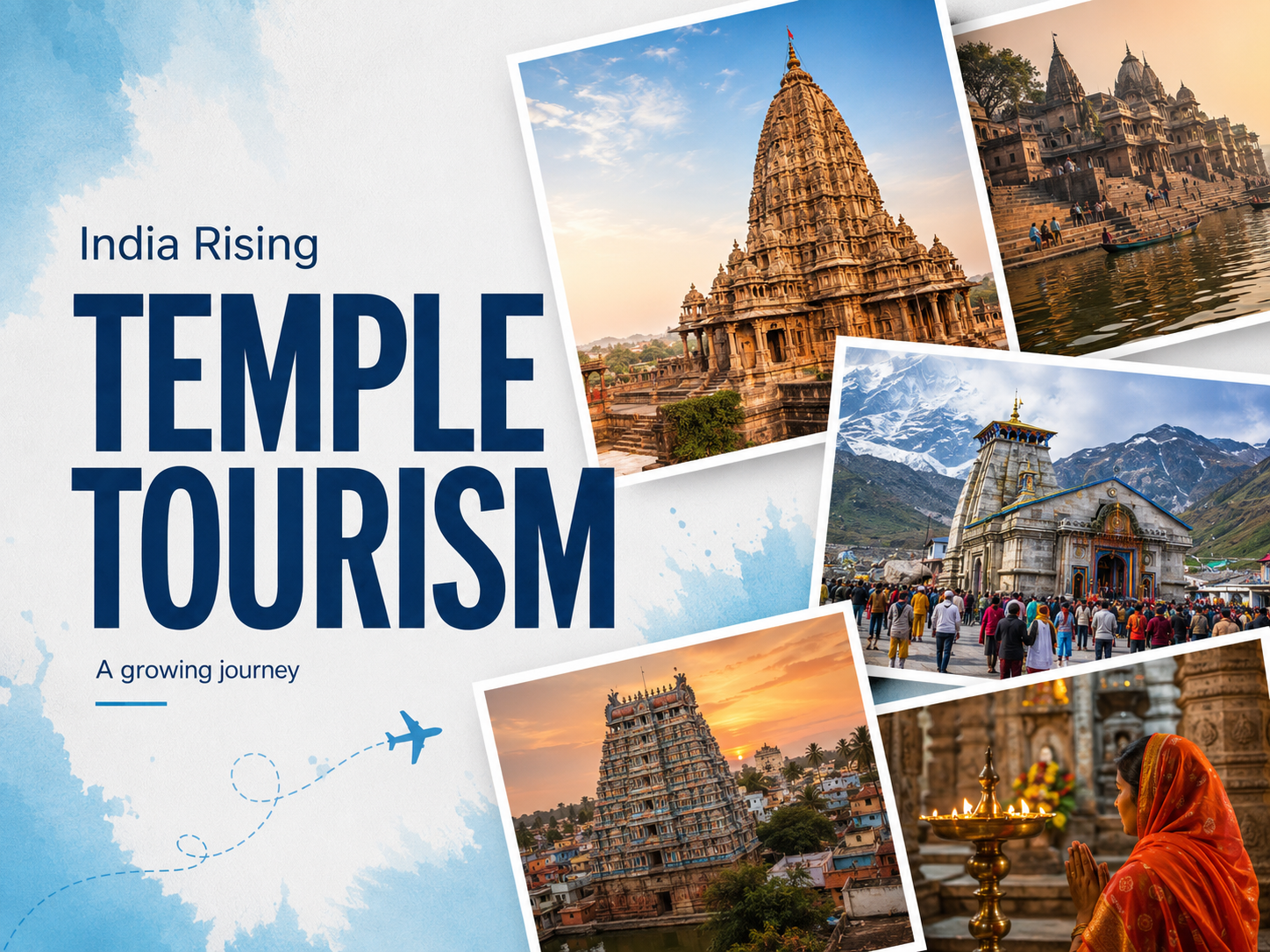
Temple tourism has become one of the most important segments of India's domestic travel market. Every year, millions of people travel across the country to visit temples, participate in religious festivals, complete pilgrimage circuits, and spend time at sacred destinations. What was once viewed primarily as traditional religious travel is now evolving into a much broader tourism ecosystem involving accommodation, transportation, food, local experiences, digital booking, and destination services.
India's spiritual geography is exceptionally diverse. Devotees travel to Himalayan shrines such as Kedarnath and Badrinath, coastal pilgrimage centers such as Rameswaram and Dwarka, major urban temples such as Kashi Vishwanath and Mahakaleshwar, and iconic destinations such as Tirupati, Jagannath Puri, Vaishno Devi, Somnath, Ayodhya, and countless regional temples.
This growing movement of travelers is creating new opportunities for hotels, guest houses, homestays, transport providers, food businesses, local guides, and digital travel platforms. At the same time, pilgrims are becoming more demanding about comfort, convenience, cleanliness, verified accommodation, and online booking.
Understanding the temple tourism industry therefore requires looking beyond religion alone. It is a travel category shaped by infrastructure, demographics, family behavior, technology, affordability, destination development, and changing traveler expectations.
What is Temple Tourism?
Temple tourism refers to travel motivated primarily by visits to temples, sacred sites, religious festivals, pilgrimage circuits, and spiritual destinations.
For some travelers, the purpose is purely devotional. Others combine pilgrimage with family vacations, cultural exploration, heritage tourism, local cuisine, shopping, and nearby sightseeing.
Temple tourism can include:
- Single-temple visits.
- Multi-day pilgrimages.
- Festival travel.
- Multi-temple circuits.
- Jyotirlinga journeys.
- Shakti Peetha visits.
- Char Dham pilgrimage.
- Regional spiritual tours.
- Family religious vacations.
This diversity makes temple tourism significantly larger and more complex than a simple visit to a place of worship.
Why Temple Tourism is Growing Across India
Several factors are contributing to the rapid growth of spiritual travel.
Improved road connectivity, airport development, better railway access, digital booking, new hotels, destination redevelopment, and increased awareness through social media have made many sacred destinations easier to visit than they were in the past.
At the same time, Indian families continue to place strong cultural importance on pilgrimage. This creates sustained demand throughout the year rather than only during holiday periods.
Improved Infrastructure is Making Pilgrimages Easier
One of the biggest drivers of temple tourism is better infrastructure.
Many pilgrimage destinations have benefited from:
- Improved highways.
- Better railway connectivity.
- Expanded airports.
- Temple corridor development.
- Improved public spaces.
- Better local transportation.
As accessibility improves, travelers who previously considered certain pilgrimage routes difficult are increasingly willing to undertake these journeys.
Family Travel is Driving Demand
Temple tourism is often multi-generational.
Unlike many leisure trips where travelers may travel alone or as couples, pilgrimages frequently include:
- Grandparents.
- Parents.
- Children.
- Extended family members.
- Religious groups.
This has created stronger demand for larger rooms, family-friendly accommodation, accessible hotels, nearby food options, and properties located close to temples.
Senior Citizens are an Important Traveler Segment
Many senior citizens consider pilgrimage an important life goal. As transportation and accommodation improve, more elderly travelers are able to visit destinations that were previously physically difficult to access.
Their requirements are different from younger travelers.
They often prioritize:
- Hotels near the temple.
- Minimal walking.
- Lift access.
- Comfortable beds.
- Reliable transportation.
- Nearby medical facilities.
Hotels and travel platforms that understand these needs are better positioned to serve the growing pilgrimage market.
Temple Festivals Create Major Tourism Peaks
Religious festivals create some of the largest tourism movements in India.
Events such as:
- Maha Shivaratri.
- Navratri.
- Rath Yatra.
- Brahmotsavam.
- Janmashtami.
- Kumbh Mela.
- Ram Navami.
- Kartik Purnima.
can dramatically increase accommodation demand around major pilgrimage destinations.
During these periods, hotels close to temples are often booked weeks or months in advance, creating strong seasonal demand for local hospitality businesses.
Accommodation Has Become a Core Part of Temple Tourism
For modern pilgrims, accommodation is no longer treated as an afterthought.
Travelers increasingly compare:
- Distance from the temple.
- Room cleanliness.
- Family suitability.
- Senior citizen accessibility.
- Guest reviews.
- Food availability.
- Parking.
- Pricing.
This shift is creating demand for better-quality hotels across pilgrimage towns.
Travelers Want Hotels Close to Temples
Location is particularly important in religious tourism.
A hotel located close to the temple allows devotees to:
- Attend early morning darshan.
- Return easily after evening aarti.
- Reduce transportation costs.
- Minimize walking.
- Take rest breaks during the day.
As a result, properties located near temple premises often enjoy stronger demand than hotels located farther away.
Digital Booking is Changing Pilgrimage Travel
The rise of online travel has changed how pilgrims plan their journeys.
Travelers can now:
- Research destinations online.
- Compare hotels.
- Read guest reviews.
- Check location.
- Book accommodation before travelling.
- Plan multi-destination itineraries.
This reduces uncertainty and makes pilgrimage travel more organized.
Why Specialized Temple Travel Platforms are Emerging
General hotel booking platforms serve every type of traveler, from business guests to beach tourists. Pilgrims, however, have more specialized requirements.
A platform focused specifically on temple tourism can prioritize:
- Temple proximity.
- Pilgrimage-friendly accommodation.
- Family travel.
- Senior citizen accessibility.
- Destination information.
- Spiritual travel support.
Mudras Stays follows this specialized approach by focusing on accommodation and travel around important temple destinations.
Temple Tourism Supports Local Economies
Pilgrimage tourism creates economic activity far beyond hotels.
Visitors spend money on:
- Accommodation.
- Local transport.
- Restaurants.
- Temple offerings.
- Souvenirs.
- Handicrafts.
- Local guides.
- Shopping.
This spending supports thousands of small businesses and creates employment opportunities in pilgrimage towns.
Independent Hotels Benefit from Religious Tourism
Temple destinations often have a large number of independently operated hotels, guest houses, and homestays.
These properties can benefit significantly from the growth of temple tourism, especially when they improve:
- Online visibility.
- Room quality.
- Guest service.
- Digital booking.
- Cleanliness.
- Pricing transparency.
Specialized platforms can help these properties reach travelers specifically searching for temple accommodation.
Temple Tourism is Becoming More Organized
Historically, many pilgrimages were planned through personal references or direct hotel calls. Today, travelers increasingly expect organized booking and clear information before travelling.
They want to know:
- Where they will stay.
- How far the hotel is from the temple.
- What facilities are available.
- What the total cost will be.
- Whether the property suits their family.
This shift is encouraging the temple hospitality market to become more professional and transparent.
Affordability Remains Important
Pilgrimage travel attracts people from every economic background.
The market therefore requires accommodation across multiple price segments:
- Budget hotels.
- Guest houses.
- Homestays.
- Mid-range hotels.
- Premium properties.
- Luxury resorts.
The strongest destinations are those that offer suitable options for every type of devotee.
Comfort is Becoming More Important to Pilgrims
Modern pilgrims increasingly expect comfortable accommodation, reliable transportation, clean facilities, and organized travel experiences.
This does not mean that spiritual journeys are becoming luxury vacations. Instead, travelers want to reduce unnecessary difficulties so they can concentrate on the purpose of their pilgrimage.
Temple Tourism is Creating New Travel Circuits
Travelers are increasingly combining multiple spiritual destinations into a single journey.
Examples include:
- Char Dham circuits.
- Jyotirlinga circuits.
- Shakti Peetha circuits.
- South India temple tours.
- Krishna pilgrimage routes.
- Ramayana-related destinations.
These multi-destination journeys create demand for accommodation across several temple towns rather than a single location.
Local Experiences are Becoming Part of Temple Tourism
Pilgrims increasingly combine temple visits with nearby experiences.
These may include:
- Local markets.
- Sacred ghats.
- Heritage sites.
- Traditional food.
- Local handicrafts.
- Nearby spiritual attractions.
This expands the economic impact of religious tourism and encourages travelers to stay longer at each destination.
Better Information is Improving Traveler Confidence
Digital destination guides, hotel information, maps, travel tips, and reviews are making it easier for first-time pilgrims to plan journeys independently.
Travelers no longer need to rely completely on informal recommendations. They can compare options and make informed decisions before leaving home.
Why Mudras Stays Fits the Growing Temple Tourism Market
As temple tourism grows, travelers increasingly need a booking platform that understands pilgrimage-specific requirements rather than treating temple travel like ordinary tourism.
Mudras Stays focuses specifically on accommodation around India's spiritual destinations and helps pilgrims discover properties that are relevant to their journey.
The platform can help travelers explore:
- Hotels near temples.
- Budget and premium accommodation.
- Family-friendly properties.
- Senior citizen-friendly stays.
- Destination-focused accommodation.
- Pilgrimage travel information.
- Multi-temple travel options.
- Local spiritual destinations.
This specialized approach reflects the broader evolution of India's temple tourism industry toward more organized, digital, and traveler-focused services.
Frequently Asked Questions
What is temple tourism?
Temple tourism refers to travel centered around visiting temples, sacred destinations, pilgrimage circuits, religious festivals, and other spiritual attractions.
Why is temple tourism growing in India?
Improved infrastructure, easier transportation, online booking, better accommodation, increasing family travel, and continued cultural importance are all contributing to its growth.
Who are the main travelers in the temple tourism market?
Families, senior citizens, solo devotees, religious groups, domestic tourists, and travelers interested in spiritual and cultural experiences all form important segments.
How important are hotels to temple tourism?
Accommodation is a major part of the pilgrimage experience because location, comfort, cleanliness, and accessibility directly affect how easily devotees can visit temples.
Why do pilgrims prefer hotels close to temples?
Nearby hotels reduce travel time, transportation expenses, and walking while making early morning darshan and evening rituals more convenient.
How is technology changing religious tourism?
Digital booking, online reviews, maps, destination guides, and travel information allow pilgrims to research and organize their journeys before leaving home.
How does temple tourism help local communities?
Pilgrims spend on hotels, transport, food, shopping, offerings, guides, and local services, creating employment and supporting businesses throughout pilgrimage towns.
What role does Mudras Stays play in temple tourism?
Mudras Stays focuses on accommodation and travel around temple destinations, helping devotees find stays that are more relevant to pilgrimage requirements than general city hotel searches.
Is temple tourism only about religion?
No. Many travelers combine pilgrimage with cultural tourism, heritage exploration, traditional food, local markets, family vacations, and nearby sightseeing.
What is the future of temple tourism in India?
The sector is likely to become more organized, digitally connected, accommodation-focused, and traveler-friendly as infrastructure and pilgrimage services continue to improve.