Uttara Swami Malai Temple, R.K. Puram – Delhi’s Hilltop Shrine of Lord Murugan
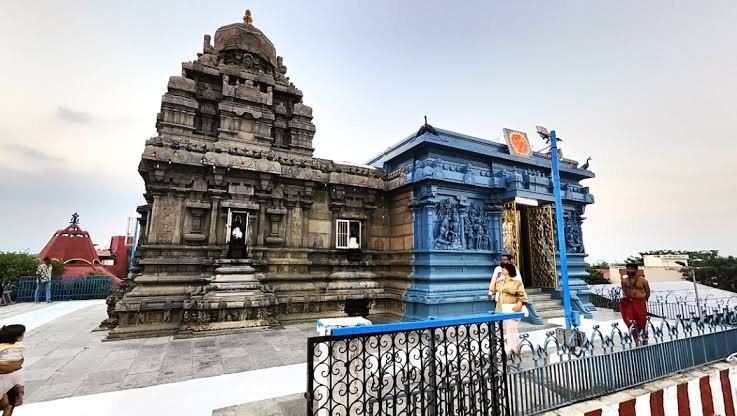
Uttara Swami Malai Temple, popularly known as **Malai Mandir**, is one of Delhi’s most prominent South Indian Hindu temples. Situated on a small rocky hill in Sector 7 of R.K. Puram, the temple is primarily dedicated to **Lord Swaminatha Swami**, a revered form of Lord Murugan, Kartikeya or Subrahmanya.
The temple’s elevated location, granite construction, Tamil-style rituals and traditional architecture create an atmosphere strongly reminiscent of the historic Murugan temples of Tamil Nadu. It has become an important spiritual centre for Tamil, Telugu, Kannada, Malayalam-speaking and other Hindu communities living in Delhi and the National Capital Region.
The formal name **Uttara Swami Malai** may be understood as “the northern hill of Swaminatha.” The popular name Malai Mandir comes from the Tamil word *malai*, meaning hill. Its location on a natural hillock follows the ancient South Indian tradition of building Murugan temples on elevated terrain.
Lord Murugan is closely associated with hills in Tamil devotional culture. Several of his most sacred temples in Tamil Nadu—including Palani, Tiruttani and Swamimalai—are situated on or near hills. The R.K. Puram temple brings that religious and architectural tradition to northern India.
Visitors climb towards the main shrine and are rewarded with a peaceful temple environment that feels removed from the surrounding movement of Delhi. Devotees visit for daily darshan, abhishekam, archana, family prayers and major Murugan festivals such as Skanda Shashti and Thaipusam.
Travellers looking for hotels near Uttara Swami Malai Temple, family accommodation in R.K. Puram or convenient stays for a South Delhi temple pilgrimage can explore suitable options through **MudrasStays**.
## Who Is Lord Swaminatha Swami?
Lord Swaminatha Swami is a form of Lord Murugan, the son of Lord Shiva and Goddess Parvati and the younger brother of Lord Ganesha.
Murugan is known by several sacred names, including:
* Kartikeya
* Subrahmanya
* Skanda
* Shanmukha
* Saravana
* Kumara
* Guha
* Velan
* Swaminatha
* Dandapani
* Devasenapati
Each name expresses a different aspect of the deity.
As Kartikeya, he is the divine warrior and commander of the celestial forces. As Shanmukha, he is represented with six faces. As Subrahmanya, he is the source of sacred wisdom. As Swaminatha, he becomes the teacher of even Lord Shiva.
Devotees worship Lord Murugan for:
* Courage and fearlessness
* Victory over obstacles
* Wisdom and clarity
* Educational progress
* Protection from negative forces
* Discipline and self-control
* Success in professional life
* Family welfare
* Marriage and children
* Spiritual knowledge
* Relief from confusion and fear
The spear or **Vel** carried by Lord Murugan represents divine knowledge capable of destroying ignorance. His peacock vehicle symbolises the control of pride, vanity and uncontrolled desire.
## The Sacred Meaning of Swaminatha
The name **Swaminatha** means “the teacher of the Lord” or “the guru of Swami.”
The title comes from an important tradition associated with Swamimalai in Tamil Nadu.
According to the sacred narrative, Lord Murugan once asked Brahma to explain the meaning of the Pranava mantra, “Om.” When Brahma was unable to provide a satisfactory explanation, Murugan questioned his fitness to perform the work of creation.
Lord Shiva then asked Murugan whether he himself understood the meaning of Om. Murugan replied that he did, but sacred knowledge should be transmitted properly from a guru to a disciple.
Lord Shiva accepted the position of a student. Murugan sat at an elevated place and whispered the meaning of the Pranava into Shiva’s ear.
Because the son became the teacher and Shiva became the disciple, Murugan received the name **Swaminatha Swami**.
The episode expresses an important spiritual principle: divine wisdom is not limited by age, social position or family relationship. A true seeker must receive knowledge with humility, even when the teacher appears younger.
Uttara Swami Malai Temple is dedicated specifically to this wise and compassionate form of Murugan.
## History of Uttara Swami Malai Temple
Unlike many temples connected with ancient legends, Uttara Swami Malai Temple has a clearly documented modern history.
Its development began during the 1960s, when Delhi’s growing South Indian community felt the need for a major temple dedicated to Lord Murugan.
The temple was developed through the efforts of the **Sri Swaminatha Swami Seva Samaj**, a religious and community organisation formed to establish and administer the shrine.
The chosen site was a rocky hillock in R.K. Puram. The location was considered particularly suitable because Murugan is traditionally worshipped on hills.
### Foundation Stone in 1965
The foundation stone of the temple was laid on **8 September 1965** by M. Bhakthavatsalam, who was then the Chief Minister of Tamil Nadu.
The ceremony was held under the presidency of **Lal Bahadur Shastri**, then Prime Minister of India.
This event reflected the temple’s significance not merely as a neighbourhood shrine but as an important cultural bridge between southern India and the national capital.
Construction required the transportation and placement of large quantities of granite, as the temple was intended to follow the architectural language of traditional Tamil temples rather than an ordinary modern concrete structure.
### Consecration of the Main Temple in 1973
The main shrine dedicated to Lord Swaminatha Swami was completed and ceremonially consecrated on **7 June 1973**.
The consecration was performed through a **Mahakumbhabhishekam**, the elaborate Vedic and Agamic ceremony through which a newly constructed or restored temple is ritually energised.
During Kumbhabhishekam:
* Sacred fires are established.
* Vedic and Agamic mantras are recited.
* Consecrated water is stored in ceremonial vessels.
* Rituals are performed over several days.
* Sacred water is poured over the temple tower and deities.
* The spiritual presence of the deity is formally invoked.
The 1973 consecration marked the formal beginning of worship at the principal Swaminatha Swami shrine.
### Expansion of the Temple Complex in 1990
The complex was subsequently expanded to include separate shrines dedicated to the divine family of Lord Murugan.
On **13 June 1990**, temples dedicated to the following deities were consecrated:
* Sree Karpaga Vinayagar
* Sree Sundareswarar
* Devi Meenakshi
A Jeernoddharana Kumbhabhishekam, or restoration consecration, was also performed for the main Swaminatha Swami Temple on the same occasion.
These additional shrines transformed Malai Mandir from a single-deity temple into a complete Shaiva and Shakta pilgrimage complex.
### Navagraha and Idumban Shrines
On **7 July 1995**, the Navagraha shrine and a smaller shrine dedicated to Idumban Swami were consecrated.
The Navagrahas are the nine planetary deities traditionally worshipped within Hindu temple practice:
* Surya
* Chandra
* Mangala
* Budha
* Brihaspati
* Shukra
* Shani
* Rahu
* Ketu
Devotees pray at the Navagraha shrine for balance, protection and relief from difficult planetary influences.
Idumban holds a special place in Murugan worship, particularly in relation to kavadi traditions and the sacred history of Palani. His presence within the temple reinforces the connection between Uttara Swami Malai and the larger Tamil Murugan pilgrimage tradition.
### Adi Sankara Hall
The **Adi Sankara Hall** was inaugurated on **9 November 1997**.
The hall provides space for religious discourses, devotional programmes, music, cultural events and community gatherings. It reflects the temple’s wider role as a centre of spiritual education and South Indian cultural life in Delhi.
### Major Kumbhabhishekam in 2001
A further major restoration and consecration was held on **27 June 2001**.
The ceremonies included Punaruddharana, Ashtabandhana and Swarna-Rajatha Bandhana Mahakumbhabhishekam rituals for the temple shrines.
The consecration was performed in the presence of senior spiritual leaders associated with the Kanchi Kamakoti Peetham, including Sri Jayendra Saraswati and Sri Vijayendra Saraswati.
Subsequent repairs, devotional activities and periodic ritual renewals have allowed the complex to remain an active and carefully maintained place of worship.
## Architecture of Malai Mandir
Uttara Swami Malai Temple is especially admired for bringing the visual language of Tamil temple architecture to Delhi.
The complex combines features inspired by the **Chola and Pandya architectural traditions**.
### Granite Construction
The main Swaminatha shrine is built primarily from granite. The use of granite gives the building a strong, monumental appearance and recalls the great stone temples of Tamil Nadu.
Visitors may observe:
* Massive stone blocks
* Precisely fitted architectural sections
* Sculpted pillars
* Traditional mouldings
* A compact sanctum
* Stone stairways
* Decorative towers
* Carefully proportioned walls
* Religious carvings and motifs
The material also distinguishes the temple from many modern urban shrines constructed mainly from concrete and marble.
### Hilltop Setting
The temple stands on a small natural hillock overlooking parts of R.K. Puram and Vasant Vihar.
The climb towards the sanctum is spiritually meaningful. In Hindu pilgrimage traditions, ascending a hill can symbolise leaving behind ordinary concerns and moving towards higher knowledge.
The hilltop setting is also appropriate to Lord Murugan, whose worship is deeply connected with mountains and elevated sacred landscapes.
Visitors with mobility limitations should check the latest arrangements for senior citizens and accessible entry before travelling, as portions of the visit may involve steps or inclined paths.
### Chola-Inspired Main Shrine
The principal Swaminatha Swami Temple is influenced by the architectural vocabulary associated with the Chola period.
The Cholas were major patrons of Tamil temple architecture and developed monumental stone shrines characterised by:
* Strong geometric planning
* Granite construction
* Sculpted architectural elements
* Carefully defined sanctums
* Rhythmic wall projections
* Elaborate ritual organisation
The Delhi temple does not claim to be an ancient Chola monument. Rather, it is a twentieth-century structure intentionally inspired by that tradition.
### Pandya-Inspired Subsidiary Shrines
The shrines dedicated to Meenakshi, Sundareswarar and Karpaga Vinayagar are commonly described as drawing inspiration from the Pandya tradition, particularly the sacred architecture associated with Madurai.
Their presence recalls the divine family worshipped at the famous Meenakshi-Sundareswarar Temple.
This architectural combination makes Malai Mandir both a Murugan shrine and a compact representation of Tamil Shaiva temple culture.
## Principal Deities in the Temple Complex
### Lord Swaminatha Swami
The presiding deity is Lord Swaminatha Swami. Devotees seek his blessings for wisdom, confidence, education, courage and spiritual progress.
### Sree Karpaga Vinayagar
Lord Ganesha is worshipped here as Karpaga Vinayagar, the remover of obstacles and giver of auspicious beginnings.
Devotees traditionally worship Ganesha before proceeding to the main Murugan shrine.
### Sree Sundareswarar
Sundareswarar is a form of Lord Shiva, the father of Lord Murugan. The name means “the beautiful Lord.”
The shrine connects the complex with the Shaiva tradition of Madurai.
### Devi Meenakshi
Goddess Meenakshi is worshipped as a form of Parvati and the divine mother of Murugan.
Devotees pray for family welfare, marriage, courage, prosperity and protection.
### Navagraha
The nine planetary deities are worshipped for harmony and relief from difficult astrological influences.
### Idumban Swami
Idumban is an important devotee and guardian figure in Murugan tradition. He is particularly associated with the kavadi pilgrimage custom.
## The Story of Idumban and the Kavadi
According to Tamil religious tradition, Sage Agastya asked his disciple Idumban to carry two hills suspended from a wooden pole.
The structure formed by the pole and the two balanced burdens became associated with the **kavadi**.
During the journey, one of the hills became fixed at Palani. Idumban attempted to move it and entered into conflict with a young boy, who was Lord Murugan in disguise.
After Idumban was defeated, he recognised the deity and prayed for forgiveness. Murugan restored him and granted him the position of guardian.
Devotees carrying kavadi in Murugan festivals remember Idumban’s devotion, surrender and transformation.
The kavadi represents:
* Carrying personal burdens to the deity
* Discipline and penance
* Gratitude for fulfilled prayers
* Surrender of pride
* Physical and spiritual endurance
* Balance between human effort and divine grace
## The Vel of Lord Murugan
The Vel is the sacred spear carried by Lord Murugan.
According to tradition, Goddess Parvati gave the Vel to Murugan before his battle against the asura Surapadman.
The weapon symbolises:
* Divine knowledge
* Penetration of ignorance
* Courage
* Protection
* Purity of purpose
* Victory of dharma
* The power of the Divine Mother
Devotees may pray before the Vel for mental clarity, success in examinations, courage during difficulty and freedom from confusion.
## The Peacock of Murugan
The peacock is the vahana of Lord Murugan.
It symbolises the transformation of pride and desire into disciplined spiritual energy. Its magnificent feathers represent beauty, while its position beneath the deity shows that beauty and ego must remain under divine control.
Peacock imagery can be seen in the temple’s devotional decorations and cultural identity.
Visitors should not disturb or feed any birds or animals within the complex unless temple authorities specifically permit it.
## Important Festivals
### Skanda Shashti
Skanda Shashti is among the most important celebrations at Malai Mandir.
The six-day observance remembers Lord Murugan’s battle against the asura Surapadman and the victory of divine wisdom over arrogance and negativity.
Devotees may:
* Observe fasting
* Attend special abhishekam
* Recite Skanda Shashti Kavacham
* Participate in devotional music
* Offer flowers and fruit
* Attend the concluding celebrations
The temple has also hosted classical music and devotional programmes during the Skanda Shashti period.
### Thaipusam
Thaipusam commemorates the occasion on which Goddess Parvati gave the divine Vel to Lord Murugan.
Devotees may offer:
* Milk pots
* Kavadi
* Flowers
* Fruit
* Special archana
* Personal vows and prayers
Crowd arrangements and the exact form of processions should be confirmed for the current year.
### Panguni Uthiram
Panguni Uthiram is associated with sacred divine marriages and is important within Murugan tradition.
Devotees pray for:
* Marital harmony
* Suitable marriage alliances
* Family unity
* Commitment and responsibility
* Blessings for couples
### Vaikasi Visakam
Vaikasi Visakam celebrates the manifestation or birth of Lord Murugan.
Special pujas, abhishekams and devotional recitations may be organised.
### Karthigai and Karthigai Deepam
Krittika is closely associated with Lord Murugan, who was nurtured by the six Krittika mothers.
Monthly Krittika days and the annual Karthigai Deepam period are therefore important for many devotees.
### Tamil New Year
The Tamil New Year is observed with prayers for an auspicious beginning, prosperity and family welfare.
### Other Festivals
The wider complex may also observe:
* Vinayaka Chaturthi
* Maha Shivaratri
* Navratri
* Deepavali
* Pradosham
* Monthly Shashti
* Monthly Krittika
* Special abhishekam days
Festival schedules vary according to the Tamil calendar and temple administration.
## Daily Worship and Temple Rituals
Ritual worship is generally conducted according to South Indian Agamic traditions.
Common ceremonies may include:
* Suprabhata or opening prayers
* Abhishekam
* Alankaram
* Archana
* Naivedyam
* Deepa aradhana
* Aarti
* Special homam
* Sankalpam puja
* Festival processions
### Abhishekam
Abhishekam is the ceremonial bathing of the deity using permitted sacred substances.
These may include:
* Water
* Milk
* Curd
* Honey
* Panchamrit
* Sandalwood water
* Vibhuti
* Rose water
The actual materials and schedule are determined by the temple.
### Archana
During archana, the priest recites sacred names of the deity while offering flowers.
Devotees may arrange archana for personal prayers, birthdays, marriage anniversaries, educational success or family welfare.
Current charges and booking procedures should be confirmed at the official temple counter.
## Temple Timings
Commonly published visiting hours are approximately:
* **Morning:** 6:30 AM to 11:00 AM
* **Evening:** 5:30 PM to 9:00 PM
Some visitor sources report longer or continuous hours on Sundays and major festival days.
These timings are indicative and may change for:
* Skanda Shashti
* Thaipusam
* Panguni Uthiram
* Kumbhabhishekam
* Special homams
* Maintenance
* Seasonal arrangements
Visitors should confirm the current darshan, abhishekam and aarti schedule before making a long journey.
## Temple Etiquette
Visitors should:
* Dress modestly.
* Remove footwear in the designated area.
* Keep mobile phones silent.
* Follow the queue.
* Respect sanctum photography restrictions.
* Avoid touching deities or ritual vessels.
* Carry only essential belongings.
* Use official counters for pujas and donations.
* Keep children supervised.
* Maintain silence during abhishekam.
* Avoid wasting prasad.
* Keep the hill and temple grounds clean.
* Follow instructions during crowded festivals.
South Indian temple practice may differ from that followed at North Indian shrines. Visitors should observe local instructions respectfully.
## Best Time to Visit
### October to March
Delhi’s cooler season offers comfortable weather for climbing the hill and spending time in the temple complex.
### Skanda Shashti
This is one of the most spiritually significant periods, although larger crowds should be expected.
### Thaipusam and Vaikasi Visakam
These occasions allow devotees to experience major Murugan traditions and special worship.
### April to June
Delhi can become extremely hot. Early-morning darshan is preferable.
### July to September
Monsoon rain may make stone steps and slopes slippery. Visitors should wear footwear with a secure grip.
Weekday mornings are generally best for quieter darshan.
## Suggested Duration
Keep approximately one to two hours for:
* Climbing to the main shrine
* Karpaga Vinayagar darshan
* Swaminatha Swami darshan
* Meenakshi and Sundareswarar shrines
* Navagraha and Idumban worship
* Quiet prayer and prasad
More time may be required during festivals, abhishekam or special cultural programmes.
## Nearby Spiritual and Cultural Attractions
### Sree Ayyappa Temple, R.K. Puram
Another important South Indian temple in the R.K. Puram area, dedicated to Lord Ayyappa.
### Devi Kamakshi Temple
A South Indian-style Devi shrine in the wider Qutub Institutional Area.
### Qutub Minar and Qutub Complex
The UNESCO World Heritage complex can be included as a separate heritage visit.
### National Rail Museum
A popular family attraction in Chanakyapuri displaying historic railway engines, coaches and exhibits.
### Dilli Haat, INA
A cultural market featuring handicrafts and regional food from different Indian states.
### Hauz Khas
The area includes medieval monuments, a historic reservoir and urban leisure spaces.
### Sanjay Van
A forested area suitable for a separate morning nature visit. Visitors should remain on recognised paths and avoid isolated sections.
## How to Reach Uttara Swami Malai Temple
The temple is located on Palam Marg in Sector 7, R.K. Puram, New Delhi.
Visitors may arrive by:
* Delhi Metro
* Auto-rickshaw
* App-based cab
* Private taxi
* Local bus
* Personal vehicle
* Hotel-arranged transport
Munirka and Vasant Vihar are among the convenient metro stations serving the wider area, followed by a short auto-rickshaw or cab journey.
The final approach may involve an uphill walk and steps. Families travelling with elderly devotees should confirm current vehicle access and accessibility arrangements.
Parking can become limited during major festivals and weekends.
## Food and Local Facilities
R.K. Puram, Munirka and Vasant Vihar offer a range of vegetarian and South Indian food options.
Visitors may find:
* Idli
* Dosa
* Vada
* Uttapam
* Pongal
* Lemon rice
* Curd rice
* Sambar rice
* Filter coffee
* North Indian vegetarian meals
* Sweets and snacks
Food availability within the temple itself should not be assumed. Visitors should check whether prasad or festival meals are being distributed on the day of their visit.
## Where to Stay Near Malai Mandir
Travellers may choose accommodation in R.K. Puram, Vasant Vihar, Munirka, Safdarjung, Green Park or other South Delhi areas.
### Stay in R.K. Puram or Munirka For:
* Convenient temple access
* Local transport
* Budget and mid-range accommodation
* Access to nearby South Indian temples
### Stay in Vasant Vihar For:
* Premium hotels and guesthouses
* Airport-road connectivity
* Restaurants and shopping
* Quieter residential surroundings
### Stay in Green Park or Safdarjung For:
* Metro connectivity
* Wider hotel selection
* Access to central and south Delhi attractions
* Medical and restaurant facilities
Before booking, verify:
* Actual distance from the temple
* Final uphill access
* Parking availability
* Lift or ground-floor rooms
* Family-room configuration
* Vegetarian meals
* Secure luggage storage
* Metro connectivity
* Early check-in
* Festival cancellation policies
## Book Hotels Near Uttara Swami Malai Temple with MudrasStays
**MudrasStays** helps pilgrims find suitable accommodation near temples, sacred cultural centres and important spiritual routes.
Travellers visiting Malai Mandir can use MudrasStays to explore:
* Hotels near Uttara Swami Malai Temple
* Family stays in R.K. Puram
* Accommodation near Vasant Vihar
* Rooms suitable for senior citizens
* Hotels near South Indian restaurants
* Group stays for Skanda Shashti
* Accommodation for Thaipusam pilgrims
* Properties with parking
* Hotels with Delhi Metro connectivity
* Stays for South Delhi temple circuits
Choosing accommodation near R.K. Puram allows devotees to attend early abhishekam, participate in festival worship and visit other South Delhi temples without repeatedly travelling across the city.
Uttara Swami Malai Temple is more than a modern urban shrine. It is a cultural bridge that carries the ancient Murugan worship, architecture, music and ritual traditions of Tamil Nadu into the heart of Delhi.
By climbing the sacred hill, seeking the blessings of Lord Swaminatha and booking a comfortable nearby stay through **MudrasStays**, pilgrims can experience a meaningful journey of courage, knowledge, discipline and divine protection.