Vashisht Village – Sacred Temples and Natural Hot Springs Near Manali
Vashisht Village is a historic Himalayan settlement located across the Beas River from Manali in the Kullu district of Himachal Pradesh. Known for its ancient temples, naturally heated springs, traditional wooden architecture and mountain views, the village is one of the most important spiritual and cultural attractions near Manali.
The village is named after **Sage Vashisht**, one of the revered Saptarishis in Hindu tradition and the spiritual teacher associated with Lord Rama. Its principal sacred attraction is Vashisht Temple, situated beside the natural hot-water springs for which the village has become widely known.
Visitors can offer prayers at Vashisht Temple, visit the nearby Rama Temple, observe the traditional bathing arrangements and then explore the narrow village lanes lined with small shops, cafés, guesthouses and local homes.
Vashisht lies only a short road journey from central Manali, making it easy to combine with Mall Road, Hidimba Devi Temple, Manu Temple and other sacred attractions. However, its sloping streets, older houses and compact temple quarter provide a very different experience from Manali’s busy commercial centre.
Travellers searching for hotels near Vashisht Temple, accommodation close to the hot springs or peaceful stays near Manali can explore suitable options through **MudrasStays**.
## Visit the Sacred Vashisht Temple
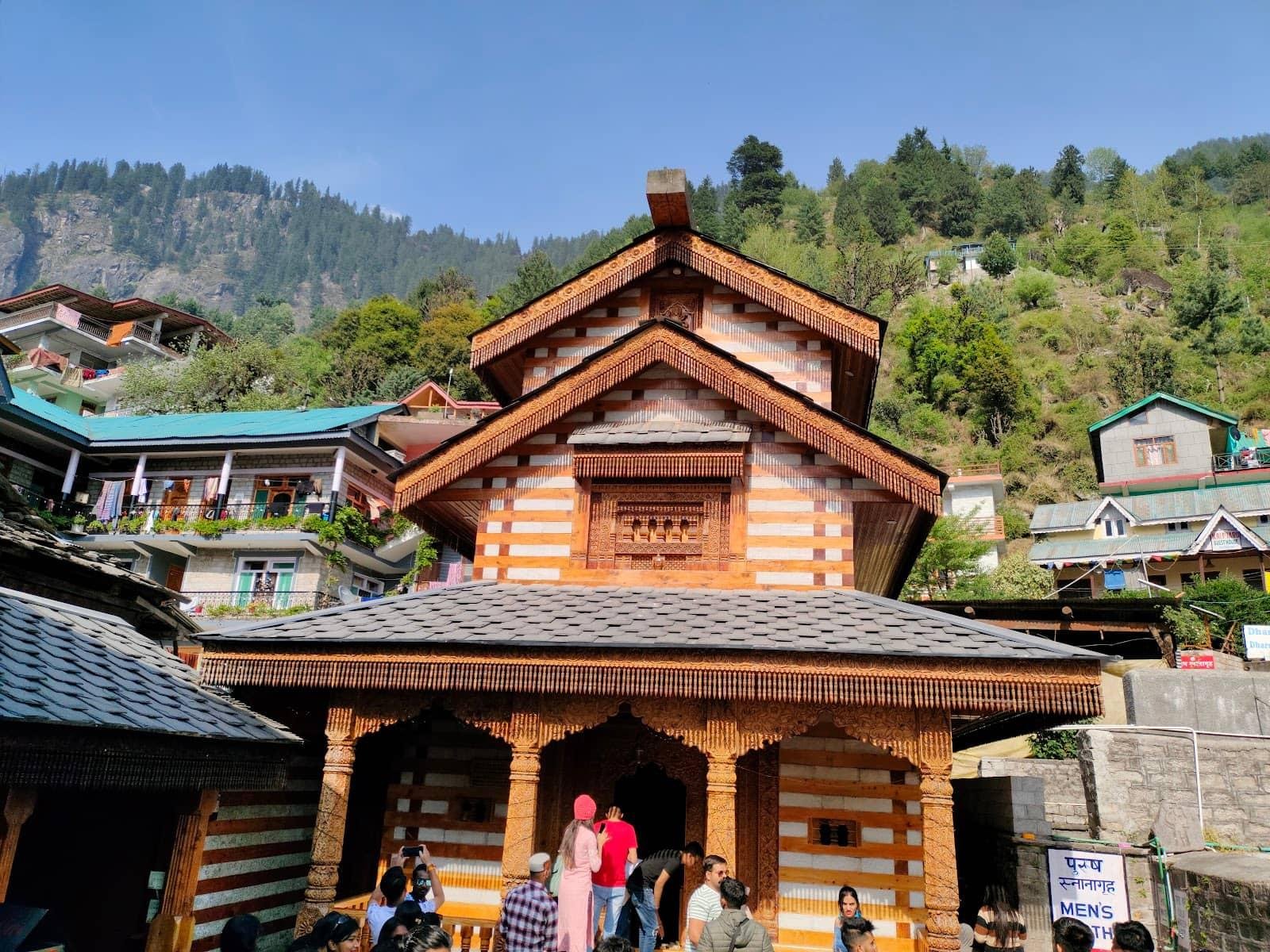
Vashisht Temple is the central spiritual attraction of the village. The shrine is dedicated to Sage Vashisht and reflects the traditional wooden architectural character found across the Kullu Valley.
The temple structure features carved wooden elements, a sloping roof and an intimate courtyard surrounded by the old village settlement. Devotees visit to seek the blessings of the sage and experience the sacred atmosphere created by the temple and natural springs.
Sage Vashisht is traditionally remembered as:
* One of the seven great sages or Saptarishis
* A respected Vedic rishi
* The spiritual teacher of Lord Rama
* A symbol of wisdom, discipline and spiritual knowledge
Visitors should remove footwear at the designated place, dress respectfully and follow current instructions regarding entry, offerings and photography.
A suitable pilgrimage sequence may include:
**Vashisht Temple Darshan – Hot-Water Spring Area – Rama Temple – Village Walk – Vegetarian Meal**
Completing darshan before shopping makes it easier to enter the temple without carrying large bags.
## Experience the Natural Hot-Water Springs
The natural hot-water springs are among Vashisht Village’s most distinctive attractions. Warm mineral water emerges naturally and is channelled into bathing areas near the temple.
For generations, pilgrims and local residents have regarded the spring water as sacred. Visitors commonly take a bath before or after temple darshan, depending on personal tradition and current arrangements.
Separate bathing areas may operate for men and women. Visitors should confirm the facilities available on the day of their visit and follow all posted instructions.
Those using the baths should:
* Bathe only in designated areas
* Respect separate bathing arrangements
* Wear appropriate bathing clothing
* Avoid using soap, shampoo or chemicals where prohibited
* Keep personal belongings secure
* Avoid taking photographs inside bathing areas
* Maintain cleanliness and silence
* Allow senior citizens and children adequate space
* Follow instructions issued by temple or local authorities
The water can feel extremely hot to some visitors. Entering gradually is safer than stepping in quickly.
## Important Health Precautions
The hot springs are traditionally associated with wellness, but they should not be treated as a substitute for professional medical care.
Visitors should avoid or limit bathing without medical guidance when they have:
* Heart or blood-pressure concerns
* Serious skin infections
* Pregnancy-related restrictions
* Reduced heat tolerance
* Open wounds
* Fever or acute illness
* Dizziness or dehydration
* Mobility limitations that make entering the pool unsafe
Children and senior citizens should remain under supervision. Visitors should leave the water immediately if they feel faint, uncomfortable or overheated.
Claims that the spring water cures particular illnesses should be treated as traditional beliefs rather than guaranteed medical outcomes.
## Visit the Rama Temple
A temple dedicated to **Lord Rama** is also associated with Vashisht Village and can be visited during the same spiritual journey.
The Rama Temple reflects the village’s connection with Sage Vashisht, who is traditionally regarded as the spiritual teacher of Lord Rama.
Visitors can include both shrines in a simple pilgrimage circuit:
**Vashisht Temple – Rama Temple – Hot Springs – Local Market**
Temple access and worship arrangements may differ during festivals, maintenance work or periods of heavy visitor movement. Visitors should follow local directions rather than relying entirely on old online timings.
## Explore the Traditional Village Lanes
Vashisht is not only a temple complex. It is a living Himalayan village with old homes, narrow pedestrian lanes, stone pathways and sloping streets.
Walking through the settlement allows visitors to observe:
* Traditional wood-and-stone houses
* Slate and metal roofs
* Carved wooden balconies
* Village courtyards
* Small religious shrines
* Cafés and guesthouses
* Local shops
* Views across the Beas Valley
* Apple orchards in the upper areas
* Forested mountain slopes
The lanes can be steep and uneven. Comfortable footwear with a secure grip is strongly recommended.
Visitors should remember that homes, gardens and orchards are private property. Permission should be requested before entering residential courtyards or photographing residents.
## Explore Vashisht’s Small Market
The approach to Vashisht Temple contains a compact local market rather than a large organised bazaar.
Small shops may sell:
* Flowers and basic puja materials
* Religious photographs
* Prayer beads
* Lord Rama and Sage Vashisht souvenirs
* Woollen caps and socks
* Shawls and scarves
* Jewellery and accessories
* Fabric bags
* Tibetan-style decorative products
* Incense
* Handmade-style notebooks
* Walking sticks
* Rain protection
* Packaged snacks and drinks
The selection varies by season and current shop operations.
Vashisht is suitable for light souvenir and practical shopping. Visitors looking for a wider choice of Kullu shawls, clothing, handicrafts and general products can also explore Manali Mall Road or Manu Market.
## Buy Puja Items and Religious Souvenirs
Shops near the temple may offer simple devotional products for pilgrims.
Depending on availability, visitors may find:
* Flowers
* Incense sticks
* Sacred threads
* Camphor
* Prayer beads
* Small puja plates
* Religious pendants
* Pictures of Vashisht Temple
* Lord Rama photographs
* Small idols
* Spiritual books
* Packaged prasad
Visitors should confirm which offerings are accepted inside the temple before purchasing a complete puja basket.
Avoid individuals making unofficial promises of special access, guaranteed blessings or faster darshan. Donations and religious services should be handled through recognised temple arrangements.
## Shop for Woollens and Himalayan Accessories
Because Vashisht lies in a cool mountain environment, woollen garments and weather-protection products are commonly useful.
Visitors may find:
* Sweaters
* Shawls
* Stoles
* Woollen caps
* Gloves
* Socks
* Mufflers
* Jackets
* Ponchos
* Raincoats
* Umbrellas
* Handmade knitted accessories
Product origin and quality vary. Not every item presented as handmade or pure wool will necessarily have been produced locally.
For expensive purchases, visitors should examine the material carefully, compare prices and request a bill.
## Enjoy the Café Culture
Vashisht has developed a relaxed café and guesthouse culture influenced by its proximity to Manali and its popularity among long-stay travellers.
Depending on the establishment, visitors may find:
* Tea and coffee
* Herbal drinks
* Hot chocolate
* Fresh juices
* Parathas
* Vegetarian thalis
* Momos
* Noodles and soups
* Sandwiches
* Pizza and pasta
* Cakes and bakery products
* Vegan dishes
* Salads
* International-style meals
Some cafés offer terraces or windows overlooking the valley.
Opening days and menus can change according to tourism seasons, winter conditions and owner availability. Travellers visiting a particular café should confirm its current status.
Pilgrims following a strict vegetarian or satvik diet should ask whether onion, garlic, eggs or shared cooking utensils are used.
## Enjoy Vegetarian Food After Darshan
Visitors seeking familiar Indian meals can find small restaurants and eateries in Vashisht and central Manali.
Commonly available dishes may include:
* Dal and rice
* Rajma chawal
* Kadhi chawal
* Roti with vegetables
* Paneer dishes
* Aloo paratha
* Chana and puri
* Vegetarian thali
* Maggi and noodles
* Vegetable momos
* Tea and pakoras
A light meal may be more comfortable before using the hot-water baths. Visitors should avoid entering very hot water immediately after consuming a heavy meal.
Families with children or elderly pilgrims should select a clean establishment with appropriate seating and washroom access.
## Walk Towards the Upper Village
Beyond the main temple and market area, Vashisht extends uphill through quieter residential lanes.
The upper village may provide:
* Orchard views
* Traditional houses
* Quieter walking paths
* Valley panoramas
* Forest surroundings
* A less commercial village atmosphere
The climb can be steep and may not be suitable for everyone. Travellers should turn back before becoming exhausted and avoid unmarked forest routes without local guidance.
Mobile connectivity and lighting may be inconsistent in quieter sections. Visitors should return to the principal village area before dark.
## Combine Vashisht with Manali Mall Road
Vashisht Village can be comfortably combined with Manali Mall Road during a half-day or full-day itinerary.
A convenient plan may include:
**Vashisht Temple – Hot Springs – Rama Temple – Vashisht Market – Manali Mall Road**
Mall Road offers a wider selection of:
* Kullu shawls
* Woollen clothing
* Handicrafts
* Restaurants
* Bakeries
* Pharmacies
* General shopping
* Hotels and transport services
Vashisht provides the stronger spiritual and village experience, while Mall Road is better suited for extensive shopping and evening leisure.
## Combine Vashisht with Hidimba Devi Temple
Hidimba Devi Temple is one of Manali’s most important sacred attractions. Located in a deodar forest at Dhungri, the temple is dedicated to Goddess Hidimba and is known for its tiered wooden architecture.
A temple-focused itinerary may include:
**Vashisht Temple – Rama Temple – Hidimba Devi Temple – Ghatotkacha Shrine – Mall Road**
This circuit introduces visitors to different religious and architectural traditions around Manali.
Traffic can become heavy during summer holidays, snowfall periods and long weekends, so several temples should not be compressed into an unrealistic schedule.
## Visit Manu Temple in Old Manali
Manu Temple is dedicated to Sage Manu and is located in Old Manali.
Pilgrims can combine Vashisht and Manu Temple to explore two important sage-linked sacred destinations around Manali.
A suitable itinerary may include:
**Vashisht Temple – Hot Springs – Manu Temple – Old Manali Market**
Both villages contain narrow and sloping lanes. Families travelling with senior citizens should confirm vehicle access and walking requirements before departure.
## Add Jogini Waterfall Carefully
Jogini Waterfall is associated with the wider Vashisht area and is reached through a walking route passing village and natural surroundings.
The walk should be treated as a separate nature excursion rather than a simple extension of temple darshan.
Before attempting it, visitors should check:
* Current trail access
* Weather conditions
* Walking distance
* Daylight availability
* Local directions
* Physical fitness
* Water and footwear requirements
The trail may become slippery during rain. Families with small children, senior citizens or people with mobility limitations should assess whether the walk is suitable.
Visitors should not rely on informal shortcuts or attempt the route close to sunset.
## Best Time to Visit Vashisht Village
Vashisht can be visited throughout much of the year, but the experience changes seasonally.
### Spring
Spring offers pleasant weather, fresh greenery and comfortable village-walking conditions.
### Summer
Summer is one of the busiest periods. The temple, baths and market can become crowded, especially during weekends and school holidays.
### Monsoon
Rain makes the surroundings green but can also make stone lanes and steps slippery. Road and weather advisories should be checked before travel.
### Autumn
Autumn generally offers clearer skies, cool temperatures and pleasant conditions for temple visits.
### Winter
Winter can bring cold weather, frost and occasional snowfall. Hot-water bathing may feel especially attractive, but lanes can become icy and some cafés may operate on reduced schedules.
Visitors should wear warm clothing and shoes with a strong grip during winter.
## Best Time of Day to Visit
Morning is generally suitable for quieter temple darshan and bathing.
An early visit may provide:
* Fewer visitors
* A calmer temple environment
* More comfortable village walking
* Additional time for other Manali temples
* Easier café and market exploration later
Afternoons can become busier with sightseeing groups.
Visitors should avoid planning the final return too late because the upper village lanes may be difficult to navigate after dark.
## How Much Time to Spend in Vashisht
Most visitors can keep approximately three to five hours for the complete village experience.
A typical visit may include:
**Temple Darshan – Hot Springs – Rama Temple – Market Walk – Vegetarian Meal**
Additional time may be required for:
* Bathing queues
* Festival crowds
* Detailed village exploration
* Café visits
* Shopping
* Senior-citizen travel
* Continuing towards Jogini Waterfall
Travellers staying in Vashisht can explore the village through shorter morning and evening walks rather than completing everything during one crowded visit.
## Practical Tips for Visitors
A few precautions can improve the Vashisht experience:
* Carry an extra set of clothes when planning to bathe.
* Bring a towel and waterproof bag.
* Keep valuables secure.
* Wear modest and appropriate bathing clothing.
* Avoid photography inside bathing areas.
* Wear footwear with a strong grip.
* Carry drinking water.
* Keep rain protection during the monsoon.
* Carry warm clothing in winter.
* Confirm digital-payment availability.
* Carry some cash for smaller shops.
* Avoid carrying heavy luggage uphill.
* Ask permission before photographing residents.
* Do not enter private orchards.
* Keep temple and spring areas clean.
* Follow local instructions and temporary restrictions.
Visitors should avoid leaving wet clothing, plastic bottles or disposable toiletries near the spring.
## How to Reach Vashisht Village
Vashisht Village lies across the Beas River, approximately three kilometres from central Manali.
It can be reached through:
* Private taxi
* Hotel-arranged cab
* Locally available transport
* Personal vehicle up to an authorised point
* Walking from Manali, depending on fitness and route conditions
The final approach includes narrow streets and may require walking from the nearest vehicle-access point.
Parking can be limited during peak periods. Families should ask their hotel or driver about the most practical drop-off point.
Manali is connected by road with Kullu, Bhuntar, Mandi, Chandigarh and Delhi. The nearest commercial airport is at Bhuntar, followed by onward road travel.
## Where to Stay in Vashisht Village
Vashisht offers guesthouses, homestays, hostels, cafés with rooms and small hotels.
Staying in the village may suit travellers seeking:
* Early access to Vashisht Temple
* Convenient hot-spring visits
* Mountain and valley views
* A quieter alternative to Mall Road
* Café culture
* Longer stays
* Village surroundings
* Access towards local walking routes
Before booking, travellers should verify:
* Actual distance from Vashisht Temple
* Uphill or downhill walking requirements
* Number of stairs
* Vehicle access
* Parking
* Heating during winter
* Continuous hot water
* Family-room configuration
* Vegetarian or satvik meals
* Power backup
* Mobile and internet connectivity
* Secure luggage storage
* Café or market noise
* Assistance for senior citizens
* Snow and monsoon cancellation conditions
A property may appear close on a map while still requiring a steep climb.
Travellers with mobility concerns should ask whether a vehicle can reach the property entrance and whether ground-floor accommodation is available.
## Vashisht Village or Central Manali: Where Should You Stay?
Both areas provide convenient access to Manali’s attractions but offer different experiences.
### Stay in Vashisht For:
* Vashisht Temple access
* Natural hot-water springs
* Village atmosphere
* Mountain views
* Cafés and guesthouses
* A quieter setting
* Longer leisure stays
### Stay Near Mall Road For:
* Central shopping
* More restaurants
* Easier transport
* Pharmacies and general services
* Wider hotel choice
* Better convenience for short family visits
* Access to multiple sightseeing routes
The final choice should depend on walking ability, transport needs and the traveller’s preferred atmosphere.
## Book Stays Near Vashisht Village with MudrasStays
**MudrasStays** helps pilgrims discover accommodation near temples, sacred springs, traditional villages and important spiritual travel routes.
Travellers visiting Manali can use MudrasStays to explore:
* Hotels near Vashisht Temple
* Stays near Vashisht hot-water springs
* Guesthouses in Vashisht Village
* Family accommodation near Manali
* Hotels near Rama Temple
* Stays near Hidimba Devi Temple
* Accommodation near Manu Temple
* Properties serving vegetarian food
* Pilgrimage-friendly rooms for senior citizens
* Group accommodation for Manali temple journeys
Choosing accommodation close to Vashisht allows visitors to attend temple darshan, use the spring facilities and explore the village without repeatedly travelling through Manali’s congested centre.
Vashisht Village is more than a sightseeing stop near Manali. It is a sacred Himalayan settlement where the spiritual legacy of Sage Vashisht, traditional temples, naturally heated springs and everyday village life come together.
By visiting respectfully and booking a comfortable nearby stay through **MudrasStays**, travellers can enjoy a meaningful journey combining devotion, cultural heritage, wellness traditions, local food and the peaceful beauty of the Kullu Valley.