
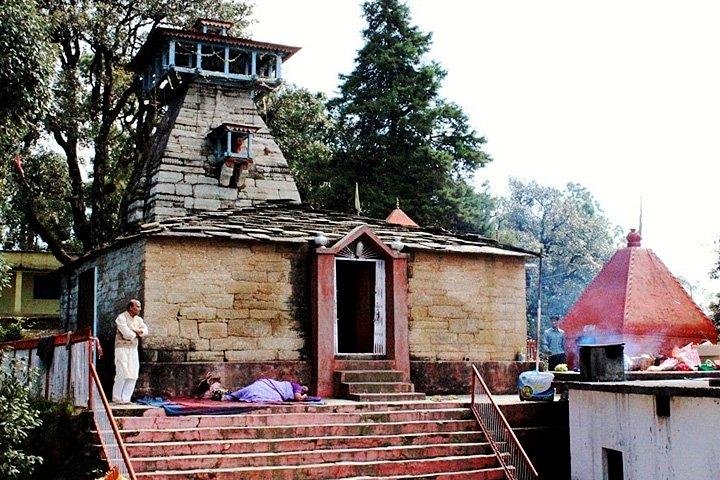
Vriddha Jageshwar Temple is a peaceful and ancient hilltop shrine situated above the sacred temple town of Jageshwar in the Almora district of Uttarakhand. Dedicated to Lord Shiva in his older or ancient form, the temple is one of the most spiritually significant yet comparatively less-crowded destinations in the wider Jageshwar pilgrimage circuit.
The word “Vriddha” means old, ancient or elderly, and Vriddha Jageshwar is therefore commonly understood as the shrine of the ancient form of Lord Shiva. Local religious tradition connects this hilltop temple with the spiritual origins of Jageshwar and regards it as an important place in the sacred geography of the Kumaon Himalayas.
Unlike the main Jageshwar Dham temple complex, which stands within a narrow valley surrounded by tall deodar trees, Vriddha Jageshwar occupies an elevated ridge above the region. Its higher location, quiet forest surroundings and open mountain views create a very different pilgrimage experience.
The journey to Vriddha Jageshwar is not limited to temple darshan. It is a gradual spiritual approach through forested slopes, mountain paths and peaceful countryside. The route takes visitors away from the activity of the main temple complex and towards a quieter environment suited to prayer, meditation and personal reflection.
Vriddha Jageshwar Temple is generally reached through an uphill walk from the Jageshwar region. The traditional trail is approximately 1.5 kilometres, although the actual walking distance may vary depending on the chosen route, starting point and current local access arrangements.
The uphill journey passes through the scenic Himalayan landscape of Kumaon. Visitors may walk among pine, oak, rhododendron and deodar trees while enjoying views of forested ridges, mountain settlements and distant valleys.
For pilgrims, the walk can be understood as a part of the spiritual experience. The gradual climb allows visitors to leave behind noise, traffic and daily distractions before reaching the temple. The silence of the forest, the cool mountain air and the rhythm of walking can help create a reflective state of mind.
Travellers should wear comfortable walking shoes because sections of the trail may be steep or uneven. Drinking water, light refreshments, sun protection and weather-appropriate clothing should be carried, especially during summer, winter and the monsoon season.
Senior citizens, families with small children and travellers with mobility limitations should confirm the latest road and trail conditions with their hotel, homestay host or local taxi operator before beginning the journey.
The temple itself reflects the simplicity of traditional Himalayan shrines. Instead of a large commercial complex, visitors encounter an intimate place of worship surrounded by trees and open mountain scenery. The modest stone architecture, temple bells, sacred flags and peaceful courtyard contribute to the spiritual character of the destination.
The shrine is dedicated to Lord Shiva and is locally associated with his ancient presence in the Jageshwar region. According to a widely shared regional tradition, Lord Shiva was worshipped at Vriddha Jageshwar before his divine presence became associated with the main Jageshwar valley below.
This belief gives the temple an important position within the Jageshwar pilgrimage. Many devotees visit the main Jageshwar Dham and later travel uphill to Vriddha Jageshwar to complete a broader spiritual experience of the sacred region.
The temple is also connected with the origin of the Jata Ganga, the stream that flows through the Jageshwar valley. The name Jata Ganga refers to the matted locks, or jata, of Lord Shiva, from which the sacred River Ganga is traditionally believed to emerge.
The association between Vriddha Jageshwar and the Jata Ganga strengthens the temple’s spiritual significance. Water, mountains, forests and Shiva worship come together naturally within the sacred landscape of Jageshwar.
The Jata Ganga passes through the wider temple region and contributes greatly to the peaceful atmosphere of Jageshwar Dham. The sound of flowing water, temple bells and wind moving through the deodar trees creates a distinctive environment that has attracted pilgrims and spiritual seekers for generations.
Vriddha Jageshwar is especially suitable for travellers seeking a quieter Shiva temple experience. The main Jageshwar Dham may attract large numbers of visitors during weekends, summer months, Mahashivratri and the Shravan season, while the elevated Vriddha Jageshwar shrine often retains a more secluded atmosphere.
Devotees visit the temple to seek blessings from Lord Shiva for spiritual strength, family welfare, health, protection, clarity and fulfilment of personal prayers. Many visitors also spend time in silence after darshan because the surrounding environment encourages meditation and self-reflection.
The temple can be meaningful for yoga practitioners, spiritual travellers and people interested in slow, mindful journeys. The combination of walking, forest surroundings and temple worship makes the visit more immersive than a quick roadside stop.
Morning is one of the best times to visit Vriddha Jageshwar Temple. The temperature is generally comfortable, the forest is quieter and the air is fresh. Early visitors may also experience clearer views before clouds gather over the surrounding hills.
Beginning the journey in the morning allows sufficient time for the climb, temple darshan, rest and return to Jageshwar before evening. Mountain weather can change quickly, so it is advisable to complete the journey during daylight.
The higher location offers beautiful views of the surrounding Kumaon region. Depending on weather and visibility, visitors may see layers of forest-covered hills, small settlements, agricultural fields and distant Himalayan landscapes.
The views are especially attractive during clear autumn and winter days. During spring, blooming rhododendrons and fresh forest vegetation may add colour to the route. In the monsoon season, the hills become intensely green, although rain can make paths slippery and travel conditions more difficult.
The spiritual importance of Vriddha Jageshwar is closely connected with the wider Jageshwar Dham temple group. Jageshwar is one of the most important Shaiva pilgrimage destinations in Uttarakhand and is often described as the “Valley of Gods.”
The Jageshwar region contains more than one hundred historic stone temples of different sizes. These temples are primarily dedicated to Lord Shiva, although shrines associated with other Hindu deities are also present within the sacred valley.
The historic temples of Jageshwar display remarkable stone architecture. Their tall curving towers, carved doorways, stone walls and compact arrangement reflect the temple-building traditions of the central Himalayan region.
The temples were constructed and developed across different historical periods. Together, they represent centuries of worship, architectural evolution and religious importance in the Kumaon Himalayas.
The main Jageshwar temple complex is situated within a dense deodar forest. The presence of ancient temples among towering trees creates one of the most memorable spiritual landscapes in Uttarakhand.
Visitors travelling to Vriddha Jageshwar should ideally spend enough time exploring the principal temples of Jageshwar Dham as well. The main complex includes several important shrines associated with Lord Shiva and other deities.
The Jageshwar Mahadev Temple is among the central places of worship within the main complex. It is closely connected with the religious identity of Jageshwar and receives devotees throughout the year.
The Mahamrityunjaya Temple is another important shrine in the complex. Dedicated to Lord Shiva in the form associated with victory over death, the temple attracts devotees who pray for protection, health and spiritual strength.
The Dandeshwar Temple complex is situated close to the main Jageshwar region and should be included in a complete pilgrimage itinerary. The tall stone temple and its forest setting provide another example of the area’s ancient architectural heritage.
The Kuber Temple is dedicated to Lord Kuber, traditionally associated with wealth and prosperity. Its location within the broader Jageshwar pilgrimage landscape demonstrates the variety of deities represented across the region.
The Archaeological Museum at Jageshwar can also be visited by travellers interested in history, sculpture and temple architecture. The museum preserves important stone sculptures and artefacts recovered from temples across the Jageshwar area.
A visit to the museum can help travellers understand the artistic detail and historical development of the temple groups. It is particularly useful for students, researchers, heritage travellers and anyone interested in the religious art of Uttarakhand.
Vriddha Jageshwar Temple offers a more personal experience than many large pilgrimage centres. The absence of an extensive commercial market near the shrine allows attention to remain focused on worship, nature and silence.
The destination is suitable for solo travellers seeking spiritual reflection, couples planning a peaceful mountain holiday, families interested in temple tourism and groups undertaking a wider Shiva pilgrimage.
Photographers may find the temple’s stone architecture, forest environment and changing mountain light particularly appealing. However, the temple remains an active place of worship, so visitors should avoid disturbing devotees or photographing the inner shrine without permission.
Visitors should dress respectfully, remove footwear where required and maintain silence around prayer areas. Temple bells, offerings and sacred objects should not be handled unnecessarily.
The surroundings of Vriddha Jageshwar are ecologically sensitive. Travellers should avoid leaving plastic bottles, food packets, disposable plates or other waste along the trail.
Reusable water bottles and cloth bags are preferable during the journey. Any waste generated should be carried back to Jageshwar or disposed of only in designated bins.
The forest around Jageshwar is an essential part of the region’s spiritual identity. Visitors should avoid activities that may damage trees, disturb wildlife or create a risk of forest fires.
Smoking, open flames and careless disposal of burning materials can be extremely dangerous in mountain forests. Travellers should follow all local instructions regarding fire safety and environmental protection.
Supporting locally operated homestays, taxi services, guides, restaurants and shops can contribute to the economy of the Jageshwar region. Local hosts can also provide valuable guidance regarding trail conditions, weather and temple customs.
The best time to visit Vriddha Jageshwar depends on the experience a traveller prefers. Spring generally offers pleasant weather, colourful vegetation and comfortable walking conditions.
Summer is comparatively cooler than the plains and is suitable for family holidays and extended temple visits. However, popular destinations around Almora and Jageshwar may receive more visitors during the summer vacation period.
The monsoon transforms the surrounding forests into a green and misty landscape. Shravan is religiously important for devotees of Lord Shiva, but rainfall may affect road conditions and make the trail slippery.
Autumn usually offers clearer skies, comfortable temperatures and good visibility. It is one of the most suitable periods for trekking, temple visits and photography.
Winter provides a quiet spiritual atmosphere. Clear winter days can offer impressive views, although mornings and evenings become cold. Warm clothing, proper footwear and sufficient daylight should be considered when planning the walk.
Mahashivratri is one of the most important occasions for visiting the Jageshwar region. Temples dedicated to Lord Shiva attract devotees for special prayers, rituals and celebrations.
The month of Shravan is also considered highly sacred for Shiva worship. Pilgrims may visit Jageshwar Dham, Vriddha Jageshwar and nearby temples during this period to offer prayers and seek blessings.
Travellers visiting during festivals should expect greater demand for accommodation, taxis and parking. Rooms near Jageshwar should be reserved early, particularly for families and larger pilgrimage groups.
A one-day Jageshwar itinerary may begin with morning darshan at the main Jageshwar Dham temple complex. Visitors can then explore the Archaeological Museum and travel or walk towards Vriddha Jageshwar in the afternoon.
However, travellers undertaking the uphill trail should avoid beginning too late. Sufficient time should be kept for the ascent, temple visit, rest and safe return during daylight.
A two-day itinerary provides a more comfortable experience. The first day can include Dandeshwar Temple, Jageshwar Dham and the Archaeological Museum. The second day can be dedicated to the Vriddha Jageshwar Temple walk and peaceful exploration of the surrounding region.
A three-day spiritual itinerary can include Jageshwar Dham and Dandeshwar on the first day, Vriddha Jageshwar on the second day and Chitai Golu Devta Temple or Kasar Devi Temple on the third day.
Travellers can also add Almora town, Nanda Devi Temple and Katarmal Sun Temple to create a broader heritage and pilgrimage circuit.
Kasar Devi Temple is known for meditation, yoga and its peaceful hilltop setting near Almora. Chitai Golu Devta Temple is famous for thousands of bells and written petitions offered by devotees seeking justice.
Nanda Devi Temple represents the cultural and religious traditions of Almora town, while Katarmal Sun Temple provides an opportunity to explore ancient Surya worship and Himalayan stone architecture.
Together, these destinations create a diverse temple journey covering Shiva worship, Devi traditions, local deities, meditation sites, sacred rivers and historic architecture.
Accommodation near Vriddha Jageshwar Temple is available primarily in Jageshwar, Artola and the surrounding mountain villages. Travellers can choose from hotels, guesthouses, traditional homestays, cottages and nature retreats.
Staying in Jageshwar is the most convenient option for pilgrims who wish to attend early darshan at the main temple complex and undertake the journey to Vriddha Jageshwar.
Properties close to Jageshwar Dham reduce daily travel time and allow visitors to experience the temple region during quieter morning and evening hours.
Homestays near Jageshwar offer a more personal experience of Kumaoni hospitality. Local hosts may provide home-cooked food, information about nearby temples and guidance regarding the best route to Vriddha Jageshwar.
Mountain cottages and nature retreats are suitable for visitors seeking privacy, forest surroundings and a peaceful environment. These properties may appeal especially to couples, meditation travellers and guests planning a longer spiritual stay.
Budget guesthouses can be suitable for solo pilgrims, students and groups seeking simple accommodation close to the temple circuit.
Families should check room size, meal availability, road access, parking and heating arrangements before confirming accommodation. Winter visitors should confirm the availability of warm bedding and hot water.
Travellers with senior citizens should choose properties that minimise steep walking and provide easy vehicle access. Accessibility can vary considerably across mountain accommodations.
Mobile connectivity, internet quality and power availability may differ in forested or remote locations. Travellers requiring consistent connectivity should confirm these facilities in advance.
MudrasStays helps pilgrims discover hotels, homestays, guesthouses and peaceful mountain retreats near Vriddha Jageshwar Temple and Jageshwar Dham.
The platform is designed specifically for travellers searching for accommodation close to temples and spiritual destinations across India.
Visitors can explore properties based on distance from Jageshwar Dham, room type, budget, group size and required facilities.
Booking accommodation near Jageshwar allows pilgrims to spend more time at the temples and less time travelling repeatedly from Almora or other distant towns.
A nearby stay also makes it easier to begin the Vriddha Jageshwar walk early, attend morning prayers and explore the wider temple valley at a relaxed pace.
Travellers using MudrasStays can plan a complete Kumaon pilgrimage journey by combining accommodation near Vriddha Jageshwar, Jageshwar Dham, Chitai Golu Devta Temple, Kasar Devi Temple, Nanda Devi Temple and Katarmal Sun Temple.
Local taxis and guides can be useful for travellers unfamiliar with mountain roads and temple routes. Accommodation hosts may assist with transport arrangements, but the details should be confirmed before arrival.
Jageshwar is connected by road with Almora and other important towns in Kumaon. The journey passes through forested hills and scenic mountain settlements.
Because mountain roads can be narrow and travel times may be longer than map distances suggest, visitors should keep sufficient time between destinations.
Weather, road maintenance, festival traffic and seasonal travel conditions can affect the journey. Travellers should check current conditions before departure.
Vriddha Jageshwar Temple is an ideal destination for visitors who wish to move beyond conventional sightseeing and experience the deeper spiritual character of the Jageshwar region.
The temple’s value lies not only in its age or religious traditions but also in its relationship with the surrounding landscape.
The uphill path, forest silence, source of the Jata Ganga and elevated shrine together create a pilgrimage that unfolds gradually.
For devotees of Lord Shiva, Vriddha Jageshwar represents an opportunity to worship an ancient form of Mahadev in the sacred forests of Kumaon.
For spiritual seekers, the destination provides space for meditation, silence and reflection.
For trekkers and nature lovers, the walk offers a gentle combination of pilgrimage and mountain exploration.
For heritage travellers, the temple forms part of a wider landscape shaped by centuries of Shiva worship and Himalayan temple architecture.
For families, the journey can provide a meaningful introduction to the cultural and religious history of Uttarakhand.
For photographers and writers, the changing light, stone shrine, mountain forest and peaceful surroundings offer abundant inspiration.
A visit to Vriddha Jageshwar should ideally be undertaken without hurry. Travellers should allow time to sit near the temple, observe the surrounding forest and appreciate the stillness of the ridge.
The destination encourages a slower and more mindful form of tourism. It invites visitors to listen to the forest, walk carefully, pray quietly and respect the sacred environment.
Plan your journey to Vriddha Jageshwar Temple with MudrasStays and discover one of the most peaceful Shiva shrines in the Almora region.
Walk through Himalayan forests, seek the blessings of Lord Shiva, experience the sacred origin of the Jata Ganga and explore the historic temples of Jageshwar Dham.
Book hotels near Vriddha Jageshwar Temple, find homestays near Jageshwar Dham and discover mountain cottages and spiritual retreats through MudrasStays.
Stay closer to the temples, begin your pilgrimage early and experience the forests, traditions and sacred atmosphere of Jageshwar at a comfortable pace.
MudrasStays connects pilgrims and spiritual travellers with accommodation near important temples and religious destinations across India.
Begin your Vriddha Jageshwar pilgrimage with a comfortable stay and create a memorable spiritual journey through the ancient Shiva temples and peaceful Himalayan landscapes of Kumaon.