ISKCON Vrindavan Aarti: A Day Filled With Kirtan and Krishna Seva
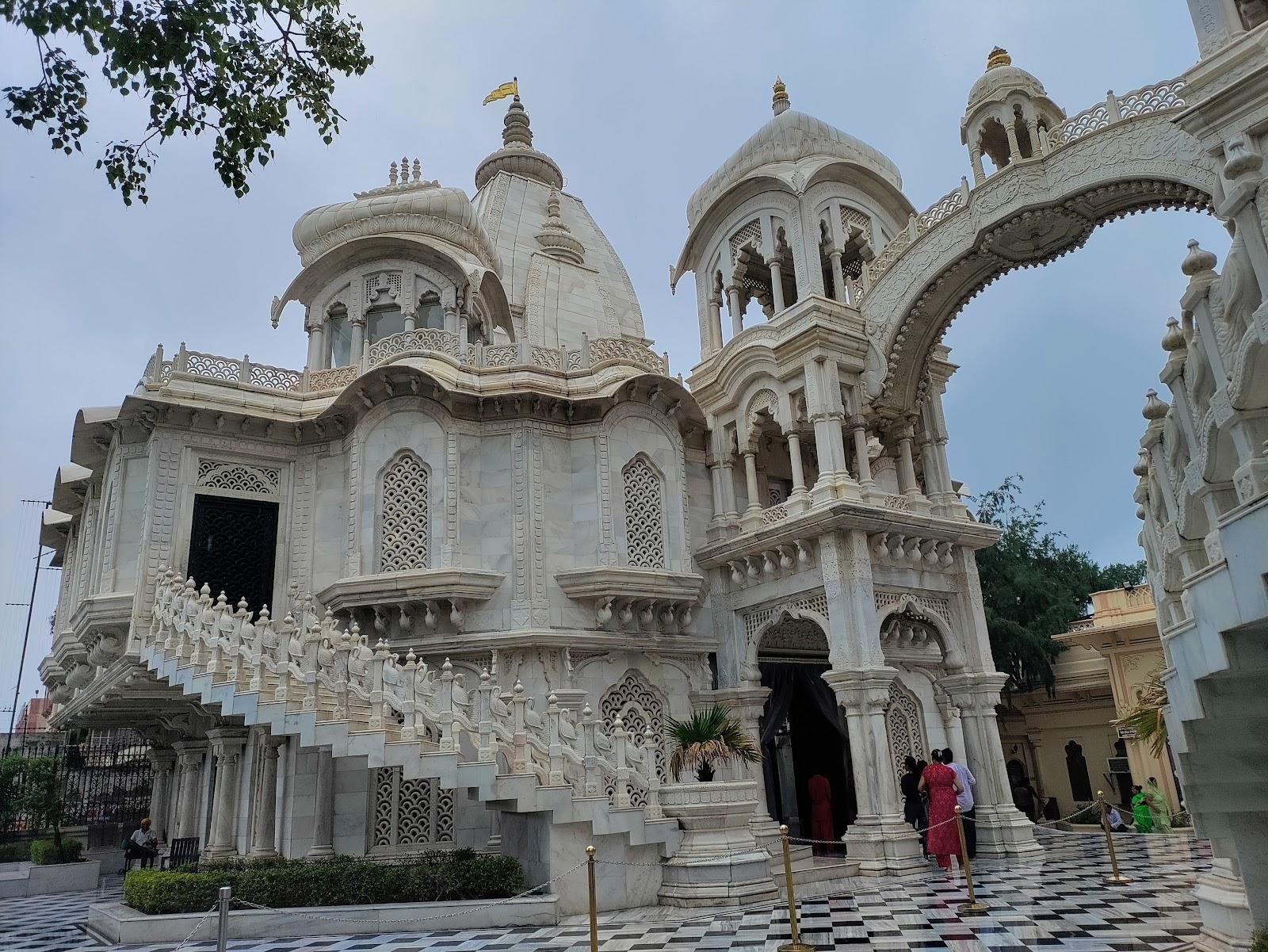
ISKCON Vrindavan Aarti is a structured cycle of worship performed throughout the day at the historic Sri Sri Krishna-Balaram Mandir in Raman Reti, Vrindavan. Beginning before sunrise with Mangala Aarti and concluding at night with Shayan Aarti, the ceremonies unite sacred lamps, deity darshan, devotional songs and the collective chanting of Krishna’s names.
The temple’s presiding deities are Sri Sri Krishna-Balaram, representing Lord Krishna alongside his elder brother Balaram. They are worshipped at the central altar, accompanied by Sri Sri Gaura-Nitai on the left and Sri Sri Radha-Shyamasundar on the right.
Each Aarti expresses a different devotional mood. Mangala Aarti welcomes the auspicious beginning of the day. Shringar Darshan reveals the freshly adorned deities. Raj Bhog Aarti accompanies the principal meal offering, Sandhya-Gaura Aarti fills the evening with energetic kirtan, and Shayan Aarti respectfully concludes the daily worship.
Unlike a temple where worship is concentrated into one morning and one evening ceremony, Krishna-Balaram Mandir follows an extensive devotional schedule. Bhoga offerings, Tulasi worship, Guru Puja, scripture discourse, darshan and kirtan connect the principal Aartis into one continuous day of seva.
Origin of the ISKCON Vrindavan Aarti Tradition
Sri Sri Krishna-Balaram Mandir was established by His Divine Grace A.C. Bhaktivedanta Swami Prabhupada, the Founder-Acharya of the International Society for Krishna Consciousness. The temple was inaugurated in 1975 on the auspicious occasion of Ram Navami.
Srila Prabhupada personally oversaw the temple’s development and installed the deities of Sri Sri Krishna-Balaram. His intention was to create a major spiritual centre where devotees from India and across the world could experience Vrindavan through deity worship, congregational chanting, scriptural study and devotional service.
The choice of Krishna and Balaram as the presiding deities connects the temple with Raman Reti and the childhood pastimes of the divine brothers in Braj. Krishna represents divine attraction and loving devotion, while Balaram represents spiritual strength, service and support.
The temple’s daily Aarti schedule developed as part of the organised deity worship introduced under Srila Prabhupada’s guidance. The deities are awakened, adorned, offered food, worshipped with lamps and later prepared for rest according to the devotional rhythm followed in Gaudiya Vaishnavism.
Srila Prabhupada’s Samadhi Mandir is also included in the early-morning programme. The first published Aarti of the day takes place there at 4:10 AM before the main Mangala Aarti begins at the central temple altars.
The Three Altars Worshipped During Aarti
Sri Sri Gaura-Nitai
The left altar is dedicated to Sri Chaitanya Mahaprabhu and Sri Nityananda Prabhu, worshipped together as Gaura-Nitai. They represent the compassionate distribution of Krishna bhakti through the congregational chanting of the holy names.
The evening Sandhya Aarti is also known as Gaura Aarti. Its songs celebrate the beautiful worship of Lord Chaitanya and the devotional movement of sankirtan that he popularised.
Sri Sri Krishna-Balaram
The central altar contains the presiding deities of Krishna and Balaram. Their worship celebrates the loving relationship between the divine brothers and their eternal pastimes in the forests and pastures of Vrindavan.
Krishna is traditionally understood as the source of divine attraction, while Balaram represents strength, service and spiritual guidance. Worshipping them together gives the temple its distinctive identity.
Sri Sri Radha-Shyamasundar
The right altar is dedicated to Shri Radha and Krishna in the form of Radha-Shyamasundar. Their worship expresses the intimate devotional mood of Vrindavan, with Shri Radha representing the highest form of loving surrender to Krishna.
Shringar Darshan is particularly beautiful at this altar because the deities are presented in carefully coordinated garments, jewellery, flowers and seasonal decorations.
Spiritual Significance of ISKCON Vrindavan Aarti
The word Aarti refers to an auspicious ceremony in which illuminated lamps and other sacred articles are offered before the divine. The lamp symbolises spiritual knowledge, purity and the removal of inner darkness.
When the flame is moved before the deities, devotees symbolically offer their minds, senses, actions and abilities in divine service. The ceremony encourages worshippers to place Krishna at the centre of their daily lives.
The ringing of bells, sound of conch shells, rhythm of mridangas and clashing of kartals help draw the mind away from ordinary distractions. Collective chanting allows everyone to participate, even when they are unfamiliar with the detailed Sanskrit or Bengali prayers.
Mangala Aarti represents a conscious decision to begin the day by remembering God. Raj Bhog Aarti teaches gratitude by first offering food to Krishna. Sandhya Aarti provides an opportunity to return the mind to devotion after the day’s activities, while Shayan Aarti expresses gratitude and surrender before rest.
The worship of Gaura-Nitai connects Aarti with the principle of sankirtan—the congregational chanting of Krishna’s names. Rather than remaining a ceremony performed only by priests, the Aarti becomes a shared expression of devotion involving the entire congregation.
Srila Prabhupada’s Guru Puja reminds devotees that spiritual knowledge is received through a recognised teacher and tradition. Respect for the spiritual master is therefore integrated into the temple’s daily worship of Krishna.
Benefits of Attending ISKCON Vrindavan Aarti
- Concentrated devotional experience: Lamps, music, mantra and deity darshan create a clear point of focus for prayer.
- Participation through kirtan: Visitors can chant, clap and respond without needing extensive knowledge of temple rituals.
- Peaceful beginning to the day: Mangala Aarti offers an opportunity for reflection before ordinary responsibilities begin.
- Understanding of deity seva: The complete schedule demonstrates how the deities are awakened, adorned, fed and prepared for rest.
- Connection with Vrindavan: Worshipping Krishna-Balaram in Raman Reti connects devotees with Krishna’s childhood pastimes in Braj.
- Stronger spiritual discipline: The carefully organised programme encourages punctuality, consistency and mindful participation.
- Collective devotional energy: Singing with devotees from different countries creates a powerful feeling of spiritual community.
- Gratitude for food: Raj Bhog and other bhoga offerings teach that nourishment can first be acknowledged as a divine gift.
- Exposure to sacred teachings: The morning programme connects Aarti with Guru Puja and Srimad-Bhagavatam discourse.
- Emotional reassurance: Prayer and collective chanting may offer comfort during periods of personal uncertainty or stress.
These are devotional and personal experiences rather than guaranteed material outcomes. The deeper value of attending Aarti depends on the sincerity, attention and intention of the participant.
What Makes ISKCON Vrindavan Aarti Special?
The most distinctive feature is the temple’s combination of traditional deity worship with highly participative kirtan. Visitors do not simply observe the priest offering lamps. They are encouraged to chant Krishna’s names, clap rhythmically and join the devotional atmosphere respectfully.
The central worship of Krishna and Balaram is another important speciality. Although Radha-Krishna deities are present in many ISKCON temples, Krishna-Balaram are the presiding deities at this Vrindavan temple.
The three altars allow worshippers to contemplate different dimensions of bhakti: the mercy of Gaura-Nitai, the brotherly pastimes of Krishna-Balaram and the divine love of Radha-Shyamasundar.
The first public devotional activity begins at Srila Prabhupada’s Samadhi at 4:10 AM. The movement from the Samadhi Aarti to the main Mangala Aarti connects respect for the spiritual teacher with worship of the deities.
The temple is also renowned for its continuous 24-hour kirtan. Sripad Aindra Prabhu re-inaugurated this programme in 1986 on Vijaya Dashami during Kartik. The sound of the Hare Krishna Mahamantra therefore surrounds the Aarti schedule with an ongoing atmosphere of chanting.
Devotees from numerous countries participate together. Bengali and Sanskrit devotional songs, traditional Braj worship and a global congregation meet within the same marble courtyard.
Current ISKCON Vrindavan Aarti Timings
The temple’s currently published schedule lists a morning session from 4:10 AM to 12:45 PM and an evening session from 4:30 PM to 8:45 PM.
Morning Aarti, Darshan and Seva Schedule
- 4:10 AM: Mangala Aarti at Srila Prabhupada’s Samadhi
- 4:10 AM: Mangala Bhoga
- 4:30 AM: Mangala Aarti in the main temple
- 5:00 AM: Tulasi Puja
- 7:15 AM: Shringar Darshan
- 7:20 AM: Sri Guru Puja
- 8:00 AM: Srimad-Bhagavatam class
- 8:10 AM: Baal Bhoga
- 8:30 AM: Dhoop Aarti
- 11:10 AM: Raj Bhoga offering
- 12:00 noon: Raj Bhoga Aarti
- 12:45 PM: Temple closes for the afternoon
Evening Aarti, Darshan and Seva Schedule
- 4:10 PM: Utthapan Bhoga
- 4:30 PM: Utthapan Aarti and public reopening
- 6:35 PM: Sandhya Bhoga
- 7:00 PM: Sandhya-Gaura Aarti
- 8:10 PM: Shayan Bhoga
- 8:30 PM: Shayan Aarti
- 8:45 PM: Temple closes for the night
The afternoon interval should be considered when planning a visit. Public darshan is not continuously available between the morning closing and evening reopening.
Important: Timings can change during Janmashtami, Balaram Purnima, Gaura Purnima, Radhashtami, Kartik and other important observances. Visitors should check the temple’s current schedule before travelling.
Meaning of Each Principal ISKCON Vrindavan Aarti
Mangala Aarti
Mangala Aarti is the first principal worship of the day. The word Mangala means auspicious. Devotees assemble before sunrise to begin the day with prayers, lamps and the chanting of Krishna’s names.
The first Aarti is performed at Srila Prabhupada’s Samadhi at 4:10 AM. The congregation then participates in the main Mangala Aarti before Sri Sri Gaura-Nitai, Sri Sri Krishna-Balaram and Sri Sri Radha-Shyamasundar at 4:30 AM.
The atmosphere is disciplined yet energetic. Devotees sing prayers honouring the spiritual master, while mridangas, kartals and bells establish the rhythm of the early-morning worship.
Mangala Aarti is ideal for visitors seeking the temple’s most traditional and spiritually concentrated experience. Reaching the complex before the programme begins is essential.
Tulasi Puja
Tulasi Puja follows Mangala Aarti at 5:00 AM. Tulasi Devi is deeply respected in Vaishnava tradition and is closely connected with the worship of Krishna.
Devotees sing Tulasi prayers and circumambulate the sacred plant. The ceremony expresses the desire to receive devotion and become qualified to serve Radha and Krishna.
Shringar Darshan
Shringar Darshan takes place at 7:15 AM after the deities have been dressed and decorated. Although the current schedule describes it as a darshan rather than a separate Aarti, it is one of the most important moments of the morning programme.
The curtains open to reveal the deities in fresh garments, jewellery, garlands and flowers. Their appearance may change according to the season, festival or devotional theme.
Visitors who cannot attend the pre-dawn Mangala Aarti often choose Shringar Darshan because it combines a more convenient hour with the first complete view of the day’s ornamentation.
Sri Guru Puja
Guru Puja begins shortly after Shringar Darshan. The ceremony honours Srila Prabhupada and acknowledges the role of the spiritual teacher in transmitting Krishna consciousness.
A lamp, incense, flowers and other articles are offered while devotees sing prayers and perform kirtan. The programme expresses gratitude for the spiritual teachings, temples and devotional practices established by Srila Prabhupada.
Dhoop Aarti
Dhoop Aarti is conducted at 8:30 AM. Fragrant incense is offered before the deities as a symbol of purified intention and loving service.
This Aarti follows the morning discourse period and helps return the congregation’s attention directly to the deities. It is generally more manageable for families and visitors who cannot reach the temple before sunrise.
Raj Bhoga Aarti
Raj Bhoga is the principal meal offering of the day. Vegetarian preparations are offered to the deities before being accepted as Krishna prasadam.
The published schedule lists Raj Bhoga at 11:10 AM and Raj Bhoga Aarti at 12:00 noon. Access to the altar may be temporarily adjusted while the food is offered privately.
Raj Bhoga Aarti celebrates abundance, gratitude and the principle of offering nourishment to Krishna before accepting it for oneself. The morning session concludes afterwards, and the temple closes at 12:45 PM.
Utthapan Aarti
The word Utthapan refers to awakening or rising after rest. Utthapan Bhoga is listed at 4:10 PM, followed by Utthapan Aarti and the public reopening at 4:30 PM.
This ceremony begins the evening phase of worship. The deities are welcomed after the afternoon interval, and devotees once again receive darshan.
Sandhya-Gaura Aarti
Sandhya-Gaura Aarti begins at 7:00 PM and is usually the most energetic public ceremony of the day. The word Sandhya refers to the transition into evening, while Gaura Aarti honours Sri Chaitanya Mahaprabhu.
Devotees sing the traditional Gaura Aarti composition, accompanied by mridangas, kartals and the Hare Krishna Mahamantra. The congregation may clap, raise its hands and dance while maintaining respect for the altar and other visitors.
This Aarti reflects Sri Chaitanya Mahaprabhu’s teaching that Krishna’s names should be chanted collectively. It is particularly suitable for first-time visitors who want to experience ISKCON’s participative kirtan tradition.
Shayan Aarti
Shayan Aarti is the final worship of the day. Shayan Bhoga is offered at 8:10 PM, followed by Aarti at 8:30 PM and closing at 8:45 PM.
The ceremony expresses gratitude for the completed day and respectfully prepares the deities for rest. Its mood is softer than the main evening Aarti, although kirtan continues to remain central.
Visitors should arrive well before 8:30 PM because entry, security and movement through the complex may take time. The temple closes soon after the ceremony.
Rituals Performed During the Aarti
Opening of the Altar
The altar curtains are opened at the designated point, allowing devotees to receive darshan of the adorned deities. During private bhoga offerings, the curtains may remain closed.
Offering of Incense
Fragrant incense is moved before the deities. Its rising smoke symbolises purified thoughts, prayer and the desire to offer one’s qualities in divine service.
Offering of Sacred Lamps
Ghee lamps are offered in circular movements before the deities. Their light symbolises knowledge and the removal of spiritual ignorance.
Other Ceremonial Articles
Depending on the particular Aarti, the priest may offer water, cloth, flowers, a chamara whisk or a peacock-feather fan. The precise sequence can vary according to the time, season and form of worship.
Bells, Conch and Musical Instruments
Bells and conch shells announce sacred moments in the ceremony. Mridangas and kartals support the kirtan and help the congregation chant in a shared rhythm.
Congregational Kirtan
Devotees sing prayers and repeat the Hare Krishna Mahamantra. Visitors may participate by chanting, clapping or listening attentively.
Final Prayers
The Aarti concludes with devotional prayers, respectful obeisance and remembrance of the deities. The schedule then moves towards the next darshan, bhoga offering or closing period.
Role of the 24-Hour Kirtan
Kirtan is not merely background music at Krishna-Balaram Mandir. It is one of the temple’s central devotional services and gives the Aarti its unmistakable character.
The continuous kirtan programme was re-inaugurated by Sripad Aindra Prabhu in 1986 during Kartik. Groups of devotees continue chanting Krishna’s names in organised shifts, preserving a devotional soundscape throughout the day and night.
During the principal Aartis, the chanting becomes more focused and congregational. Visitors from different linguistic and cultural backgrounds can participate together through the Hare Krishna Mahamantra.
The combination of priestly worship and collective chanting makes the Aarti both intimate and public. The deity receives formal offerings while the congregation offers its voice, attention and devotional feeling.
Which ISKCON Vrindavan Aarti Should You Attend?
Choose Mangala Aarti if you want the most disciplined and contemplative experience. It requires an exceptionally early start but reveals the temple at one of its most spiritually focused times.
Choose Shringar Darshan and Guru Puja if you want to see the deities in their freshly prepared garments while also experiencing an energetic morning kirtan.
Choose Raj Bhoga Aarti if you want to understand how the principal food offering forms part of the daily seva cycle.
Choose Sandhya-Gaura Aarti if you enjoy participative chanting, mridanga music and an energetic congregation. The 7:00 PM ceremony is usually the best introduction for first-time visitors.
Choose Shayan Aarti if you prefer a quieter conclusion to the evening and want to witness the final ceremony before the temple closes.
Festival Aartis and Special Celebrations
Krishna Janmashtami
Janmashtami is one of the largest annual celebrations at Krishna-Balaram Mandir. The programme traditionally includes extended kirtan, abhishek, devotional presentations and midnight Aarti commemorating Krishna’s appearance.
Balaram Purnima
Balaram Purnima honours Lord Balaram, one of the temple’s presiding deities. The celebration places special emphasis on Balaram’s role as Krishna’s elder brother and the embodiment of spiritual strength and service.
Gaura Purnima
Gaura Purnima celebrates the appearance of Sri Chaitanya Mahaprabhu. Worship of Gaura-Nitai, congregational chanting and Gaura Aarti become especially prominent.
Radhashtami
Radhashtami honours Shri Radha. Special decoration and worship of Sri Sri Radha-Shyamasundar create an affectionate Vrindavan mood centred on divine love.
Ram Navami
Ram Navami carries additional historical importance because Krishna-Balaram Mandir was inaugurated on this sacred occasion in 1975.
Kartik
Kartik attracts large numbers of devotees to Vrindavan. Temple worship is accompanied by additional chanting, lamp offerings and prayers associated with Lord Damodar.
Festival programmes do not necessarily follow the ordinary daily timetable. Devotees should rely on announcements issued specifically for the celebration they plan to attend.
Aarti Dress Code and Visitor Guidelines
- Wear clean and modest clothing appropriate for a Vaishnava temple.
- Remove footwear and use the temple’s designated shoe-stand facility.
- Arrive before the announced Aarti time rather than entering during the main lamp offering.
- Keep mobile phones silent and follow current photography instructions.
- Do not use flash, tripods or selfie sticks near the worship area.
- Do not cross barriers or enter spaces reserved for priests and authorised devotees.
- Participate in kirtan without pushing, running or blocking the view of others.
- Avoid loud personal conversations during Aarti, bhoga and scripture discourse.
- Do not touch the altar, ceremonial objects or offerings.
- Accept prasadam respectfully and avoid wasting it.
- Keep wallets, phones and spectacles secure while travelling through Vrindavan.
- Follow instructions provided by temple volunteers, security personnel and management.
Planning Your Aarti Visit
Visitors attending Mangala Aarti should stay within Vrindavan because travelling from another city before 4:00 AM can be difficult. Accommodation available through Mudras Stays can help devotees reach Raman Reti before the early-morning programme begins.
For Sandhya-Gaura Aarti, reaching the temple by approximately 6:15 PM provides time for footwear deposit, security and a comfortable place within the hall before the 7:00 PM ceremony.
The temple closes between 12:45 PM and 4:30 PM. Arriving during this interval can result in a long wait without public darshan.
Weekdays are generally easier to manage than weekends, public holidays and major Vaishnava festivals. Kartik, Holi, Janmashtami, Radhashtami and Balaram Purnima can bring exceptionally large crowds.
General participation in public Aarti is ordinarily free. Optional pujas, deity offerings, donations and sponsored sevas follow separate arrangements.
Interesting Facts About ISKCON Vrindavan Aarti
- Krishna-Balaram Mandir was inaugurated in 1975 on Ram Navami.
- The temple was established under the direct guidance of Srila Prabhupada.
- Sri Sri Krishna-Balaram are the presiding deities.
- The temple contains three principal altars: Gaura-Nitai, Krishna-Balaram and Radha-Shyamasundar.
- The first published Aarti begins at Srila Prabhupada’s Samadhi at 4:10 AM.
- Main-temple Mangala Aarti begins at 4:30 AM.
- Shringar Darshan is held at 7:15 AM.
- Sandhya-Gaura Aarti begins at 7:00 PM.
- Shayan Aarti is the final ceremony before the 8:45 PM closing.
- The temple follows separate morning and evening public sessions.
- The continuous 24-hour kirtan programme was re-inaugurated in 1986.
- Janmashtami includes a special midnight Aarti.
Frequently Asked Questions About ISKCON Vrindavan Aarti
What is ISKCON Vrindavan Aarti?
It is the daily ceremonial worship of Sri Sri Gaura-Nitai, Sri Sri Krishna-Balaram and Sri Sri Radha-Shyamasundar through sacred lamps, devotional offerings, prayers and congregational kirtan.
What time is Mangala Aarti at ISKCON Vrindavan?
Mangala Aarti at Srila Prabhupada’s Samadhi begins at 4:10 AM. The main-temple Mangala Aarti begins at 4:30 AM.
What time is Sandhya Aarti?
The currently published schedule lists Sandhya-Gaura Aarti at 7:00 PM.
What time is Shringar Darshan?
Shringar Darshan takes place at 7:15 AM, followed by Sri Guru Puja at 7:20 AM.
When is Raj Bhog Aarti performed?
Raj Bhoga is offered at 11:10 AM, while Raj Bhoga Aarti begins at 12:00 noon.
What time is Shayan Aarti?
Shayan Bhoga is listed at 8:10 PM, followed by Shayan Aarti at 8:30 PM and temple closing at 8:45 PM.
Which Aarti is best for first-time visitors?
Sandhya-Gaura Aarti at 7:00 PM is generally the most accessible introduction because it combines deity darshan with energetic congregational kirtan. Mangala Aarti offers a quieter and more disciplined experience.
Is there an entry fee for Aarti?
General darshan and participation in the public Aarti are ordinarily free. Optional sponsored sevas, pujas and offerings may involve separate contributions.
Is advance registration required?
General daily Aarti normally does not require advance registration. Special crowd arrangements may apply during major festivals.
Can visitors participate in the kirtan?
Yes. Visitors may chant, clap and respond during the kirtan while respecting the temple’s movement system and the space of other devotees.
What is Gaura Aarti?
Gaura Aarti is the evening worship associated with Sri Chaitanya Mahaprabhu. It is accompanied by a traditional Bengali devotional composition and congregational chanting.
Why are Krishna and Balaram worshipped together?
The deities recall Krishna and his elder brother Balaram’s eternal childhood pastimes in Braj. Balaram also represents spiritual strength and service to Krishna.
Does the temple remain open throughout the afternoon?
No. The morning session closes at 12:45 PM, and the public evening session begins with Utthapan Aarti at 4:30 PM.
Is live Aarti available online?
The temple provides an official live-darshan facility, subject to streaming availability and the programme being conducted at that time.
Do Aarti timings change on festivals?
Yes. Janmashtami, Balaram Purnima, Gaura Purnima, Radhashtami, Kartik and other celebrations can have extended or modified programmes.
How early should visitors arrive?
Arriving 15 to 20 minutes before an ordinary daily Aarti is advisable. Allow considerably more time on weekends, holidays and major festival days.