
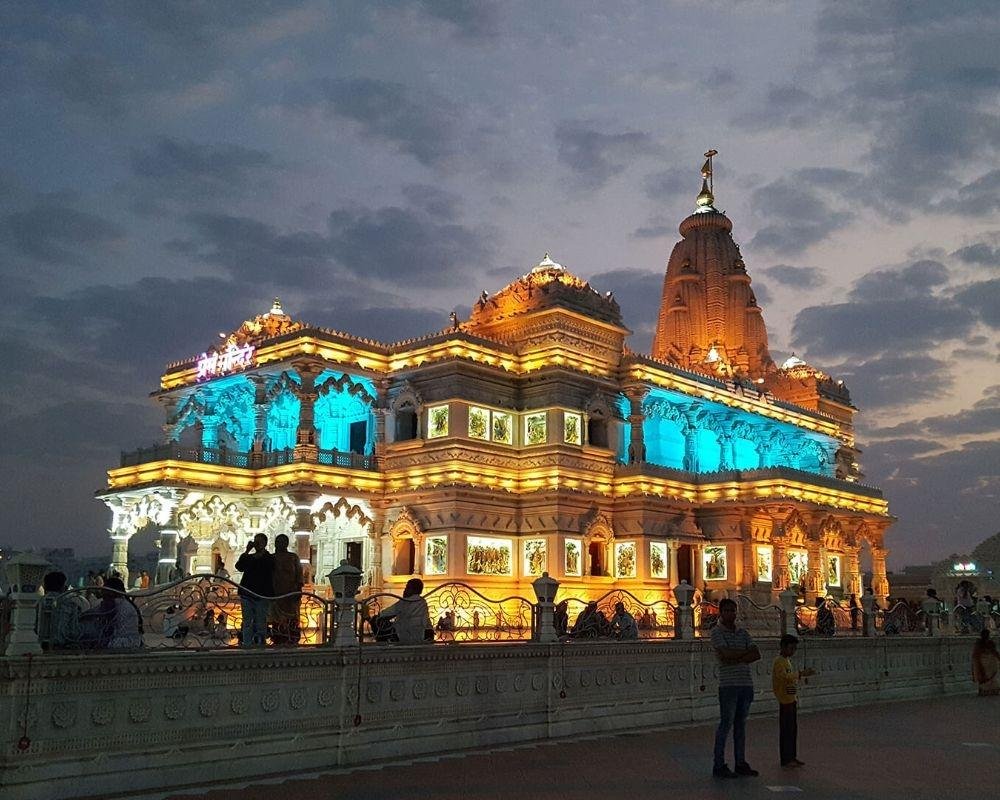
Prem Mandir Aarti: Worship Illuminated by Divine Love
Prem Mandir Aarti is a devotional offering performed before Shri Radha Krishna and Shri Sita Ram at Prem Mandir in Vrindavan, Uttar Pradesh. The ceremony brings together sacred lamps, prayer, devotional music and darshan within one of the most recognisable modern temples of the Braj region.
The name Prem Mandir means the Temple of Divine Love. This central idea shapes the character of its Aarti. Rather than presenting devotion only through elaborate ritual, the ceremony encourages devotees to offer their thoughts, feelings and actions to God through selfless love.
Morning Aarti offers a peaceful beginning to the public darshan session. The temple’s white marble interiors, devotional compositions and beautifully adorned deities create a calm atmosphere for prayer. Evening Aarti has a different character as natural daylight gradually gives way to the temple’s illuminated appearance.
Prem Mandir conducts public Aarti and darshan in separate morning and evening sessions. Bhog, parikrama and concluding Shayan Aarti form additional parts of the daily worship sequence. Visitors should plan according to the announced schedule because the temple closes between its morning and evening sessions.
History Behind the Prem Mandir Aarti Tradition
Prem Mandir was founded by Jagadguru Shri Kripalu Ji Maharaj as a monument dedicated to divine love and devotion. According to the temple’s official history, he had expressed the desire to build a grand temple in Vrindavan as early as 1946.
The foundation stone was laid on 14 January 2001 in the presence of thousands of devotees. Approximately 1,000 artisans worked on the structure, which required around twelve years to complete.
The temple’s inauguration and Pran Pratishtha ceremonies were conducted from 15 to 17 February 2012. The consecration established Prem Mandir as a functioning place of worship rather than merely an architectural monument.
Since its inauguration, daily Aarti has provided visitors with a direct devotional connection to the temple’s philosophy. The ceremonies honour both Shri Radha Krishna and Shri Sita Ram, presenting divine love through two sacred traditions: the loving pastimes of Radha and Krishna and the devotion, duty and companionship represented by Sita and Ram.
The Aarti tradition is supported by devotional compositions associated with Jagadguru Shri Kripalu Ji Maharaj. Verses and spiritual teachings engraved throughout the temple reinforce the message that sincere love and surrender form the heart of bhakti.
Spiritual Significance of Prem Mandir Aarti
Aarti is the ceremonial offering of illuminated lamps to the divine. The flame represents spiritual knowledge, purity and the removal of inner darkness. When the lamp is presented before the deities, devotees symbolically offer their minds, senses and actions to God.
At Prem Mandir, this offering is closely connected with the principle of prem bhakti, or devotion founded on selfless divine love. The ceremony encourages worshippers to move beyond formal participation and develop a sincere emotional relationship with Radha Krishna.
Shri Radha represents the highest expression of loving devotion, while Shri Krishna is worshipped as the divine recipient and embodiment of that love. Their presence gives the Aarti an affectionate devotional mood particularly associated with Vrindavan and the wider Braj region.
The presence of Shri Sita Ram introduces another dimension of devotion. Sita and Ram represent faithfulness, righteousness, sacrifice and commitment to dharma. Worshippers can therefore contemplate both the intimate love of Radha Krishna and the principled devotion expressed through Sita Ram.
The movement of the sacred lamp in circular patterns symbolises the idea that every part of life revolves around the divine. Bells and devotional music help the mind withdraw from everyday distractions, while folded hands represent humility and surrender.
The concluding Shayan Aarti carries the meaning of completion and peaceful rest. Devotees offer gratitude for the day before the deities are ceremonially prepared for the closing of the public darshan session.
Benefits of Attending Prem Mandir Aarti
- Focused prayer: The coordinated lamps, music and darshan help devotees concentrate their attention on the divine.
- Inner quietness: Participating respectfully can offer a calm pause from everyday pressures and distractions.
- Stronger Radha Krishna bhakti: The ceremony introduces visitors to devotion centred on selfless divine love.
- Emotional reassurance: Collective prayer can create feelings of hope, belonging and spiritual support.
- Daily gratitude: Morning and Shayan Aarti provide natural moments for setting intentions and expressing thankfulness.
- Understanding of Braj devotion: Visitors experience the devotional importance of Radha and Krishna within the sacred geography of Vrindavan.
- Family participation: The organised setting allows people of different ages to attend worship together.
- Reflection on values: Shri Sita Ram inspire contemplation of responsibility, loyalty, sacrifice and righteousness.
- Community connection: Singing and praying with other devotees creates a shared spiritual experience.
- Appreciation of devotional art: The ceremony connects worship with marble carvings, sacred imagery and compositions displayed throughout the temple.
What Makes Prem Mandir Aarti Special?
Prem Mandir Aarti is distinguished by the combination of living worship, devotional architecture and carefully designed illumination. The ceremony is conducted inside a temple built from white Italian Carrara marble, whose carved surfaces interact beautifully with both natural and artificial light.
The temple measures approximately 125 feet in height, 190 feet in length and 128 feet in width. Its scale creates a grand setting, yet the Aarti remains centred on direct darshan of the deities and personal prayer.
The outer walls contain 84 carved panels depicting loving pastimes of Shri Radha Krishna. Devotees encounter these scenes while moving along the circumambulation route, allowing the message of the Aarti to continue through visual storytelling.
Life-sized representations of Jhulan Leela, Govardhan Leela, Raas Leela and Kaliya Naag Leela appear within the surrounding complex. These depictions help visitors connect the worship inside the temple with Krishna’s sacred pastimes in Braj.
The evening experience is especially memorable because the marble façade becomes illuminated after sunset. Changing colours highlight the carvings, pillars, domes and sculptural details. However, visitors should understand that the architectural lighting and musical fountain are separate from the religious Aarti.
Aarti remains a sacred ceremony conducted before the deities, while the fountain is an audio-visual presentation held outside at its announced seasonal time. Planning for both experiences can be rewarding, but devotees should not leave the Aarti prematurely in order to secure a place at the fountain.
Prem Mandir Aarti Timings
Prem Mandir is currently open to the public every day during two sessions: 8:30 AM to 12:00 noon and 4:30 PM to 8:30 PM.
Morning Aarti and Darshan Schedule
- 8:30 AM: Darshan and morning Aarti
- 11:30 AM: Bhog offering
- 12:00 noon: Shayan Aarti and doors close
Evening Aarti and Darshan Schedule
- 4:30 PM: Evening Aarti and darshan
- 5:30 PM: Bhog offering
- 7:00 PM: Parikrama
- 8:10 PM: Shayan Aarti
- 8:30 PM: Temple doors close
Musical and Digital Fountain Schedule
- Summer, 1 April to 30 September: 7:30 PM to 8:00 PM
- Winter, 1 October to 31 March: 7:00 PM to 7:30 PM
Visitors should arrive 20 to 30 minutes before the desired Aarti on an ordinary weekday. Additional time should be allowed on weekends, public holidays, Ekadashi, Janmashtami, Holi and other important religious occasions.
Note: Aarti and darshan timings may change during festivals, special programmes or administrative arrangements.
Rituals and Devotional Sequence of Prem Mandir Aarti
Preparation of the Shrine
Before public darshan, the deities are prepared and adorned with garments, jewellery, flowers and garlands. The decoration may reflect the season, festival or devotional programme being observed.
Opening Darshan
The opening of the public session allows devotees to receive darshan of Shri Radha Krishna and Shri Sita Ram. Worshippers generally stand with folded hands, offer silent prayers and follow the directions of temple volunteers.
Offering of the Sacred Lamp
An illuminated lamp is offered before the deities in circular movements. The flame represents knowledge, purity and the surrender of the devotee’s entire being to God.
Bells and Devotional Music
Temple bells and devotional singing accompany the ceremony. Their rhythmic sound helps create a collective focus and encourages visitors to participate inwardly even when they do not know every prayer.
Flowers and Fragrant Offerings
Flowers express beauty, affection and gratitude, while fragrant offerings symbolise purified thoughts and intentions. Only offerings permitted by the temple administration should be presented.
Bhog Offering
Bhog is presented at designated times during both sessions. Food is first offered to the divine and becomes sanctified as prasad. Visitors should remain patient if access or visibility is temporarily adjusted during the offering.
Parikrama
The evening schedule includes parikrama at 7:00 PM. Circumambulation represents placing God at the centre of life. The route also allows devotees to observe the carved panels illustrating the pastimes of Radha and Krishna.
Shayan Aarti
Shayan Aarti concludes each public worship session. Its devotional mood is gentle and reflective, expressing gratitude before the deities are ceremonially prepared for rest and the doors are closed.
Morning Aarti or Evening Aarti: Which Should You Attend?
Morning Aarti at 8:30 AM is preferable for visitors seeking a quieter and more prayerful experience. The marble interiors appear bright in natural light, and the premises are generally more manageable than during the evening illumination period.
Evening Aarti at 4:30 PM allows visitors to attend worship and remain within the complex as the temple’s illuminated appearance emerges after sunset. This option is particularly suitable for first-time visitors who want to combine devotion with the visual experience of Prem Mandir.
Morning Shayan Aarti at 12:00 noon marks the conclusion of the first session. It is suitable for those arriving later in the morning, although they should enter sufficiently early because the doors close immediately afterwards.
Evening Shayan Aarti at 8:10 PM offers a reflective conclusion to the day. Devotees should not arrive at the last minute because security, queues and movement through the premises can take additional time.
Dress Code and Aarti Guidelines
- Wear clean, modest clothing that covers the shoulders and knees.
- Remove footwear at the designated facility before entering the worship area.
- Reach the temple before the announced Aarti time and follow the established queue.
- Keep mobile phones silent and avoid using them during prayers.
- Follow all displayed photography restrictions, especially near the principal deities.
- Do not use flash, selfie sticks or tripods during worship.
- Avoid talking loudly while Aarti, bhog or devotional singing is in progress.
- Do not cross barriers or enter areas reserved for priests and authorised sevadars.
- Stand without blocking the movement or darshan of other devotees.
- Purchase or present offerings only through recognised temple arrangements.
- Keep the marble floors, gardens and parikrama route clean.
- Follow instructions issued by temple volunteers, security personnel and management.
Best Time to Experience Prem Mandir Aarti
An ordinary weekday morning provides the most peaceful opportunity to attend Aarti. Reaching the entrance by approximately 8:00 AM allows sufficient time for footwear deposit, security procedures and entry before the 8:30 AM ceremony.
Visitors interested in the illuminated exterior should choose the evening session. Arriving before the 4:30 PM Aarti provides time for worship, darshan, bhog, parikrama and the later lighting experience without rushing between activities.
October to March generally offers more comfortable weather for spending time in the outdoor gardens and parikrama area. Summer evenings remain popular but can be warm and crowded.
Janmashtami, Radhashtami, Holi and other important celebrations create an especially festive atmosphere. However, these occasions can bring exceptionally large crowds and temporary changes to the regular schedule.
Devotees staying in Vrindavan can use Mudras Stays to explore nearby accommodation, making it easier to reach Prem Mandir before morning Aarti or return safely after Shayan Aarti.
Nearby Spiritual Places After Prem Mandir Aarti
- ISKCON Krishna Balaram Mandir: A major Vrindavan temple known for its energetic kirtans and daily programme of Krishna worship.
- Banke Bihari Temple: The historic shrine where Krishna is worshipped through intimate Shringar, Rajbhog and Shayan seva.
- Radha Raman Temple: A revered temple known for its self-manifested form of Krishna and carefully preserved daily worship tradition.
- Nidhivan: The sacred grove associated with the devotional pastimes of Radha Krishna and the appearance of Banke Bihari Ji.
Interesting Facts About Prem Mandir Aarti
- Prem Mandir means the Temple of Divine Love.
- The temple honours both Shri Radha Krishna and Shri Sita Ram.
- Its foundation stone was laid on 14 January 2001.
- Around 1,000 artisans worked for approximately twelve years on the structure.
- The Pran Pratishtha and inauguration took place from 15 to 17 February 2012.
- The temple was founded by Jagadguru Shri Kripalu Ji Maharaj.
- The structure is built using white Italian Carrara marble.
- The outer walls contain 84 panels illustrating pastimes of Radha Krishna.
- Public Aarti and darshan are conducted in separate morning and evening sessions.
- Shayan Aarti is performed at the end of both public sessions.
- The musical fountain follows separate summer and winter schedules.
- The illuminated exterior and fountain presentation are separate from the religious Aarti.
Frequently Asked Questions About Prem Mandir Aarti
What is Prem Mandir Aarti?
Prem Mandir Aarti is the ceremonial offering of sacred lamps, prayers and devotional music before Shri Radha Krishna and Shri Sita Ram at Prem Mandir in Vrindavan.
What time is the morning Aarti at Prem Mandir?
The official public schedule lists morning darshan and Aarti at 8:30 AM.
What time is the evening Aarti?
Evening Aarti and darshan begin at 4:30 PM according to the temple’s published schedule.
When is Shayan Aarti performed?
Morning Shayan Aarti is conducted at 12:00 noon when the first session closes. Evening Shayan Aarti is listed at 8:10 PM, followed by closing at 8:30 PM.
Is Prem Mandir Aarti conducted every day?
Yes. Prem Mandir is open seven days a week and follows morning and evening worship sessions. Special events may result in temporary schedule changes.
Which Aarti is best for first-time visitors?
The 4:30 PM evening Aarti is suitable for first-time visitors because they can attend worship and remain for the illuminated evening appearance. Morning Aarti is preferable for a quieter experience.
Is the fountain show part of the Aarti?
No. The fountain is a separate musical and digital presentation conducted outside at its seasonal time. Aarti is a religious ceremony performed before the deities.
What are the fountain timings?
The fountain is scheduled from 7:30 PM to 8:00 PM between 1 April and 30 September, and from 7:00 PM to 7:30 PM between 1 October and 31 March.
How early should devotees arrive?
Arriving 20 to 30 minutes before the ceremony is advisable on an ordinary weekday. More time is required during weekends, holidays and major festivals.
Can visitors attend both Aarti and the fountain show?
Yes. Visitors attending the evening session can participate in the 4:30 PM Aarti and remain for the later fountain presentation. They should also respect the scheduled bhog and parikrama activities.
Are photographs allowed during Aarti?
Visitors should follow the signs and instructions displayed within the temple. Photography may be possible in outdoor areas, but taking photographs near the deities or during Aarti may be restricted.
Does the temple close during the afternoon?
Yes. The morning session ends at 12:00 noon, and the temple reopens for public Aarti and darshan at 4:30 PM.