
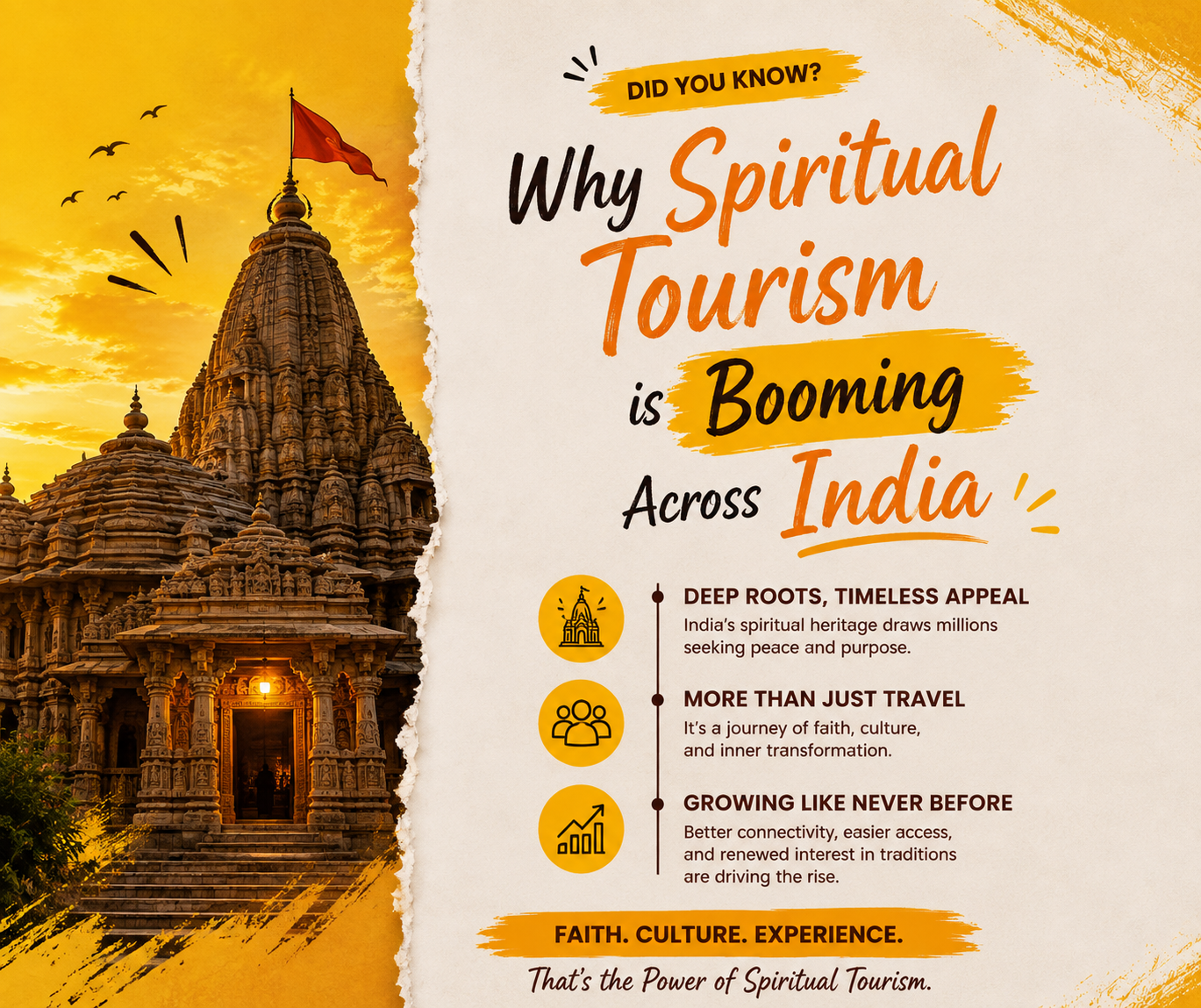
Why Spiritual Tourism is Growing So Rapidly
Spiritual tourism has become one of the most important travel movements in India. Millions of people are visiting temples, sacred cities, pilgrimage circuits, ghats, monasteries, spiritual retreats, and religious festivals not only for worship but also for culture, heritage, family bonding, and personal reflection.
From Kedarnath and Badrinath in the Himalayas to Tirupati and Rameswaram in the south, from Kashi Vishwanath and Ayodhya in the north to Dwarka and Somnath in the west, spiritual destinations are seeing stronger interest from travelers across age groups.
What makes this growth particularly interesting is that pilgrimage travel is no longer limited to traditional religious tourism. Younger travelers, families, senior citizens, working professionals, and even international visitors are increasingly including spiritual destinations in their travel plans.
This broader interest is reshaping how temple tourism is planned, booked, and experienced across India.
Faith Remains the Strongest Driver
At the core of spiritual tourism is faith. For millions of devotees, visiting a sacred temple is not simply a travel activity but an important personal or family aspiration.
People undertake pilgrimages to:
- Seek blessings.
- Fulfill religious vows.
- Participate in important rituals.
- Visit ancestral spiritual destinations.
- Celebrate festivals.
- Complete traditional pilgrimage circuits.
These motivations create consistent travel demand throughout the year, particularly around major festivals and auspicious dates.
Improved Connectivity is Making Pilgrimages Easier
One of the biggest reasons spiritual tourism is expanding is improved transportation infrastructure.
Many pilgrimage destinations that were once difficult to reach now benefit from:
- Better highways.
- Improved railway connectivity.
- New airport routes.
- Organized bus services.
- Local taxi networks.
- Better last-mile connectivity.
As travel becomes easier, destinations that were once considered difficult pilgrimages are becoming more accessible to families and senior citizens.
Temple Infrastructure is Improving
Many major pilgrimage centers have invested in better visitor infrastructure.
These improvements may include:
- Improved temple approach roads.
- Better queue management.
- Parking facilities.
- Visitor centers.
- Public amenities.
- Safer pedestrian areas.
Improved infrastructure creates a better overall experience and encourages more travelers to visit.
Families are Travelling Together More Often
Spiritual tourism is increasingly becoming a family travel category.
Many households combine pilgrimage with family vacations, creating multi-generational journeys involving children, parents, and grandparents.
These travelers usually look for:
- Comfortable accommodation.
- Hotels near temples.
- Easy transportation.
- Family rooms.
- Nearby dining options.
- Senior-friendly facilities.
As family participation grows, demand for reliable pilgrimage accommodation is rising as well.
Senior Citizens are Travelling More Comfortably
Many senior citizens have long-held wishes to visit sacred destinations across India. Better roads, improved rail services, more accessible hotels, and organized travel services are making these journeys easier than before.
Senior travelers often prioritize:
- Hotels close to temples.
- Lift access where available.
- Minimal walking.
- Comfortable transportation.
- Nearby medical facilities.
- Flexible itineraries.
This has created growing demand for senior-friendly pilgrimage services and accommodation.
Digital Booking is Changing Spiritual Travel
Technology has transformed the way devotees plan temple journeys.
Travelers can now use digital platforms to:
- Book hotels.
- Compare room options.
- Check temple locations.
- Read reviews.
- Plan transportation.
- Store travel documents.
- Monitor weather.
This convenience has significantly reduced the uncertainty traditionally associated with pilgrimage planning.
Online Information is Making Travelers More Confident
Earlier, devotees depended heavily on local contacts or travel agents for information about temple destinations.
Today, travelers can research:
- Temple timings.
- Festival dates.
- Accommodation.
- Weather conditions.
- Nearby attractions.
- Local transportation.
Better information makes first-time pilgrimage travel much easier.
Younger Travelers are Showing Greater Interest
Spiritual tourism is increasingly attracting younger generations.
Many young travelers visit temples not only for religious reasons but also for:
- Cultural exploration.
- Architecture.
- History.
- Photography.
- Personal reflection.
- Family traditions.
This has expanded temple tourism beyond its traditional traveler base.
Social Media is Increasing Destination Awareness
Social media has introduced many lesser-known spiritual destinations to a much larger audience.
Travel videos, pilgrimage itineraries, temple photography, and personal travel stories help people discover destinations they may never have previously considered visiting.
This increased visibility encourages travelers to explore:
- Ancient temples.
- Regional pilgrimage circuits.
- Sacred villages.
- Temple festivals.
- Spiritual heritage destinations.
Religious Festivals Drive Massive Travel Demand
Major temple festivals create some of the largest travel movements in India.
Events such as:
- Rath Yatra.
- Maha Shivaratri.
- Navratri.
- Brahmotsavam.
- Kumbh Mela.
- Janmashtami.
can attract enormous numbers of devotees, creating high demand for hotels, transportation, food services, and local tourism businesses.
Pilgrimage Circuits Encourage Longer Trips
Many travelers now combine multiple temples into one journey.
Popular spiritual circuits include:
- Char Dham Yatra.
- Jyotirlinga Circuit.
- Shakti Peetha Circuit.
- Krishna Circuit.
- Ramayana Circuit.
- South India Temple Circuit.
These multi-destination journeys increase the need for better accommodation planning and organized travel services.
Spiritual Tourism Supports Local Economies
Temple tourism creates economic activity far beyond the temple itself.
Visitors spend on:
- Hotels.
- Restaurants.
- Taxis.
- Local guides.
- Religious items.
- Handicrafts.
- Local shopping.
This supports thousands of small businesses and creates employment in pilgrimage destinations.
Local Hotels are Becoming More Important
As temple tourism grows, travelers increasingly need reliable accommodation close to sacred destinations.
Independent hotels, guest houses, homestays, and boutique properties often play an important role in meeting this demand.
Travelers usually prioritize:
- Location.
- Cleanliness.
- Comfort.
- Affordability.
- Family suitability.
- Temple accessibility.
Affordable Travel is Expanding the Market
Spiritual tourism includes travelers across every budget category.
A pilgrimage may involve:
- Budget hotels.
- Guest houses.
- Mid-range accommodation.
- Premium hotels.
- Luxury spiritual retreats.
This broad accommodation range allows more travelers to undertake temple journeys according to their financial preferences.
Comfort is Becoming More Important
Modern pilgrims increasingly expect better accommodation and travel infrastructure.
While the spiritual purpose remains central, travelers also value:
- Clean rooms.
- Reliable hot water.
- Good bedding.
- Safe surroundings.
- Accessible transport.
- Responsive hotel staff.
This shift is encouraging the hospitality industry around pilgrimage destinations to improve service standards.
Location Matters More Than Ever
As temple towns become busier, staying close to the temple becomes increasingly valuable.
Nearby accommodation can provide:
- Less commuting.
- Lower transportation costs.
- Easier early morning darshan.
- Convenient rest breaks.
- Better access for senior citizens.
This creates strong demand for hotels that are genuinely convenient for temple visitors.
Specialized Temple Booking Platforms are Emerging
General booking websites provide enormous hotel inventories, but pilgrimage travelers often have very specific requirements.
A specialized platform can make the booking process easier by focusing on:
- Temple proximity.
- Pilgrimage-friendly hotels.
- Family accommodation.
- Senior-friendly stays.
- Destination relevance.
Mudras Stays has been developed around this temple-focused approach, helping travelers explore accommodation specifically around spiritual destinations.
How Mudras Stays Fits Into India's Growing Spiritual Tourism Market
As pilgrimage demand grows, finding suitable accommodation becomes increasingly important. Travelers do not simply need a hotel in the same city; they need a stay that works for the actual journey.
Mudras Stays helps devotees explore:
- Hotels near major temples.
- Verified accommodation options.
- Budget and premium stays.
- Family-friendly hotels.
- Senior citizen-friendly accommodation.
- Destination-focused properties.
- Convenient temple access.
- Practical pilgrimage planning support.
This specialization helps simplify hotel selection for travelers who might otherwise spend significant time filtering general accommodation listings.
Spiritual Travel is Becoming More Organized
Another important reason for the growth of spiritual tourism is the increasing organization of pilgrimage travel.
Travelers can now plan:
- Accommodation in advance.
- Multi-city itineraries.
- Local transport.
- Temple visits.
- Festival travel.
- Family requirements.
Better organization makes pilgrimage accessible to people who may previously have considered such journeys too complicated.
Temple Tourism is Expanding Beyond Traditional Pilgrimage
Many travelers now combine religious visits with cultural and leisure experiences.
A temple trip may also include:
- Heritage walks.
- Local food experiences.
- Markets.
- Historical attractions.
- Nature destinations.
- Traditional festivals.
This broader experience is helping spiritual tourism become a major part of India's domestic travel industry.
Frequently Asked Questions
Why is spiritual tourism growing in India?
The growth is being driven by faith, better connectivity, improved infrastructure, digital booking, rising family travel, greater awareness, and easier access to pilgrimage information.
Which spiritual destinations are most popular in India?
Popular destinations include Tirupati, Kedarnath, Badrinath, Vaishno Devi, Varanasi, Ayodhya, Ujjain, Dwarka, Somnath, Rameswaram, Puri, and many others.
Are younger travelers interested in spiritual tourism?
Yes. Younger travelers increasingly visit temples for spirituality, culture, heritage, architecture, photography, and family traditions.
How has technology affected temple tourism?
Online hotel booking, maps, travel information, digital payments, weather tools, and online temple services have made pilgrimage planning much easier.
Why are hotels near temples in greater demand?
Nearby hotels reduce travel time, lower transportation costs, make darshan more convenient, and provide greater comfort for families and senior citizens.
How does temple tourism support local communities?
Pilgrims spend on accommodation, food, taxis, shopping, guides, religious items, and local services, creating income and employment in temple destinations.
Can Mudras Stays help spiritual travelers?
Yes. Mudras Stays focuses on accommodation near pilgrimage destinations, helping travelers find stays that are more relevant to temple travel.
Is spiritual tourism only for religious travelers?
No. Many travelers visit spiritual destinations for culture, architecture, history, heritage, wellness, and personal reflection in addition to religious reasons.
Will spiritual tourism continue to grow?
Given improving infrastructure, digital access, rising domestic travel, family participation, and strong cultural interest, spiritual tourism is likely to remain an important travel category in India.
Who benefits from the growth of temple tourism?
Devotees, hotels, local businesses, transport providers, guides, restaurants, artisans, and communities around pilgrimage destinations all benefit from increased visitor activity.