Kartik Swami Aarti: Where Courage Meets the Himalayan Sky
Kartik Swami Aarti is the ceremonial worship of Lord Kartikeya at the sacred Kartik Swami Temple in Rudraprayag district, Uttarakhand. Perched on a narrow Himalayan ridge at approximately 3,048 metres, the temple combines devotion, mountain silence, sacred lamps, bells and panoramic views in a deeply memorable spiritual experience.
Lord Kartikeya is the son of Lord Shiva and Goddess Parvati. He is also known as Skanda, Murugan, Subrahmanya, Shanmukha and Kartik Swami. Devotees worship him as a symbol of courage, discipline, wisdom, youthful energy and victory over negative forces.
The Aarti becomes especially powerful because of the temple’s isolated mountain setting. As priests offer the sacred lamp and the sound of bells moves across the ridge, worshippers experience a rare combination of prayer and Himalayan stillness.
Kartik Swami Temple generally has morning and evening Aarti. Special ceremonies may also be organised during Kartik Purnima, the Kalash Yatra, Mahayagya and other locally important religious occasions.
History of Kartik Swami Temple
Kartik Swami Temple is situated on Kraunch Parvat, also written as Kronch Parvat, near Kanakchauri village in Rudraprayag district. The shrine is reached through an approximately three-kilometre uphill trek from the village.
The temple is considered one of Uttarakhand’s rare shrines primarily dedicated to Lord Kartikeya. Although Kartikeya is widely worshipped as Murugan or Subrahmanya in southern India, temples principally dedicated to him are less common in the Himalayan region.
The sacred identity of Kartik Swami Temple is connected with a traditional story involving Lord Kartikeya and his brother, Lord Ganesha.
According to temple tradition, Lord Shiva asked his two sons to travel around the universe. The son who completed the journey first would receive the honour of being worshipped before other deities.
Lord Kartikeya immediately began travelling across the universe on his peacock. Lord Ganesha, however, walked around Lord Shiva and Goddess Parvati and explained that his parents represented the entire universe for him.
Lord Shiva and Goddess Parvati were pleased with Ganesha’s wisdom and granted him the honour of being worshipped first. When Kartikeya returned after completing his difficult journey, he learned that Ganesha had already received the blessing.
Local tradition states that Kartikeya withdrew to Kraunch Parvat and offered his physical being, symbolically described through his flesh and bones, as testimony to his devotion and sacrifice. The sacred form worshipped at Kartik Swami Temple is associated with this tradition.
The legend gives the temple a powerful emotional meaning. Kartikeya’s journey represents effort, courage and determination, while Ganesha’s action represents wisdom and a different understanding of duty. The story encourages devotees to consider how effort, intelligence, humility and acceptance must exist together.
The shrine is often described as approximately two centuries old in its present form, although its sacred legend belongs to a much older religious tradition. Over time, Kartik Swami Temple has become an important pilgrimage place for communities from Rudraprayag, Chamoli and other parts of Uttarakhand.
Meaning of Kartik Swami Aarti
Aarti is the ceremonial presentation of light before a deity. At Kartik Swami Temple, priests offer the lighted lamp before Lord Kartikeya while bells, incense, prayers and devotional chants create an atmosphere of concentrated worship.
The Aarti flame represents divine awareness and the removal of spiritual darkness. Its circular movement symbolically offers every part of a devotee’s life to the divine.
At Kartik Swami Temple, the ceremony also reflects Lord Kartikeya’s principal qualities:
- Courage: Kartikeya is traditionally remembered as a fearless divine warrior.
- Discipline: His journey around the universe represents commitment and determined action.
- Wisdom: The story involving Ganesha encourages devotees to balance effort with thoughtful judgement.
- Sacrifice: The temple legend remembers Kartikeya’s complete surrender and devotion.
- Victory: Lord Kartikeya represents victory over fear, confusion and harmful tendencies.
- Acceptance: The narrative encourages devotees to move beyond disappointment without abandoning spiritual discipline.
The Himalayan setting adds another meaning to the Aarti. The long climb, cold wind and isolated ridge remind devotees that meaningful spiritual experiences often require patience, preparation and personal effort.
All Aartis at Kartik Swami Temple
The regular worship schedule principally includes morning and evening Aarti. Special Aartis may be performed during festivals and major religious gatherings. Exact arrangements can change according to season, weather, priestly decisions and local events.
Morning Aarti
Morning Aarti is commonly reported at approximately 7:00 AM. It begins the temple’s principal daily worship in the calm atmosphere of the Himalayan morning.
Before the Aarti, priests prepare the sanctum, ceremonial articles, flowers, incense and sacred lamp. Daily Puja and traditional offerings may be completed according to the temple’s established ritual sequence.
The lighted lamp is presented before Lord Kartikeya while bells and devotional prayers create a focused spiritual environment. On clear days, the morning ceremony may coincide with sunlight gradually illuminating the surrounding Himalayan peaks.
Morning Aarti is suited to devotees seeking quieter worship, cooler conditions and a peaceful beginning to their pilgrimage. The temple’s elevation, however, means that mornings can remain cold even outside winter.
Reaching the reported 7:00 AM ceremony requires careful planning because the temple is approached through an approximately three-kilometre trek from Kanakchauri. Visitors should calculate sufficient walking time and avoid attempting a dark, foggy, snowy or rain-affected trail without local guidance.
Evening or Sandhya Aarti
Evening Aarti is commonly reported at approximately 6:00 PM. It is also known as Sandhya Aarti and is one of the temple’s most distinctive devotional experiences.
As daylight begins to fade, the sacred lamp becomes more visually prominent against the mountain surroundings. The sound of bells and mantras travels across the open ridge, creating an atmosphere that is both devotional and peaceful.
Priests offer the lamp, incense, flowers and prayers before Lord Kartikeya. Devotees generally stand with folded hands, participate in familiar responses and receive the blessings of the Aarti flame.
Evening Aarti is especially attractive for visitors who want to experience the temple during sunset. However, sunset times and weather conditions change significantly across seasons. The ceremony may therefore begin earlier or later according to local arrangements.
Devotees must also plan their descent carefully. Walking down after the ceremony can become difficult in darkness, fog, rain or snow. Visitors intending to attend Sandhya Aarti should confirm the trail condition, carry a reliable torch and arrange local guidance or accommodation near Kanakchauri when necessary.
Kartik Purnima Special Aarti
Kartik Purnima is one of the most important annual occasions at Kartik Swami Temple. Large numbers of devotees visit the shrine to worship Lord Kartikeya through special prayers, offerings, lamps and ceremonial rituals.
The ordinary morning and evening programme may be expanded or modified during Kartik Purnima. Special Puja, chanting, community worship, cultural programmes and additional lamp ceremonies may form part of the celebration.
Because the festival follows the Hindu lunar calendar, its Gregorian date changes each year. Devotees should check the current festival programme before travelling.
Kalash Yatra and Mahayagya Aarti
The temple is known for its Kalash Yatra and Kartik Swami Mahayagya, generally organised during June according to the locally announced religious calendar.
The Mahayagya and associated religious gathering can continue for several days. Worship may include Vedic chanting, Yagya rituals, devotional discourses, Kalash processions, Purnahuti, Aarti and community meals.
Special Aarti may be performed at important stages of the programme. These ceremonies do not necessarily follow the ordinary daily timetable and should be confirmed through the current event announcement.
Other Special Aartis
Additional worship may be conducted when local communities organise religious observances, temple anniversaries, collective Pujas or special devotional programmes.
The timing, participation arrangements and ritual sequence are determined locally. Visitors should not assume that every special ceremony is open under the same conditions as the regular public Aarti.
Kartik Swami Aarti Timings
| Aarti or Worship | Commonly Reported Time | Key Experience |
|---|---|---|
| Morning Aarti | Around 7:00 AM | Quiet worship, morning prayers, bells and Himalayan sunrise atmosphere |
| Evening or Sandhya Aarti | Around 6:00 PM | Sacred lamps, sunset views, mantras and congregational worship |
| Kartik Purnima Aarti | Announced locally | Special Puja, festive lamps and a larger gathering of devotees |
| Kalash Yatra and Mahayagya Aarti | According to the event programme | Yagya, Kalash procession, chanting, Purnahuti and special Aarti |
| Other Special Aartis | Announced locally | Additional worship during community and temple programmes |
Important timing note: The morning and evening times are commonly published planning references, not a live official temple timetable. The schedule can change with season, weather, festivals and priestly arrangements. Devotees should confirm the current Aarti and darshan timings locally before beginning the trek.
Rituals Performed During Kartik Swami Aarti
Preparation of the Sanctum
The priests prepare the sanctum and ceremonial articles before worship. Movement near the deity may be regulated while the internal Puja is being completed.
Invocation and Prayer
The ceremony begins with prayers invoking divine presence and seeking permission to conduct the worship. Devotees are encouraged to remain silent and attentive.
Offering of Flowers
Fresh flowers may be presented to Lord Kartikeya as expressions of devotion, gratitude and purity. Visitors should use only offerings accepted by the temple.
Lighting of Incense
Incense is offered during worship, symbolising purified thoughts and prayers rising towards the divine.
Mantra and Devotional Chanting
Prayers invoking Lord Kartikeya through names such as Skanda, Murugan, Subrahmanya and Kartik Swami may accompany the ceremony. Devotees should follow the priest’s lead rather than interrupting the established sequence.
Offering of the Aarti Lamp
A lighted ghee or oil lamp is moved in circular patterns before the deity. The flame represents knowledge, courage and the removal of spiritual darkness.
Ringing of Bells
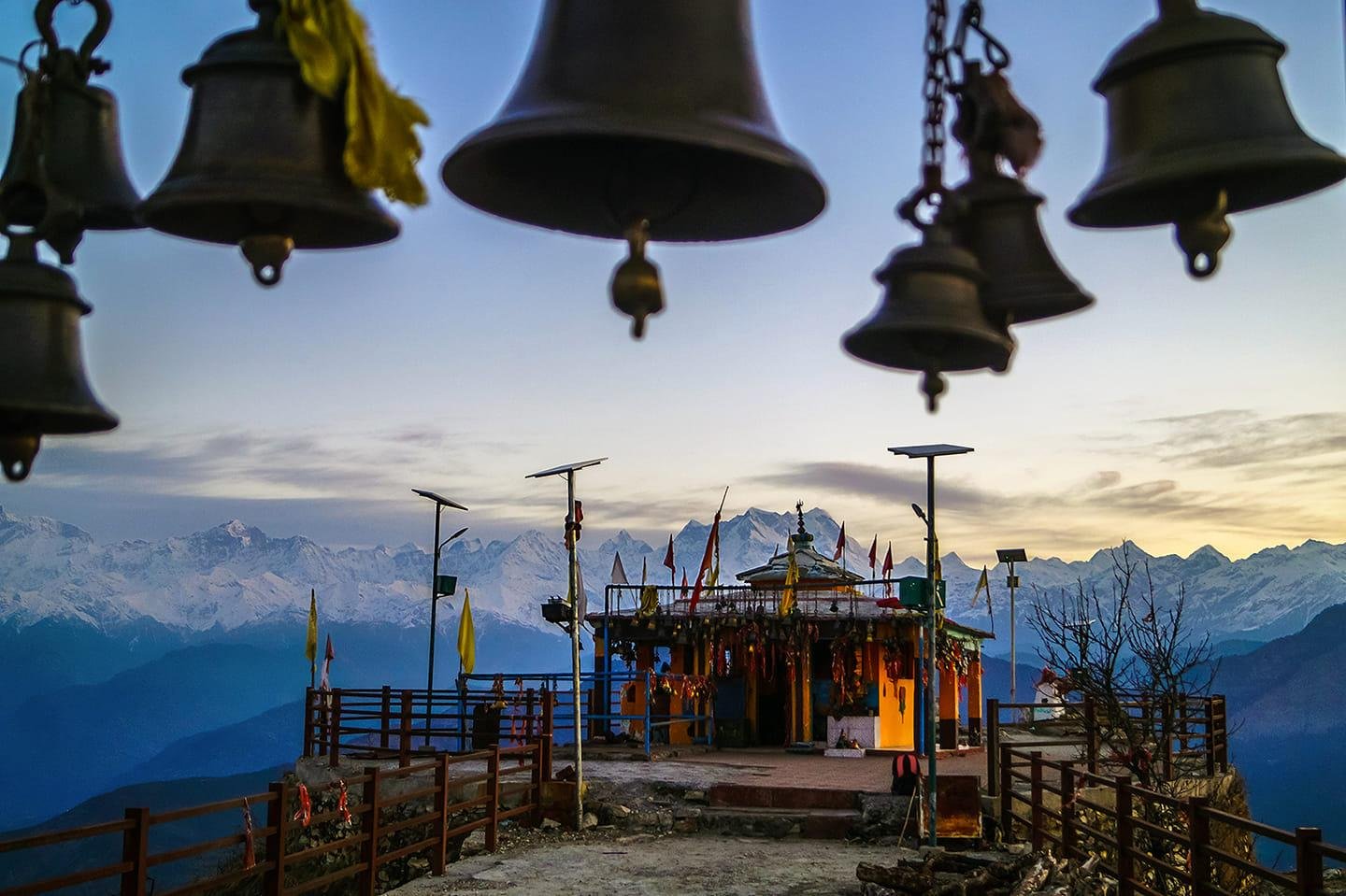
Bells form an important part of the Kartik Swami experience. Their sound helps focus the mind on worship and carries across the exposed Himalayan ridge.
Receiving the Aarti Flame
When the lamp is presented to the congregation, devotees commonly place their hands near its warmth and respectfully touch their forehead or head. Visitors should wait patiently and avoid pushing towards the lamp.
Prasad and Final Darshan
The ceremony may conclude with final darshan and the distribution of prasad. Availability and distribution arrangements can vary according to the daily worship programme.
Benefits of Attending Kartik Swami Aarti
- Developing courage: Lord Kartikeya inspires devotees to face difficult situations with strength and determination.
- Improving discipline: The trek and early worship require preparation, patience and personal commitment.
- Seeking clarity: The story of Kartikeya and Ganesha encourages thoughtful judgement instead of action driven only by speed.
- Overcoming fear: Kartikeya’s warrior form represents victory over inner hesitation and negative tendencies.
- Managing disappointment: The temple legend encourages devotees to process disappointment without losing spiritual purpose.
- Strengthening devotion: Lamps, bells and collective prayer help worshippers focus their attention on the divine.
- Finding mental calm: The mountain environment provides distance from noise, crowds and everyday distractions.
- Encouraging humility: The physical climb reminds visitors that spiritual experience requires effort and respect.
- Supporting family prayer: Families can pray together for courage, wisdom, harmony and responsible decision-making.
- Deepening gratitude: The Aarti offers an opportunity to express gratitude for strength, guidance and protection.
These are devotional interpretations based on religious belief. Attending Aarti should not be presented as a guaranteed solution for medical, financial, professional or personal difficulties.
What Makes Kartik Swami Aarti Special?
- Rare Kartikeya shrine: It is one of Uttarakhand’s few prominent temples dedicated principally to Lord Kartikeya.
- High-altitude setting: The shrine stands at approximately 3,048 metres on a narrow Himalayan ridge.
- Mountain panorama: Clear weather can reveal an extensive range of snow-covered Himalayan peaks.
- Three-kilometre pilgrimage trek: Devotees complete a forest and ridge walk before reaching the temple.
- Sacred bells: Numerous bells around the temple contribute to the distinctive atmosphere of the Aarti.
- Sunrise and sunset worship: Morning and evening ceremonies take place amid changing Himalayan light.
- Legend of sacrifice: The temple tradition remembers Kartikeya’s devotion, determination and renunciation.
- Connection with Murugan worship: The shrine is significant for devotees who worship Kartikeya as Murugan or Subrahmanya.
- Kartik Purnima celebration: Special worship attracts a larger congregation during the sacred full-moon festival.
- Kalash Yatra and Mahayagya: The June religious gathering includes extended ceremonies, chanting and community participation.
Kartik Purnima Worship
Kartik Purnima is among the most significant occasions for worship at Kartik Swami Temple. Devotees consider the full-moon day especially auspicious for honouring Lord Kartikeya.
The temple may receive considerably more visitors than on an ordinary day. Special decoration, prayers, lamps, offerings and community ceremonies can be organised according to the current programme.
Visitors should expect longer waiting periods and greater pressure on the mountain trail. They should carry minimal belongings, follow local instructions and avoid blocking the narrow approach to the temple.
Kalash Yatra and Kartik Swami Mahayagya
The Kalash Yatra and Kartik Swami Mahayagya form an important religious gathering associated with the temple. The event is generally held in June, although exact dates depend upon the Hindu calendar and local announcement.
The programme can include Yagya, religious discourses, devotional chanting, Kalash processions, Purnahuti, Aarti and Maha Bhandara. The gathering brings together temple representatives, local communities, priests and pilgrims.
Special Aarti during this period may be longer and more elaborate than ordinary daily worship. Visitors should obtain the current schedule instead of depending upon regular morning and evening planning times.
Offerings for Lord Kartikeya
Devotees may offer flowers, fruits, incense, lamps, coconut or other Puja materials accepted by the temple. The exact offering system should be confirmed locally because high-altitude temples may regulate what can be taken into the sanctum.
Visitors should avoid carrying excessive packaging or leaving plastic, food wrappers and discarded offerings on the trail. Every item carried into the mountain environment should be brought back or placed in an authorised collection point.
Bells may also be offered by devotees according to local tradition. No object should be tied, installed or left inside the temple complex without permission.
Which Kartik Swami Aarti Should You Attend?
Choose morning Aarti if you prefer peaceful worship, cooler conditions and the possibility of clear morning views. Plan sufficient time for the trek and verify that the trail is safe before sunrise.
Choose evening Aarti if you want to experience illuminated lamps and sunset over the Himalayan ridge. Arrange a safe descent, torch and local assistance because darkness follows quickly in the mountains.
Choose Kartik Purnima if you want a festive devotional atmosphere and are comfortable with larger crowds.
Choose the Kalash Yatra or Mahayagya period if you want to witness extended worship, processions, Yagya and community participation.
Choose an ordinary weekday if your priority is quiet darshan, personal prayer and fewer visitors.
Key Details for Devotees
| Temple Name | Kartik Swami Temple |
|---|---|
| Location | Kraunch Parvat near Kanakchauri, Rudraprayag district, Uttarakhand |
| Principal Deity | Lord Kartikeya, also known as Skanda, Murugan and Subrahmanya |
| Approximate Altitude | 3,048 metres above sea level |
| Approach | Approximately three-kilometre uphill trek from Kanakchauri |
| Reported Morning Aarti | Around 7:00 AM |
| Reported Evening Aarti | Around 6:00 PM |
| Important Celebrations | Kartik Purnima, Kalash Yatra and Kartik Swami Mahayagya |
| Recommended Arrival | Reach the temple 30 to 45 minutes before the expected Aarti |
| Timing Confirmation | Confirm locally before starting the trek |
Kartik Swami Aarti Etiquette
- Wear clean, modest and weather-appropriate clothing.
- Carry warm layers because temperatures can fall quickly at the summit.
- Remove footwear only at the designated location.
- Keep mobile phones silent during worship.
- Ask permission before photographing the sanctum, deity, priests or Aarti.
- Avoid flash photography during the ceremony.
- Do not block the narrow temple entrance or ridge pathway.
- Follow the priests’ instructions while presenting offerings.
- Do not touch sacred objects without permission.
- Wait patiently when receiving the Aarti flame or prasad.
- Keep children away from open lamps and exposed ridge edges.
- Do not leave plastic, bottles or Puja packaging on the trail.
- Avoid attempting the trek during severe rain, fog, snowfall or thunderstorms.
- Use a torch and local guidance if returning after evening Aarti.
Frequently Asked Questions About Kartik Swami Aarti
1. What is Kartik Swami Aarti?
Kartik Swami Aarti is the ceremonial worship of Lord Kartikeya through sacred lamps, bells, incense, flowers, mantras and devotional prayer at Kartik Swami Temple.
2. What are the Kartik Swami Aarti timings?
Morning Aarti is commonly reported at approximately 7:00 AM, while evening or Sandhya Aarti is commonly reported at approximately 6:00 PM.
3. Are the Aarti timings officially confirmed?
No live official daily timetable is currently published. The reported timings should be used for planning only and confirmed locally before beginning the trek.
4. Which Aarti is best for first-time visitors?
Morning Aarti is usually more practical because it offers daylight for the return journey. Evening Aarti is visually beautiful, but visitors must arrange a safe descent after sunset.
5. Who is worshipped at Kartik Swami Temple?
The temple is dedicated to Lord Kartikeya, the son of Lord Shiva and Goddess Parvati. He is also known as Skanda, Murugan, Subrahmanya and Kartik Swami.
6. Why is Kartik Swami Temple considered special?
It is a rare Himalayan shrine dedicated principally to Lord Kartikeya and stands at approximately 3,048 metres on a ridge surrounded by panoramic mountain views.
7. How far is the trek to Kartik Swami Temple?
The temple is reached through an approximately three-kilometre uphill trek from Kanakchauri village.
8. Is advance booking required for Aarti?
Advance booking is generally not required for ordinary public Aarti. Special Puja or festival ceremonies may follow separate local arrangements.
9. What happens during Kartik Purnima?
Kartik Purnima can include special worship, lamps, prayers, festive gatherings and a larger number of devotees. The current programme should be confirmed locally.
10. Can visitors attend evening Aarti and return the same day?
They can, but the descent may take place in darkness. Visitors should check the weather and trail, carry a reliable torch and arrange local guidance when necessary.