Radha Raman Aarti: Worship That Treats Krishna as a Living Beloved
Radha Raman Aarti is part of an intimate daily cycle of worship performed before Shri Radharaman Lal at the historic Shri Radharaman Temple in Vrindavan. The ceremony combines sacred lamps, incense, flowers, devotional music and carefully maintained deity seva.
Rather than being limited to one morning and one evening ceremony, the temple follows several stages of worship. Mangala Aarti awakens the deity before sunrise, Shringar Aarti presents Him in freshly arranged garments, Rajbhog Aarti accompanies the principal meal offering, Sandhya Aarti marks the devotional evening, and Shayan Aarti respectfully concludes the day.
Each ceremony reflects the belief that Shri Radharaman is not merely a sacred image but a living divine personality who is awakened, bathed, dressed, fed, entertained and prepared for rest with affection.
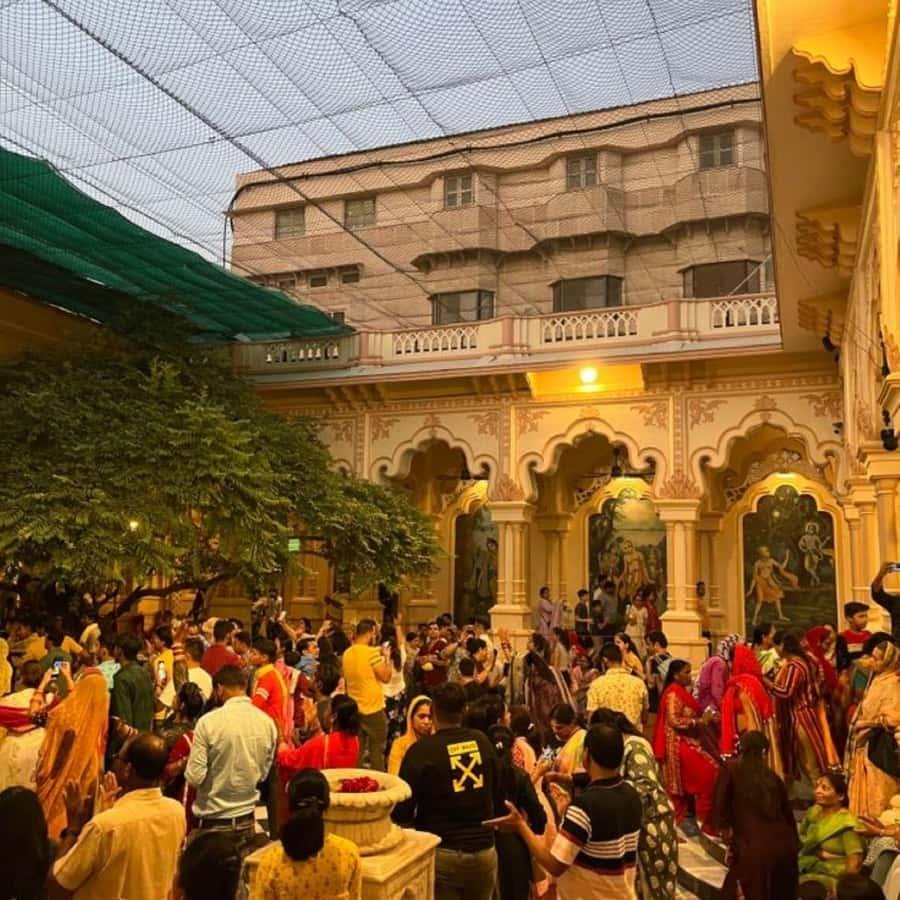
The small size of the self-manifested deity, the uninterrupted Goswami family seva, the singing of traditional Brajbhasha compositions and the temple’s intimate courtyard give Radha Raman Aarti a character that differs from the larger congregational ceremonies of many modern temples.
Who Is Shri Radha Raman Ji?
Radha Raman means the one who delights Shri Radha or the beloved of Radha. The presiding deity is a beautiful form of Lord Krishna who is traditionally believed to have manifested from a sacred Damodar Shaligram Shila in response to the devotion of Shri Gopal Bhatta Goswami.
The deity is exceptionally small, light and moveable. Despite His size, devotees observe clearly formed facial features, limbs, a graceful posture and the markings of the original Shaligram on His back.
There is no separate three-dimensional deity of Shri Radharani beside Him. According to the temple tradition, Shri Radharaman is the combined form of Radha and Krishna, and the sacred name of Radha is worshipped at His left side.
The temple’s official explanation also notes that the deity does not physically hold a flute. Because He is small and moveable, repeatedly placing and removing a flute could damage His delicate hands or cause Him to fall. Devotees therefore meditate upon Him as eternally holding His flute.
Origin of the Radha Raman Aarti Tradition
Shri Gopal Bhatta Goswami was one of the six principal Goswamis associated with Shri Chaitanya Mahaprabhu’s devotional movement. As a young boy in Srirangam, he served Chaitanya Mahaprabhu during the latter’s visit to South India.
After eventually settling in Vrindavan, Gopal Bhatta Goswami worshipped sacred Shaligram Shilas. Temple tradition records that he received twelve Shilas connected with the Gandaki River in Nepal.
Gopal Bhatta lovingly offered water, Tulasi leaves, food and prayers to the Shilas. However, he desired to serve Krishna in a human-like form that could be dressed with garments and decorated with ornaments.
According to the traditional account, one morning he opened the basket containing the Shilas and discovered that the Damodar Shila had manifested as a perfectly formed deity of Krishna. Eleven Shilas remained, while Shri Radharaman had appeared in a threefold-bending divine form.
The temple identifies 1542 as the year of Shri Radharaman’s manifestation. His appearance is commemorated annually around Vaishakh Purnima with special worship and a morning Mahaabhishek.
Gopal Bhatta Goswami established a detailed system of worship for the deity. The responsibility was subsequently continued through the lineage connected with his chosen successor, Shri Damodar Das Goswami.
For almost five centuries, the daily seva has remained in the care of Goswami families associated with this tradition. Families receive designated periods of service during which they arrange the deity’s worship, meals, clothing, Aartis and festivals.
Spiritual Significance of Radha Raman Aarti
Aarti is a ritual in which illuminated lamps and other sacred articles are presented before the deity. The light symbolises spiritual knowledge, purity and the removal of inner ignorance.
The circular movement of the lamp represents the offering of the devotee’s entire existence—body, senses, thoughts, abilities and actions—to the divine. The ritual reminds worshippers that every part of life can be transformed into seva.
At Radha Raman Temple, the meaning of Aarti is closely connected with personal service. The deity is approached with the affectionate mood shown towards a beloved child, friend or family member rather than only with distant royal formality.
Mangala Aarti represents an auspicious beginning centred on remembrance of Krishna. Shringar Aarti celebrates divine beauty. Rajbhog Aarti teaches gratitude for nourishment, while Sandhya Aarti gathers the mind again after the activities of the day.
Shayan Aarti expresses gratitude before rest. Instead of ending the temple programme abruptly, the final ceremony gently concludes the daily relationship between the deity, the sewayats and the assembled devotees.
The worship also reflects the Gaudiya Vaishnav understanding that sacred love is the highest purpose of spiritual practice. Ritual precision is important, but the deeper objective is to serve Krishna for His happiness rather than for personal reward.
What Makes Radha Raman Aarti Special?
- Self-manifested deity: Shri Radharaman is traditionally believed to have appeared from a Shaligram Shila rather than having been carved by an artisan.
- Combined form of Radha and Krishna: A separate deity of Radharani is not installed because Her presence is understood to reside within Shri Radharaman.
- Intimate scale: The small deity and compact worship space create an unusually personal darshan experience.
- Living seva tradition: The worship follows a daily routine of awakening, dressing, feeding, entertaining and resting the deity.
- Hereditary service: Goswami families connected with the original lineage continue to perform the seva.
- Brajbhasha devotional music: Traditional songs describe Shri Radharaman’s daily activities, beauty, festivals and relationship with devotees.
- Multiple daily Aartis: Worshippers can experience different devotional moods from pre-dawn Mangala to night-time Shayan.
- Aulai Darshan: The evening programme contains a distinctive darshan imagining Krishna returning home after grazing the cows.
- Seasonal decoration: Garments, flowers, ornaments and food offerings change according to the weather and devotional calendar.
- Historic kitchen tradition: Temple tradition maintains that the sacred cooking fire has been preserved since the early period of Shri Radharaman’s worship.
Devotional Benefits of Attending Radha Raman Aarti
- Focused prayer: The flame, bells, deity darshan and music help direct attention away from everyday distractions.
- Understanding of seva: Visitors observe how worship is organised as loving service rather than as an isolated ceremony.
- Peaceful beginning: Mangala Aarti provides a quiet setting for prayer before the streets of Vrindavan become busy.
- Experience of traditional worship: The ceremony preserves an old Gaudiya Vaishnav seva system.
- Participation through listening: Visitors can join inwardly even when they do not understand every Sanskrit, Bengali or Brajbhasha composition.
- Development of gratitude: Bhog and Rajbhog encourage devotees to acknowledge food and material resources as divine gifts.
- Emotional reassurance: The intimate atmosphere may provide comfort during periods of uncertainty or personal difficulty.
- Connection with Vrindavan: The Aarti links present-day worship with the devotional work of Chaitanya Mahaprabhu’s Goswamis.
- Spiritual discipline: The regular sequence encourages punctuality, cleanliness, attention and consistency.
- Appreciation of divine beauty: Shringar Darshan encourages contemplation through garments, flowers, jewellery and seasonal decoration.
These benefits should be understood as personal devotional experiences, not guaranteed material outcomes. The value of attending Aarti depends largely on the visitor’s sincerity, attention and conduct.
Understanding the Daily Radha Raman Aarti Cycle
Mangala Aarti
Mangala Aarti is the first principal worship of the day. It is conducted before or around sunrise, depending on the current seasonal schedule. The word Mangala means auspicious.
The ceremony awakens Shri Radharaman and begins the day with lamps, prayers and devotional singing. The atmosphere is generally quieter than later worship periods, making it suitable for devotees seeking a disciplined and contemplative experience.
Mangala Aarti timing changes with the season. Visitors should never assume that one time remains valid throughout the year.
Morning Dhoop Aarti
Dhoop Aarti centres on the offering of fragrant incense. Its rising smoke represents purified intention and the desire that one’s thoughts and actions become acceptable in divine service.
This ceremony usually takes place after the early preparation of the deity and before the principal Shringar presentation.
Shringar Aarti
Shringar Aarti reveals Shri Radharaman after He has been dressed and decorated. Garments, crowns, jewellery, garlands and flowers are selected according to the season, festival and established seva tradition.
The deity may wear light cotton and floral decorations during warmer weather, while winter worship can include heavier garments. Festival Shringar may incorporate special colours, thrones, flower arrangements and ornaments.
This is one of the best ceremonies for devotees who wish to observe the deity’s delicate appearance and the artistry of traditional decoration.
Rajbhog Aarti
Rajbhog is the principal meal offering of the day. Carefully prepared vegetarian dishes are presented to Shri Radharaman before the morning session concludes.
The Aarti expresses abundance and gratitude. Food is first offered to the deity and is subsequently respected as prasad.
The altar may be closed during private stages of the offering. Visitors should wait patiently rather than assuming that darshan has ended permanently.
Evening Dhoop and Utthapan Seva
After the afternoon interval, Shri Radharaman is welcomed into the evening phase of worship. Dhoop is offered, and the deity is presented again for darshan.
Some published schedules describe this period as evening Dhoop, while others also refer to Utthapan, meaning awakening or rising after the afternoon rest.
Sandhya Aarti
Sandhya Aarti is the principal evening lamp ceremony. It is accompanied by bells, devotional singing and the collective attention of the congregation.
The transition from daylight to evening carries symbolic importance. Devotees return their minds to Krishna after the activities and responsibilities of the day.
This is generally the most convenient Aarti for first-time visitors because it does not require a pre-dawn journey and allows them to experience the temple’s devotional music.
Aulai Darshan
Aulai is a distinctive evening darshan associated with the mood of Krishna returning from cowherding. According to the temple’s official explanation, Krishna has come home after a long day, changed into comfortable clothing and is waiting hungrily for His meal.
The expression Aulai recalls Mother Yashoda affectionately calling Krishna and assuring Him that food is being brought. The darshan therefore reflects parental love and the domestic intimacy of Braj.
Evening Bhog
Food is again presented to Shri Radharaman during the evening programme. The altar may close temporarily while the offering is made privately.
Visitors should follow the instructions of sewayats and avoid pushing towards the altar when curtains or doors are being adjusted.
Shayan Aarti
Shayan Aarti is the final ceremony of the day. The word Shayan refers to resting or reclining.
The deity is offered final prayers and respectfully prepared for rest. The mood is gentle, affectionate and reflective compared with the busier evening Aarti.
Because the temple closes shortly afterwards, visitors should arrive well before the announced Shayan time.
Radha Raman Aarti Timings
Radha Raman Temple does not follow one permanent year-round schedule. Aarti timings are periodically adjusted according to season, daylight, festivals and special seva arrangements.
The temple’s official social pages continue to publish daily Aarti Sandarshan and dated schedule notices. Visitors should therefore treat any undated online timetable as an approximation.
Latest Explicit Official Winter Schedule
An official non-festival notice issued specifically for 12 January to 31 January 2026 listed the following programme:
- 5:30 AM: Mangala Aarti
- 9:00 AM: Morning Dhoop Aarti
- 10:00 AM: Shringar Aarti
- 12:30 PM: Rajbhog Aarti
- 5:00 PM: Evening Dhoop Aarti
- 6:15 PM: Sandhya Aarti
- 7:00 PM: Aulai Darshan
- 8:00 PM: Bhog Darshan
- 8:40 PM: Shayan Aarti
This was a dated winter schedule and should not be presented as a permanent timetable for every month.
Indicative Warmer-Season Schedule
Earlier official warmer-season notices and specialist Braj references show the following general pattern. Exact minutes can be revised:
- Around 5:00 AM: Mangala Aarti
- Around 8:30 AM: Morning Dhoop Aarti
- Around 9:30 AM to 10:00 AM: Shringar Aarti
- Around 12:00 noon to 12:30 PM: Rajbhog Aarti
- Around 6:00 PM: Evening Dhoop or Utthapan seva
- Around 7:00 PM to 7:15 PM: Sandhya Aarti
- Around 8:30 PM: Aulai Darshan
- Around 9:00 PM to 9:30 PM: Shayan Aarti
Important: Confirm the same-day schedule through the temple’s current announcement channels before travelling specifically for an Aarti. Festival programmes and special manoraths may substantially change the sequence.
Rituals Performed During Radha Raman Aarti
Opening of the Altar
The curtain or altar is opened at the appropriate stage, allowing devotees to receive darshan. Temporary closures occur when Shri Radharaman is being dressed, offered food or served privately.
Offering of Incense
Fragrant incense is presented before the deity. Its fragrance and rising smoke symbolise purified thoughts and prayers.
Offering of Sacred Lamps
One or more illuminated lamps are moved in prescribed circular motions before Shri Radharaman. The light represents spiritual knowledge and the removal of inner darkness.
Offering of Flowers
Fresh flowers express affection, beauty and gratitude. Floral decoration becomes especially elaborate during Phool Bangla, spring celebrations and other seasonal programmes.
Other Sacred Articles
Water, cloth, flowers, a chamara whisk or a fan may be presented according to the particular Aarti and season. The exact sequence is performed by authorised sewayats.
Bells and Devotional Music
Bells mark sacred moments and help concentrate the congregation’s attention. Traditional songs describe the beauty, qualities and daily pastimes of Shri Radharaman.
Final Darshan and Prayers
The ceremony concludes with prayers, respectful obeisance and darshan. Devotees may silently offer personal prayers without obstructing the movement of other visitors.
Which Radha Raman Aarti Should You Attend?
Choose Mangala Aarti if you want the quietest and most disciplined experience. Staying within Vrindavan is advisable because the ceremony begins exceptionally early.
Choose Shringar Aarti if your main interest is seeing the deity in freshly arranged garments, jewellery, flowers and seasonal decoration.
Choose Rajbhog Aarti if you want to understand the relationship between food offerings, gratitude and deity seva.
Choose Sandhya Aarti if you are visiting for the first time. The evening hour is comparatively convenient and combines lamps, darshan and devotional music.
Remain for Aulai Darshan if you want to experience the affectionate Braj mood of Krishna returning home after grazing the cows.
Choose Shayan Aarti if you prefer a reflective conclusion and want to witness the final worship before the temple closes.
Festival Aartis and Special Seva
Shri Radharaman Appearance Day
Shri Radharaman’s manifestation is celebrated around Vaishakh Purnima. The official temple calendar identifies a special morning Mahaabhishek as an important part of the occasion.
Janmashtami and Nandotsav
Krishna Janmashtami brings special singing, offerings and decoration. The temple calendar also associates Nandotsav with the Shringar period on the following day.
Radhashtami
Although there is no separate permanent deity of Radharani, Radhashtami is celebrated with deep devotion. The official calendar includes a special morning Abhishek.
Holi
Holi worship reflects the playful mood of Radha and Krishna. Colours, flowers, seasonal songs and special Shringar may transform the ordinary Aarti experience.
Jhulan and Hariyali Teej
The monsoon devotional calendar includes Hindol or Jhulan celebrations. Shri Radharaman may be presented on a decorated swing with seasonal flowers and green ornamentation.
Kartik
Kartik is an especially important devotional month in Vrindavan. Lamp offerings, additional prayers and larger pilgrim numbers can affect the ordinary daily routine.
Festival visitors should never rely on the normal timetable. Special Aartis, Abhishek, congregational singing and extended darshan may be announced separately.
Dress Code and Aarti Etiquette
- Wear clean and modest clothing covering the shoulders and knees.
- Remove footwear at the designated place before entering the worship area.
- Reach the temple before the announced Aarti rather than entering during the principal lamp offering.
- Keep mobile phones silent and follow the current photography instructions.
- Do not use flash, tripods or selfie sticks inside the worship area.
- Avoid photographing the deity or sewayats when temple instructions prohibit it.
- Do not cross barriers or enter areas reserved for Goswamis and authorised sewayats.
- Do not touch the altar, ceremonial articles or food offerings.
- Avoid loud conversation during Aarti, bhog and devotional singing.
- Stand without blocking the darshan of children, elderly devotees or shorter visitors.
- Do not push when the altar opens after a temporary ritual closure.
- Present flowers, food or donations only according to recognised temple arrangements.
- Keep phones, wallets and other belongings secure while moving through Old Vrindavan.
- Follow all directions issued by temple representatives.
Best Time to Experience Radha Raman Aarti
An ordinary weekday is preferable for visitors seeking a calmer experience. Weekends, Ekadashi and major festival days generally attract larger congregations.
Mangala Aarti offers the greatest sense of stillness, while Shringar provides a more detailed view of the deity’s appearance. Sandhya Aarti is the most practical choice for first-time visitors.
October to March usually provides comfortable weather for walking through the narrow lanes of Vrindavan. However, winter Aarti times can differ significantly from the summer programme.
Devotees planning to attend Mangala or Shayan Aarti can use Mudras Stays to explore accommodation near Vrindavan’s temple areas, reducing the need for a difficult pre-dawn or late-night journey.
Arrive approximately 20 to 30 minutes before an ordinary Aarti. During Appearance Day, Janmashtami, Radhashtami, Holi, Kartik and Jhulan celebrations, considerably more time may be required.
Practical Visitor Information
- General participation in the daily public Aarti is ordinarily free.
- Advance registration is generally not required for routine worship.
- Special sponsored sevas, offerings and manoraths follow separate arrangements.
- Brief closures between different stages of worship are normal.
- The temple observes a substantial afternoon interval after Rajbhog.
- The surrounding Old Vrindavan lanes can be too narrow for large vehicles.
- Walking or using an e-rickshaw for the final approach is often more practical.
- Senior citizens should avoid the busiest festival periods if they require an unhurried darshan.
- Families should keep children close because the courtyard and approach lanes can become crowded.
Nearby Spiritual Places After Radha Raman Aarti
- Seva Kunj: A sacred area associated with the intimate devotional pastimes of Radha and Krishna.
- Nidhivan: A revered grove linked with the Raas traditions of Vrindavan.
- Radha Damodar Temple: Another historic Gaudiya Vaishnav temple associated with Shri Jiva Goswami.
- Banke Bihari Temple: One of Vrindavan’s most visited Krishna temples, known for its distinctive darshan tradition.
- Keshi Ghat: A historic Yamuna ghat where devotees can experience the riverfront atmosphere of Old Vrindavan.
Interesting Facts About Radha Raman Aarti
- Shri Radharaman is traditionally believed to have manifested from a Damodar Shaligram Shila.
- The temple identifies 1542 as the year of the deity’s appearance.
- Shri Gopal Bhatta Goswami established the original worship tradition.
- Eleven Shaligram Shilas reportedly remained after Shri Radharaman manifested.
- The deity is small, light and moveable rather than permanently fixed to a base.
- There is no separate permanent deity of Radharani beside Shri Radharaman.
- Radharani’s sacred name is worshipped at His left side.
- The deity does not physically hold a flute because of His delicate moveable form.
- Goswami families connected with the lineage continue the daily seva.
- Aulai Darshan represents Krishna returning home after cowherding.
- Traditional Brajbhasha songs describe Shri Radharaman’s daily life and festivals.
- The temple’s cooking fire is traditionally believed to have been maintained since the early period of worship.
- Aarti timings are changed periodically rather than remaining fixed throughout the year.
- Shri Radharaman Appearance Day includes a special morning Mahaabhishek.
Frequently Asked Questions About Radha Raman Aarti
What is Radha Raman Aarti?
Radha Raman Aarti is the ceremonial worship of Shri Radharaman Lal through sacred lamps, incense, flowers, prayers and devotional music at the historic temple in Vrindavan.
What time is Mangala Aarti?
Mangala Aarti is performed before or around sunrise. A dated January 2026 official schedule listed it at 5:30 AM, while warmer-season schedules commonly place it around 5:00 AM. Same-day confirmation is essential.
What time is Sandhya Aarti?
The January 2026 official notice listed Sandhya Aarti at 6:15 PM. Warmer-season schedules generally place it around 7:00 PM or shortly afterwards.
When is Shayan Aarti?
The dated January 2026 schedule listed Shayan Aarti at 8:40 PM. During warmer periods it may be conducted closer to 9:00 PM or 9:30 PM.
Which Aarti is best for first-time visitors?
Sandhya Aarti is generally the most accessible introduction. Mangala Aarti is preferable for a quiet experience, while Shringar Aarti is ideal for viewing the deity’s decoration.
What is Aulai Darshan?
Aulai Darshan reflects the devotional mood of Krishna returning home after cowherding, changing His clothes and waiting for Mother Yashoda to bring His evening meal.
Why is there no separate deity of Radharani?
The temple tradition understands Shri Radharaman as Radha and Krishna united in one form. Radharani is worshipped through Her sacred name at His left side.
Why does Shri Radharaman not hold a physical flute?
The deity is small, light and moveable. The official temple explanation states that repeatedly placing a flute in His delicate hands could cause damage or instability, so devotees meditate upon Him holding it.
Is there an entry fee for Aarti?
General participation in routine public Aarti is ordinarily free. Optional offerings, donations and sponsored sevas are separate.
Is advance booking required?
Routine daily Aarti generally does not require advance booking. Special arrangements may apply during major festivals or privately sponsored programmes.
How early should devotees arrive?
Arrive 20 to 30 minutes before an ordinary ceremony. Allow substantially more time during weekends, Ekadashi, Kartik and major festivals.
Are photographs allowed during Aarti?
Photography rules can vary. Visitors should follow current signs and instructions and must not use flash or obstruct worship for photographs.
Does the temple close during the afternoon?
Yes. The public morning session concludes after Rajbhog, followed by an afternoon rest and private seva period before evening worship resumes.
Are Aarti timings the same throughout the year?
No. Timings change according to season, daylight, festivals and temple arrangements. Dated official announcements should be prioritised over undated travel information.
Can visitors attend more than one Aarti in a day?
Yes. Devotees may attend multiple ceremonies if they plan around the afternoon closure and temporary bhog intervals.
Is Radha Raman Aarti available online?
The temple’s official social channels regularly publish Aarti Sandarshan and darshan updates. Live or recorded availability depends on the programme and platform.
What can devotees offer?
Flowers, Tulasi, suitable food offerings and donations may be accepted through authorised arrangements. Visitors should ask before presenting anything directly.