Dhari Devi Aarti: Worship of Uttarakhand’s Guardian Goddess
The Dhari Devi Aarti is a deeply devotional ceremony performed before Maa Dhari Devi, a powerful manifestation of the Divine Mother worshipped near the banks of the Alaknanda River in Uttarakhand. The ritual brings together sacred lamps, temple bells, incense, flowers, devotional chants and the collective faith of pilgrims travelling through the Garhwal Himalayas.
Maa Dhari Devi is traditionally regarded as a protective goddess of Uttarakhand and the guardian of the Char Dham pilgrimage routes. Devotees attend the Aarti to seek her blessings before continuing towards Kedarnath, Badrinath and other Himalayan shrines. The riverside setting, surrounded by mountains and flowing water, gives the ceremony a distinct spiritual character.
Unlike large ceremonial Aartis organised for public spectacle, the Dhari Devi Aarti remains closely connected with daily temple worship. The focus is on devotion, protection and surrender before the goddess. The sound of the river beneath the shrine blends with bells and mantras, creating an atmosphere that is both powerful and peaceful.
The temple is located near Kalyasaur, approximately 15 kilometres from Srinagar in Uttarakhand, on the route leading towards Rudraprayag and Badrinath. The Pauri Garhwal district administration also identifies Navratri as an important period when special worship attracts devotees from surrounding regions. :contentReference[oaicite:1]{index=1}
History of Dhari Devi Temple and Its Aarti Tradition
The precise historical date when the Dhari Devi Aarti began is not firmly documented in publicly available records. The ceremony appears to have developed as part of the temple’s continuing Shakta worship tradition, in which the goddess is honoured every morning and evening through lamps, offerings and sacred recitations.
According to regional religious tradition, the idol of the goddess was once carried by the waters of the Alaknanda River. A divine message instructed local people to establish the sacred form at its present location. The upper portion of the goddess is worshipped at Dhari Devi, while another associated form is traditionally worshipped at Kalimath. :contentReference[oaicite:2]{index=2}
The goddess is generally identified with Maa Kali and is revered for her protective power. Local belief describes her as a divine force watching over the mountains, rivers and pilgrimage routes of Uttarakhand. For this reason, many travellers stop for darshan and Aarti before continuing deeper into the Himalayas.
The Aarti tradition reflects this protective identity. Priests offer light before the goddess while praying for the safety of devotees, travellers, local communities and the surrounding region. The ritual is therefore connected not only with personal wishes but also with collective well-being.
Spiritual Significance of Dhari Devi Aarti
The word Aarti refers to the ceremonial offering of light before a deity. The flame represents divine knowledge, purity and the removal of spiritual darkness. At Dhari Devi Temple, this offering takes on an additional meaning because Maa Dhari Devi is worshipped as a guardian goddess.
When the lamp is moved in circular patterns before the deity, devotees symbolically offer their thoughts, fears, actions and responsibilities to the Divine Mother. The ritual reminds worshippers that courage does not mean the absence of fear; it means moving forward with faith and awareness.
The flowing Alaknanda River adds another symbolic dimension. A river represents constant movement and transformation. Devotees attending the Dhari Devi Aarti are encouraged to release emotional burdens while remaining steady in their spiritual values.
The goddess is also associated with Shakti, the active divine energy that sustains life. Her Aarti celebrates strength, protection, alertness and compassion. Many pilgrims consider it especially meaningful before beginning a difficult mountain journey.
Benefits of Attending Dhari Devi Aarti
The benefits connected with the Dhari Devi Aarti are based on personal faith, prayer and spiritual reflection. They should not be understood as guaranteed material outcomes.
- Inner peace: The combination of lamps, bells and mantras can help calm a restless mind.
- Sense of protection: Devotees seek the goddess’s blessings before travel and important responsibilities.
- Positive energy: Collective prayer creates an uplifting devotional environment.
- Strengthened faith: Participating in the ritual helps devotees deepen their connection with the Divine Mother.
- Emotional courage: Maa Dhari Devi is worshipped for strength during uncertainty and difficult situations.
- Spiritual discipline: Attending a scheduled Aarti encourages regularity in prayer and self-reflection.
- Cultural understanding: Visitors experience a living Himalayan worship tradition rather than only observing a temple building.
- Community devotion: Praying with local residents and pilgrims creates a sense of shared spiritual purpose.
What Makes Dhari Devi Aarti Special?
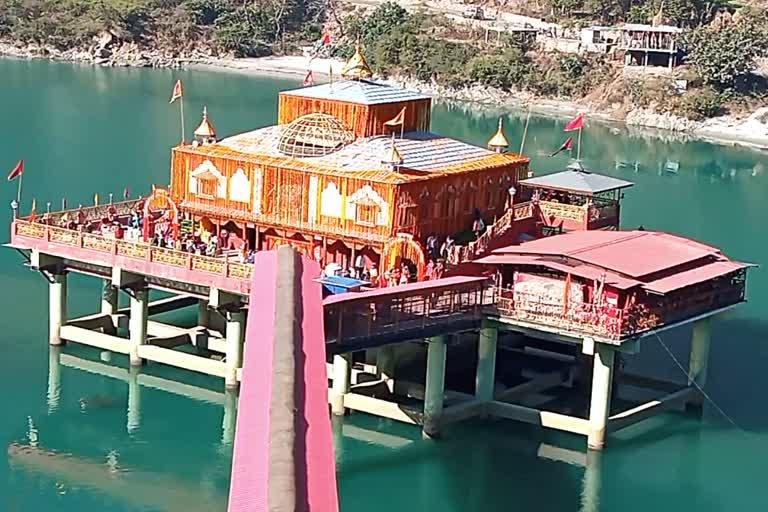
The Dhari Devi Aarti is distinguished by its remarkable riverside setting. The temple stands on a raised platform connected by a pedestrian bridge, with the Alaknanda flowing around it. During evening worship, the illuminated shrine appears to rise from the river, making the ceremony visually memorable.
The Aarti is conducted by temple priests using traditional lamps, incense, flowers and devotional recitations. The ritual is generally simple and focused, allowing devotees to concentrate on the goddess rather than on elaborate public presentation.
Sacred Lamps
A single-wick or multi-wick lamp is offered before Maa Dhari Devi. The flame represents knowledge, courage and divine protection. Devotees raise their hands towards the light and then touch their forehead as a gesture of receiving the goddess’s blessings.
Temple Bells and Conch Shells
Bells are rung during the Aarti to mark the beginning of worship and focus the mind. A conch shell may also be sounded during important ceremonies. Its deep vibration is traditionally believed to purify the ritual atmosphere.
Incense and Flowers
Incense symbolises purification and the upward movement of prayer. Flowers represent beauty, surrender and the temporary nature of material life. Red flowers and marigold garlands are commonly associated with Goddess worship.
Bhajans and Devotional Chants
Priests and devotees may recite prayers dedicated to Maa Durga, Maa Kali or Dhari Devi. During Navratri, devotional singing becomes more prominent and the temple receives elaborate floral decoration.
Festival Celebrations
Navratri is the most significant devotional period for the temple. Special worship, extended prayers and larger gatherings take place as devotees honour different forms of the Divine Mother. Government information about the shrine specifically notes that special worship is offered during Navratri. :contentReference[oaicite:3]{index=3}
Dhari Devi Aarti Timings
Dhari Devi Temple generally conducts morning and evening worship. The schedule can vary according to the season, weather, festival arrangements and instructions of the temple administration.
- Temple opening: Commonly around 6:00 AM.
- Morning Aarti: Commonly performed between 6:00 AM and 7:00 AM.
- Morning darshan: Usually available until approximately 12:00 noon.
- Afternoon interval: Often observed between 12:00 noon and 2:00 PM.
- Evening darshan: Commonly resumes around 2:00 PM.
- Sandhya Aarti: Frequently reported between 6:30 PM and 7:00 PM.
- Temple closing: Commonly between 6:00 PM and 7:00 PM, depending on the season.
A detailed local visitor schedule lists the morning Aarti from approximately 6:00 AM to 7:00 AM and the evening Aarti from approximately 6:30 PM to 7:00 PM. Other tourism listings publish slightly different closing times, so same-day confirmation is advisable. :contentReference[oaicite:4]{index=4}
Note: Timings may change during festivals or according to temple administration.
Rituals Performed During Dhari Devi Aarti
The precise ritual sequence may vary, but the following practices are commonly associated with the ceremony:
- The shrine is cleaned and prepared before the Aarti begins.
- The goddess is decorated with cloth, flowers and ornaments.
- Fresh flowers and garlands are offered before the deity.
- Incense is lit to purify the worship area.
- A ghee or oil lamp is prepared by the priest.
- The lamp is moved in circular patterns before Maa Dhari Devi.
- Temple bells are rung throughout the ceremony.
- A conch shell may be sounded during the opening or conclusion.
- Mantras and devotional hymns dedicated to the goddess are recited.
- Devotees stand with folded hands and silently offer personal prayers.
- The sacred flame is presented to the assembled worshippers.
- Prasad may be distributed after the ritual.
During major festivals, the ritual may include additional recitations, Durga Saptashati prayers, extended Bhajans and special offerings. These additions depend on the religious calendar and temple arrangements.
Temple Dress Code and Visitor Guidelines
Visitors attending the Dhari Devi Aarti should maintain a respectful appearance and follow the instructions issued by priests and security personnel.
- Wear clean, modest clothing that covers the shoulders and knees.
- Remove footwear at the designated location before entering the worship area.
- Maintain silence when mantras and prayers begin.
- Do not push towards the sanctum during the Aarti.
- Respect the queue and allow senior citizens sufficient space.
- Ask permission before taking photographs near the shrine.
- Avoid photographing the deity if temple rules prohibit it.
- Keep mobile phones silent throughout the ceremony.
- Do not touch lamps, idols or ritual objects without permission.
- Use only authorised donation boxes or temple counters.
- Do not throw flowers, plastic or food into the Alaknanda River.
- Follow weather and safety instructions during heavy rain.
The walkway and steps can become slippery during monsoon weather. Visitors should wear footwear with a secure grip for the approach and remove it only at the designated point.
Best Time to Attend Dhari Devi Aarti
Morning Aarti
The morning Aarti is suitable for visitors who prefer a calm environment and lighter crowds. The early light over the river and mountains creates a peaceful atmosphere for meditation and personal prayer.
Evening Aarti
The evening Aarti is the most visually impressive time to attend. As daylight fades, the lamps and temple illumination reflect on the Alaknanda River. Devotees who wish to experience the full atmosphere should arrive at least 30 minutes before the expected ceremony.
Navratri
Navratri offers the strongest festival atmosphere, with flowers, special prayers and larger gatherings. Visitors should expect longer queues and more extensive crowd-control arrangements.
Recommended Seasons
March to June and September to November generally offer more comfortable road and weather conditions. Heavy monsoon rainfall can increase river levels and create landslide risks on Himalayan roads. Tourism information for the shrine advises caution during July and August. :contentReference[oaicite:5]{index=5}
Pilgrims planning accommodation in Srinagar or Rudraprayag can use Mudras Stays while arranging an early-morning or evening Aarti visit.
Nearby Attractions
Rudraprayag Sangam
Located around 19 to 20 kilometres away, Rudraprayag is the sacred confluence of the Alaknanda and Mandakini rivers. It is an important spiritual stop on the route towards Kedarnath.
Kamleshwar Mahadev Temple
This historic Shiva temple in Srinagar is associated with local religious traditions and can be visited before or after Dhari Devi Aarti when travelling through the town.
Srinagar, Uttarakhand
Srinagar is the nearest major town and provides accommodation, transport, food and medical facilities. Dhari Devi Temple is approximately 15 to 16 kilometres from Srinagar. :contentReference[oaicite:6]{index=6}
Interesting Facts About Dhari Devi Aarti and Temple
- The temple is positioned on a raised platform above the Alaknanda River.
- Maa Dhari Devi is widely revered as a guardian of Uttarakhand’s pilgrimage routes.
- The upper form of the goddess is worshipped at Dhari Devi, while an associated lower form is traditionally connected with Kalimath.
- Local tradition states that the goddess’s appearance reflects different stages of womanhood during the day.
- The temple is an important stop for pilgrims travelling towards Kedarnath and Badrinath.
- Navratri is the most important period for special worship and large devotional gatherings.
- The evening Aarti is particularly striking because the illuminated shrine reflects on the river.
- The exact historical beginning of the daily Aarti tradition is not documented, but it continues as part of the temple’s established Shakta worship.
Frequently Asked Questions
What is Dhari Devi Aarti?
Dhari Devi Aarti is the daily ceremonial offering of sacred light before Maa Dhari Devi. It includes lamps, bells, incense, flowers, mantras and devotional prayers.
Where is Dhari Devi Aarti performed?
The Aarti is performed at Dhari Devi Temple near Kalyasaur, between Srinagar and Rudraprayag in Uttarakhand. The shrine stands above the Alaknanda River.
What are the Dhari Devi Aarti timings?
Morning Aarti is commonly performed between 6:00 AM and 7:00 AM. Evening Aarti is generally conducted between 6:30 PM and 7:00 PM. Visitors should confirm the timing locally.
Can anyone attend Dhari Devi Aarti?
Yes. The regular Aarti is open to devotees and visitors, subject to crowd-control, safety and temple rules.
Is there an entry fee for the Aarti?
General darshan and participation in the regular collective Aarti are ordinarily free. Donations and individually arranged rituals are optional.
What should devotees wear?
Visitors should wear modest and comfortable clothing suitable for a religious place. Warm layers may be required during winter and early-morning visits.
Which Dhari Devi Aarti is most popular?
The evening Aarti is especially popular because the lamps, temple illumination and river setting create a beautiful devotional atmosphere. The morning Aarti is better for quieter prayer.
What is the best time to attend Dhari Devi Aarti?
Morning is ideal for peace and meditation, while evening is best for illuminated worship. Navratri offers a special festival experience but attracts much larger crowds.