Introduction to Karni Mata Temple Aarti
Karni Mata Temple Aarti is a deeply respected devotional ceremony performed at the famous Karni Mata Temple in Deshnok, approximately 30 kilometres south of Bikaner in Rajasthan. The ceremony honours Karni Mata, a revered spiritual figure worshipped by her followers as a manifestation of divine feminine power.
During the Aarti, temple priests present sacred lamps before the image of Karni Mata while prayers, bells and devotional chants fill the shrine. Devotees gather with folded hands to seek the goddess’s protection, courage and blessings. The ceremony is especially meaningful to Charan communities and families that regard Karni Mata as their Kuldevi or ancestral guardian deity.
The temple is internationally known for its population of sacred rodents, locally called kabas. Within the temple tradition, these creatures are protected and treated with reverence. Their presence gives the Aarti an atmosphere unlike that of almost any other Indian shrine. Devotees are expected to walk carefully, remain respectful and avoid disturbing them.
People attend Karni Mata Temple Aarti for different spiritual reasons. Some pray for family welfare, some express gratitude after a wish has been fulfilled, and others participate to experience the temple’s centuries-old devotional tradition. The early-morning ceremony is particularly peaceful, while the evening worship attracts devotees seeking a powerful conclusion to their pilgrimage.
History of Karni Mata Temple and Its Aarti Tradition
Karni Mata is traditionally believed to have lived between the fourteenth and sixteenth centuries. She became widely respected as a spiritual guide and is closely associated with the history of the Rathore rulers of Rajasthan. Devotional accounts connect her with the royal houses of Bikaner and Jodhpur, whose rulers sought her guidance and blessings.
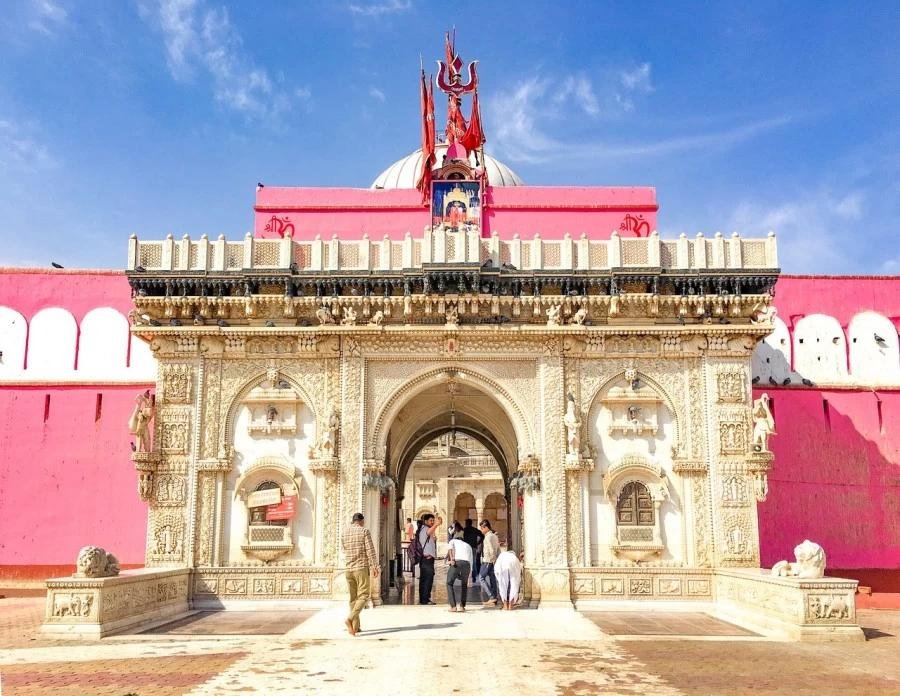
The shrine at Deshnok developed around the place associated with her spiritual presence. The present temple reflects several phases of construction and patronage. Its elaborate marble façade and silver doors are associated with later royal contributions, particularly those made under Maharaja Ganga Singh of Bikaner.
The daily Aarti grew from the regular worship offered to Karni Mata by hereditary priests and generations of devotees. Rather than being a performance for visitors, it remains an active religious ceremony shaped by the customs of the shrine.
The early-morning Mangala Aarti marks the ceremonial awakening of the goddess and the beginning of the temple’s daily worship. Lamps, prayers and offerings are presented before devotees begin entering in larger numbers. Evening worship brings the principal activities of the day towards a devotional conclusion.
The temple’s sacred kabas are inseparable from its religious identity. Different traditions explain their presence in different ways. One widely repeated belief connects them with the descendants or followers of Karni Mata. Visitors should understand these accounts as elements of living faith rather than reducing the temple to its popular description as a “rat temple.”
Spiritual Significance of Karni Mata Temple Aarti
Aarti is an offering of illuminated lamps before a deity. The flame represents divine knowledge, purity and the removal of spiritual darkness. At Deshnok, offering light before Karni Mata expresses surrender to the goddess and gratitude for her protection.
The circular movement of the lamp symbolically places every aspect of life before the divine. The devotee is encouraged to release pride, fear and anxiety while focusing on the radiance of the sacred flame.
The ringing of bells helps direct attention towards worship. Incense symbolises prayers rising towards the goddess, while flowers represent purity and heartfelt devotion. The combined ritual creates an environment in which individual prayers become part of collective worship.
Karni Mata is particularly associated with courage, protection and maternal guardianship. Her devotees approach the Aarti as an opportunity to seek emotional strength and guidance during difficult circumstances.
The respectful coexistence between worshippers and the kabas also carries a broader spiritual message. It reminds visitors that compassion should extend to all living beings and that sacredness may be recognised in forms that initially appear unfamiliar.
Benefits of Attending Karni Mata Temple Aarti
- Spiritual peace: The prayers and lamp offering provide a focused space away from everyday concerns.
- Inner courage: Devotees seek Karni Mata’s strength when facing personal or family difficulties.
- Strengthened devotion: Participating in collective worship can deepen one’s connection with the goddess.
- Positive reflection: Morning and evening ceremonies create natural moments for gratitude and introspection.
- Cultural understanding: The Aarti introduces visitors to the distinctive religious traditions of Deshnok and Bikaner.
- Community worship: Praying alongside other devotees creates a sense of unity and shared faith.
- Respect for living beings: The protected kabas encourage careful movement and compassionate behaviour.
- Connection with tradition: Attendance allows devotees to participate in a ritual preserved across generations.
These are devotional and reflective benefits. Attending an Aarti should not be presented as a guaranteed cure or as a certain way of obtaining wealth, employment or another material result.
What Makes Karni Mata Temple Aarti Special?
The most distinctive aspect of Karni Mata Temple Aarti is its setting. Sacred lamps are offered in a temple where thousands of protected kabas move freely through courtyards and worship areas. Devotees walk cautiously while making space for the animals.
The priests conduct the ceremony according to the shrine’s established traditions. The Aarti generally brings together the flame, bells, incense, flowers, devotional recitation and offerings presented to Karni Mata.
The early-morning ceremony has a calm and intimate character. The air is cooler, the crowd may be lighter on ordinary days, and devotees can hear the prayers more clearly. The evening ceremony creates a different mood as lamps illuminate the shrine and the day concludes with collective devotion.
Navratri transforms the atmosphere considerably. Deshnok hosts important fairs during Chaitra Navratri and Sharad Navratri, attracting large numbers of pilgrims. Special decorations, extended worship and crowd-management arrangements may be introduced during these periods.
Another important tradition concerns the sighting of a white kaba, which many devotees consider highly auspicious. Visitors should never chase, touch or surround one for photographs. Quiet observation is the appropriate response.
Karni Mata Temple Aarti Timings
Rajasthan Tourism publishes general temple hours of 4:00 AM to 10:00 PM. However, the temple does not appear to maintain a consistently accessible public timetable listing every daily ceremony at fixed times.
- Mangala Aarti: Performed at the beginning of the early-morning worship period, generally around the temple’s opening.
- Morning worship: Continues after Mangala Aarti with Darshan, prayers and permitted offerings.
- Bhog ceremony: Food offerings are presented according to the temple’s daily ritual arrangement.
- Sandhya Aarti: Performed during the evening worship period; its exact time may move with the season.
- Concluding worship: Final prayers and offerings take place before the temple closes for the night.
Recent schedules and local announcements indicate that Mangala Aarti can begin at approximately 4:00 AM during parts of summer, while winter worship may begin later. Evening Aarti also changes with sunset and seasonal temple practice.
Devotees should confirm the current ceremony time through the temple office, a notice displayed at the entrance or reliable local assistance on the day of their visit. Arriving 30 minutes early is advisable. During Navratri, visitors should expect longer queues and modified access arrangements.
Note: Timings may change during festivals or according to temple administration.
Rituals Performed During Karni Mata Aarti
Lighting and Offering of Lamps
The priest lights the Aarti lamp and moves it before Karni Mata in prescribed circular motions. The flame is regarded as a symbol of divine presence, wisdom and protection.
Invocation and Sacred Chanting
The ceremony includes prayers and devotional recitations honouring the goddess. Devotees may quietly repeat familiar invocations while following the lead of the priests.
Ringing of Temple Bells
Bells are sounded during important moments of worship. Their resonance helps focus the congregation’s attention on the deity and the sacred ceremony.
Conch and Ceremonial Sounds
A conch shell may be sounded to mark the opening or an important stage of the ritual. In Hindu worship, its sound is traditionally associated with auspiciousness and purification.
Flowers and Incense
Flowers are presented as expressions of love and reverence. Incense adds fragrance to the sanctum and symbolises prayer rising towards the divine.
Bhajans and Collective Devotion
Devotional singing or recitation may accompany the Aarti. Visitors should follow the established rhythm and avoid interrupting the ceremony with loud personal chanting.
Bhog and Prasad
Food is ceremonially offered to Karni Mata as Bhog. When Prasad is distributed, devotees should receive it respectfully and avoid wasting it. Visitors should only feed the kabas items permitted or provided through authorised temple arrangements.
Temple Dress Code and Visitor Guidelines
- Wear modest, comfortable clothing suitable for a place of worship.
- Cover the shoulders and knees and avoid revealing or disrespectful attire.
- Remove footwear at the designated point before entering the temple.
- Walk slowly and watch every step because kabas move freely across the floor.
- Never kick, frighten, chase, pick up or intentionally touch a kaba.
- Do not bring outside food to feed the kabas without permission.
- Use hand sanitiser after leaving and wash your hands before eating.
- Maintain silence near the sanctum and during the Aarti.
- Follow the queue without pushing or blocking the view of other devotees.
- Respect barriers and areas reserved for priests.
- Ask before taking photographs or recording videos.
- Do not use flash photography during worship.
- Follow all instructions issued by priests, security personnel and temple staff.
Published accounts differ regarding photography. Some entrance arrangements have reportedly allowed cameras after payment of a nominal charge, while photography may still be restricted near the sanctum or during ceremonies. Visitors must follow the rule displayed on the day rather than relying on an older online listing.
Best Time to Attend Karni Mata Temple Aarti
The Mangala Aarti is suitable for devotees seeking the quietest and most traditional experience. Early morning also offers cooler temperatures, particularly outside winter.
Evening Aarti is ideal for visitors who prefer a livelier congregation and the visual atmosphere created by sacred lamps. Travellers should arrive before sunset and confirm the ceremony time locally.
October to March generally offers more comfortable weather in the Bikaner region. Chaitra Navratri and Sharad Navratri are the most important festival periods, but they also bring heavy crowds.
Visitors seeking a calm first experience should choose an ordinary weekday outside Navratri. Those attending early-morning worship may arrange accommodation in Bikaner or Deshnok through Mudras Stays and leave sufficient time for the journey.
Nearby Attractions
- Junagarh Fort: Located in Bikaner, this historic fort is known for its palaces, courtyards and richly decorated interiors.
- National Research Centre on Camel: This Bikaner institution introduces visitors to camel breeds, conservation and the animal’s importance in desert life.
- Lalgarh Palace: An impressive red-sandstone complex that reflects a blend of Rajput, Mughal and European architectural influences.
Interesting Facts About Karni Mata Temple Aarti
- The temple is dedicated to Karni Mata, who is worshipped as a guardian goddess.
- Its sacred rodents are locally known as kabas and are protected within the premises.
- Seeing a white kaba is traditionally considered auspicious.
- The temple opens early so Mangala Aarti can begin the daily cycle of worship.
- Karni Mata is historically associated with the royal houses of Bikaner and Jodhpur.
- The temple’s marble façade and silver doors reflect later royal patronage.
- Major devotional gatherings take place during both Chaitra and Sharad Navratri.
- The shrine encourages careful and compassionate behaviour towards every living creature inside it.
Frequently Asked Questions About Karni Mata Temple Aarti
What is Karni Mata Temple Aarti?
It is a traditional ceremony in which priests offer sacred lamps, prayers, incense and devotional offerings before Karni Mata at the Deshnok temple.
Where is Karni Mata Temple Aarti performed?
The Aarti is performed at Karni Mata Temple in Deshnok, approximately 30 kilometres from Bikaner in Rajasthan.
What time is the Mangala Aarti?
Mangala Aarti is performed during the early-morning opening period. It may begin around 4:00 AM in summer, but visitors should confirm the current seasonal time locally.
Can everyone attend the Aarti?
Devotees and respectful visitors can ordinarily attend during public-access periods, subject to crowd levels, available space and temple rules.
Is there an entry fee?
Rajasthan Tourism states that general admission to the temple is free. Separate charges or permissions may apply to cameras or specific services.
What should devotees wear?
Visitors should wear clean, modest clothing appropriate for a religious site. Comfortable clothing is advisable because everyone must walk barefoot inside.
Is photography allowed during Karni Mata Aarti?
Photography rules may vary by area and occasion. Visitors should check the current entrance notice and avoid photographing the sanctum or ceremony without explicit permission.
Which is the best Aarti for first-time visitors?
Morning Aarti offers a quieter devotional experience, while evening Aarti provides a more illuminated and collective atmosphere. Both should be planned after confirming the same-day schedule.