Srivari Salakatla Brahmotsavam
Event Overview
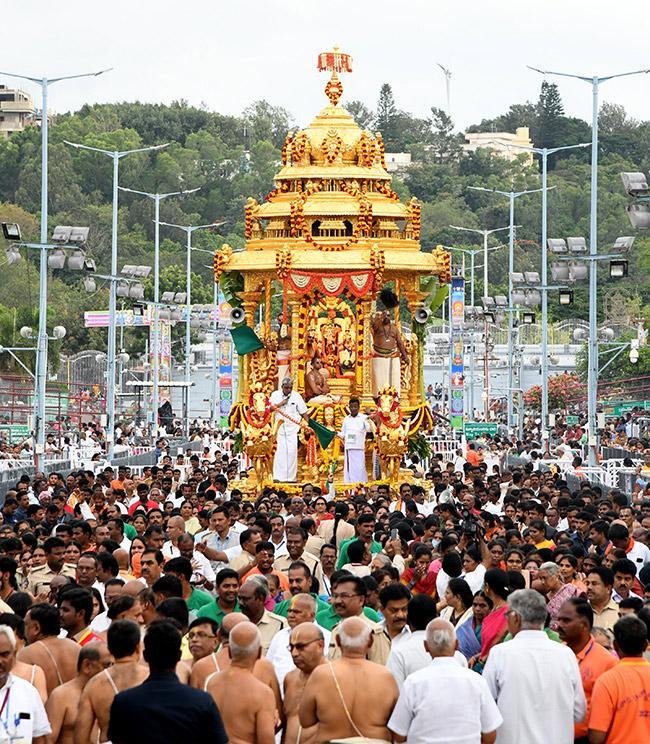
Srivari Salakatla Brahmotsavam is the principal nine-day annual festival of the Sri Venkateswara Swamy Temple at Tirumala. The 2026 celebrations officially begin with Dwajarohanam on 15 September and conclude with Chakrasnanam and Dwajavarohanam on 23 September. The Tirumala Tirupati Devasthanams has also announced Garuda Vahana Seva for 19 September and Rathotsavam for 22 September.
During the festival, the processional deity, Sri Malayappa Swamy, appears with Sridevi and Bhudevi on different sacred vahanas along Tirumala’s four Mada streets. Morning and evening processions allow pilgrims to witness the deity in several symbolic forms, accompanied by Vedic chanting, temple music, umbrellas, lamps, flowers and traditional cultural performances.
Important festival events and pilgrim activities include:
Dwajarohanam and Pedda Sesha Vahana Seva on the opening day
Chinna Sesha and Hamsa Vahana processions
Simha and Mutyapu Pandiri Vahana Sevas
Kalpavriksha and Sarva Bhoopala Vahana processions
Mohini Avataram and the major Garuda Vahana Seva
Hanumantha Vahana, Swarna Ratham and Gaja Vahana
Surya Prabha and Chandra Prabha Vahana processions
Rathotsavam through the four Mada streets
Chakrasnanam in the Swami Pushkarini
Darshan of Lord Venkateswara and participation in devotional chanting
Garuda Seva is generally the most heavily attended event because Lord Malayappa Swamy is carried on Garuda, the sacred vehicle of Lord Vishnu. Rathotsavam brings devotees together around the temple chariot, while the final Chakrasnanam includes the ceremonial bathing of Sri Sudarshana Chakra in Swami Pushkarini.
Pilgrims should expect very heavy crowds, extended waiting periods, traffic restrictions and changes to regular temple services during Brahmotsavam. Accommodation, transport and official darshan arrangements should be planned well in advance through authorised TTD channels.
Cultural & Spiritual Significance
Brahmotsavam is regarded as Tirumala’s most important annual festival. Temple tradition holds that Lord Brahma originally conducted the celebration in honour of Lord Venkateswara, which explains the name “Brahmotsavam”—the grand festival associated with Brahma.
Each vahana carries a distinct spiritual meaning. Sesha represents service and devotion, Hamsa symbolises purity and discernment, Garuda represents complete surrender to Lord Vishnu, Surya and Chandra express divine presence across time, and the chariot procession symbolises the Lord’s accessibility to all devotees.
The festival transforms Tirumala into a centre of collective worship, where pilgrims repeatedly chant “Govinda, Govinda” as the deity moves through the temple streets. The processions allow devotees who may not receive close sanctum darshan to witness Sri Malayappa Swamy outside the main shrine.
The concluding Chakrasnanam represents ritual purification and the spiritual completion of the festival. Devotees traditionally regard participation in or witnessing the sacred bath as highly auspicious. Dwajavarohanam later marks the ceremonial lowering of the Garuda flag and the conclusion of the nine-day celebration.
Planning to attend Srivari Salakatla Brahmotsavam?
Book your peaceful stays and verified temple cabs directly with Mudras Stays. Secure instant confirmation and enjoy premium Satvik hospitality.