Sharad Navratri Mahotsav at Harsiddhi Mata Temple
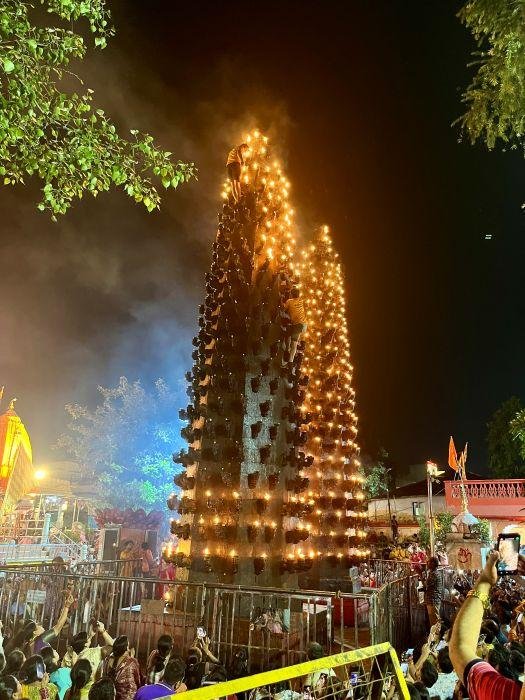
Event Overview
Sharad Navratri at Harsiddhi Mata Temple is a major multi-day celebration dedicated to Goddess Harsiddhi, a revered manifestation of Shakti. The 2026 observance begins with Ghatasthapana on 11 October and continues through Vijayadashami on 20 October. The calendar therefore covers ten dates and nine principal nights of worship.
Harsiddhi Mata Temple is situated near the Mahakaleshwar Temple and Rudra Sagar in Ujjain. During Navratri, the temple becomes a major centre of Devi worship, with large crowds, special decorations, Vedic rituals, yajnas and extended devotional activity.
A defining feature of the celebration is the illumination of the temple’s two towering deepmalas, or ceremonial lamp pillars. Hundreds of oil lamps are lit across these pillars, creating one of Ujjain’s most recognised Navratri sights. Devotees frequently make advance arrangements to sponsor or participate in the lighting ritual.
Important pilgrim activities include:
Attending morning darshan of Goddess Harsiddhi
Participating in evening aarti
Witnessing the illumination of the deepmala pillars
Offering flowers, coconuts, red cloth and sindoor
Reciting Durga Saptashati and Devi mantras
Participating in Navratri fasting and daily worship
Attending Vedic chanting and yajna ceremonies
Seeking blessings during Ashtami and Navami
Visiting Mahakaleshwar Jyotirlinga during the same pilgrimage
Participating in Vijayadashami prayers on the concluding day
The most crowded period is generally during the evening aarti and on the final days of Navratri. Devotees planning to witness the deepmala illumination should arrive early because the temple courtyard and nearby roads can become heavily congested.
Important 2026 festival dates:
11 October: Ghatasthapana and beginning of Sharad Navratri
17 October: Saraswati Puja observances
18 October: Durga Ashtami and Sandhi Puja
19 October: Maha Navami and Navami Homa
20 October: Navratri Parana and Vijayadashami
Cultural & Spiritual Significance
Harsiddhi Mata is worshipped as a protective form of the Divine Mother and is regarded in local tradition as the guardian goddess of Ujjain. The temple is also traditionally associated with Emperor Vikramaditya, who is remembered as a devoted worshipper of the goddess.
Navratri symbolises the victory of divine energy over ignorance, fear and destructive forces. Each day encourages devotees to cultivate discipline, courage, compassion and spiritual awareness.
The festival represents:
Divine protection: Devotees seek protection from fear, adversity and negative influences.
Spiritual purification: Fasting, prayer and mantra recitation promote self-discipline.
Fulfilment of wishes: Lighting lamps and offering prayers are traditionally associated with sincere wishes.
Victory of dharma: Vijayadashami represents righteousness overcoming harmful forces.
Community devotion: Thousands of pilgrims worship together through aarti, yajna and chanting.
Continuity of tradition: The festival preserves Ujjain’s Shakta, Shaiva and regional religious heritage.
The twin deepmalas carry particular symbolic importance. Their illumination represents the removal of darkness and the awakening of divine knowledge. The sight of the lamp pillars glowing during evening worship is considered one of the central spiritual experiences of Navratri in Ujjain.
The temple’s proximity to Mahakaleshwar Jyotirlinga also allows pilgrims to combine Shakti worship with Shiva worship. Many devotees therefore plan a wider spiritual circuit covering Harsiddhi Mata Temple, Mahakaleshwar Temple, Kal Bhairav Temple and other sacred places in Ujjain.
Planning to attend Sharad Navratri Mahotsav at Harsiddhi Mata Temple?
Book your peaceful stays and verified temple cabs directly with Mudras Stays. Secure instant confirmation and enjoy premium Satvik hospitality.