
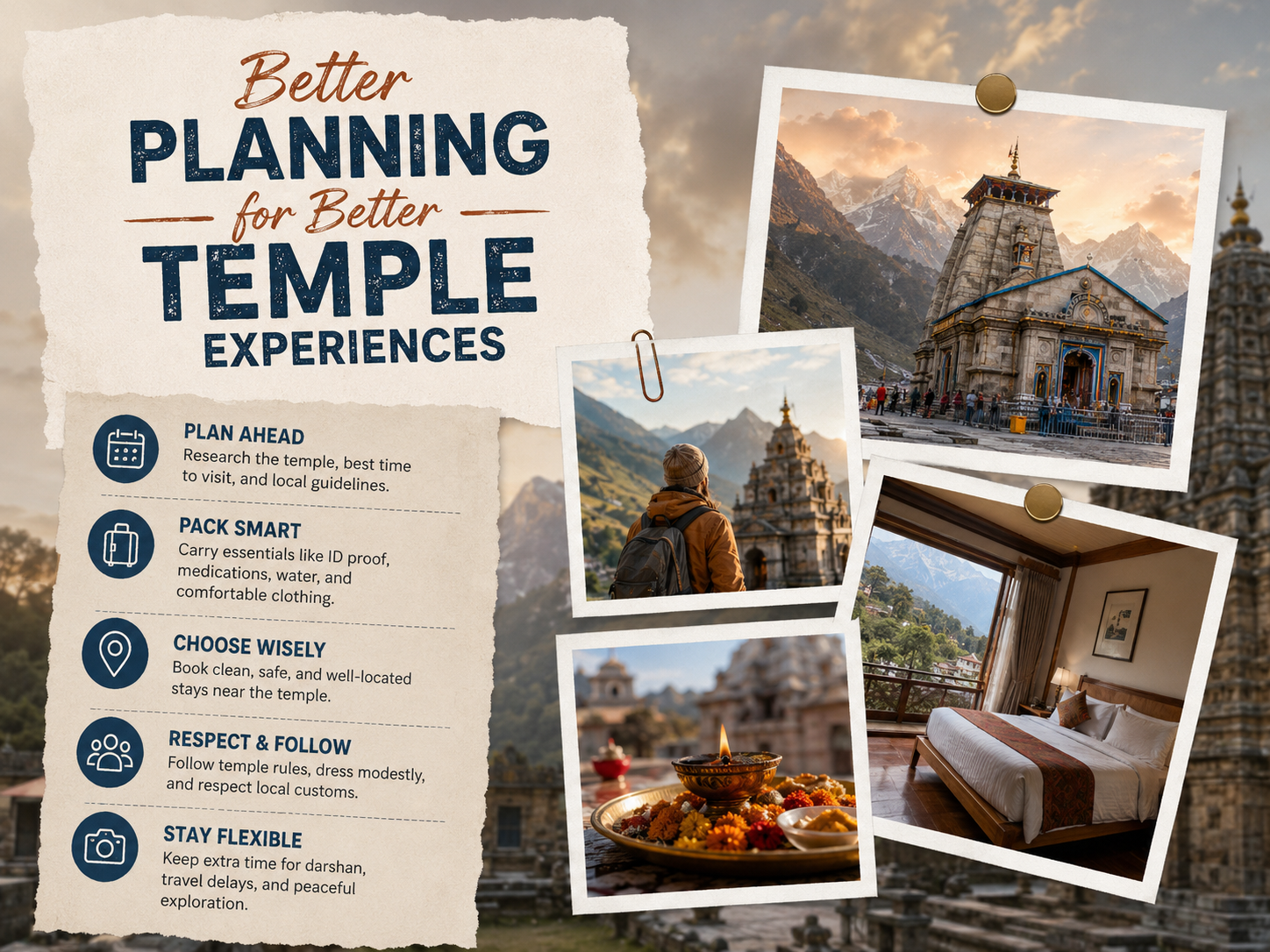
Why Better Planning Changes the Entire Pilgrimage Experience
A temple journey is often planned with deep faith and personal meaning. Devotees may travel hundreds or even thousands of kilometres to visit sacred destinations such as Kedarnath, Badrinath, Tirupati, Vaishno Devi, Somnath, Dwarkadhish Temple, Rameswaram, Kashi Vishwanath, Mahakaleshwar, Jagannath Puri, Ayodhya, Meenakshi Temple, or other revered spiritual destinations across India.
The emotional importance of these journeys is high, but the practical side of pilgrimage travel is equally important. Accommodation, transportation, weather, temple timings, walking distances, food, crowd levels, family requirements, and local accessibility can all influence the quality of the experience.
Many pilgrimage problems are not caused by the destination itself. They happen because important details were left until the last moment. A hotel is booked too far from the temple, a family arrives without understanding local transport, elderly parents are expected to walk longer distances than anticipated, or travel dates are selected during an extremely crowded period without additional preparation.
Better planning does not remove the spontaneity or spiritual value of a pilgrimage. Instead, it creates the practical structure that allows devotees to focus more fully on prayer, rituals, family, and reflection.
A thoughtfully planned journey usually means less waiting, less confusion, fewer unnecessary expenses, and greater physical comfort. That is why preparation should be treated as an important part of every temple trip rather than an administrative task completed at the last minute.
Begin With the Purpose of Your Journey
Before booking hotels or transportation, understand what you want from the pilgrimage. Some travelers may be visiting one temple for a specific darshan, while others may be planning a longer circuit covering several sacred destinations.
Your purpose will influence the entire itinerary.
- A single-temple visit may require only one or two nights.
- A festival pilgrimage may require additional time because of crowds.
- A multi-temple circuit needs carefully coordinated stays and transport.
- A family pilgrimage may require slower travel and more rest.
- A senior citizen journey should prioritize accessibility and convenience.
Clarifying the purpose early helps prevent an overly complicated itinerary.
Research the Temple Before Making Bookings
Every temple has its own rhythm. Some temples open before sunrise, some have several darshan sessions during the day, while others may temporarily close between rituals.
Before confirming your travel plans, research:
- Temple opening and closing times.
- Darshan schedules.
- Special puja timings.
- Festival dates.
- Dress requirements.
- Photography restrictions.
- Entry procedures.
- Seasonal accessibility.
This information helps you decide where to stay, when to arrive, and how many days to allocate to the destination.
Choose Travel Dates Strategically
The same temple can offer very different travel experiences depending on the season.
Festival periods may provide a vibrant and deeply devotional atmosphere, but they also bring larger crowds, higher hotel demand, longer queues, and greater transportation pressure.
Quieter periods may offer easier access, better accommodation availability, and more relaxed temple visits.
Before choosing dates, consider:
- Major festivals.
- Weekends.
- Public holidays.
- School vacation periods.
- Weather conditions.
- Temple opening seasons.
Families with children or senior citizens may benefit from travelling during less crowded periods whenever their schedule allows.
Make Accommodation a Priority
Accommodation is not simply where you sleep during a pilgrimage. It determines how much time you spend commuting, how easily you can reach the temple, and how well you recover after a tiring day.
A good temple stay should ideally combine:
- Practical location.
- Comfortable rooms.
- Clean bathrooms.
- Reliable basic amenities.
- Suitable access for your travel group.
- Helpful staff.
A well-chosen hotel can make the difference between an exhausting journey and a comfortable spiritual experience.
Do Not Judge Distance Only by Kilometres
A common mistake is assuming that the hotel with the shortest map distance is automatically the most convenient.
Temple towns often have pedestrian zones, restricted roads, traffic diversions, steep slopes, narrow lanes, or designated vehicle drop points. A property that appears one kilometre away may require a difficult walk, while another slightly farther away may provide much easier access.
Before booking, understand:
- Actual walking route.
- Vehicle access.
- Local traffic restrictions.
- Availability of autos or taxis.
- Distance from the main temple entrance.
- Terrain and road conditions.
Practical accessibility is often more important than straight-line distance.
Compare Total Value, Not Just Hotel Price
The cheapest hotel does not always produce the cheapest pilgrimage.
A lower room rate may be offset by:
- Repeated taxi fares.
- Longer travel time.
- Additional food expenses.
- Poor room comfort.
- Difficulty reaching the temple.
A slightly more expensive hotel near the temple may provide better overall value by reducing transportation costs and saving valuable time.
Book Early During Popular Travel Periods
Accommodation near major temples can fill quickly during festivals, weekends, long holidays, and peak pilgrimage seasons.
Booking early helps secure:
- Better room choices.
- More convenient locations.
- Suitable family rooms.
- Senior-friendly options.
- More predictable pricing.
Last-minute booking often forces travelers to compromise on location or comfort.
Read Hotel Information Carefully
Do not rely only on photos when choosing accommodation.
Read the property description carefully and verify:
- Room type.
- Bed configuration.
- Lift availability.
- Hot water.
- Parking.
- Meal availability.
- Check-in policy.
- Cancellation conditions.
Clear expectations before arrival reduce the chances of disappointment later.
Use Guest Reviews as Practical Evidence
Guest reviews can provide useful insights into the real experience of staying at a property.
Look specifically for comments about:
- Actual temple distance.
- Cleanliness.
- Room comfort.
- Staff responsiveness.
- Noise levels.
- Food availability.
- Family suitability.
Reading several reviews is more useful than relying on a single positive or negative comment.
Plan Transportation Around Your Stay
Accommodation and transportation should be planned together rather than independently.
Check:
- Nearest airport or railway station.
- Travel time to the hotel.
- Local taxi availability.
- Parking arrangements.
- Temple shuttle services where available.
- Late-night transport limitations.
A convenient transport plan reduces uncertainty after arrival.
Keep the Daily Itinerary Realistic
Pilgrimages often take longer than expected because of queues, rituals, security checks, and local traffic.
Avoid scheduling too many activities in one day.
A comfortable itinerary should include time for:
- Darshan.
- Meals.
- Rest.
- Local travel.
- Prayer.
- Nearby sightseeing.
A slower itinerary often creates a more meaningful spiritual experience than rushing through several destinations.
Plan Differently When Travelling With Children
Children may find long queues, extended walking, and early starts tiring.
Families should carry:
- Water.
- Light snacks.
- Extra clothing.
- Basic medicines.
- Comfortable footwear.
Choosing accommodation close to the temple allows families to return to the hotel easily when children need rest.
Give Senior Citizens Additional Comfort
For elderly devotees, accessibility should be considered before price or luxury.
Useful hotel features include:
- Lift access where available.
- Ground-floor rooms.
- Minimal stairs.
- Comfortable beds.
- Nearby transportation.
- Shorter temple access routes.
The itinerary should also include enough rest and avoid unnecessary rushing.
Prepare for Health Requirements
Long journeys, changing weather, and unfamiliar food can affect travelers physically.
Carry:
- Prescription medicines.
- Basic first-aid items.
- Medical prescriptions.
- Water.
- Essential health information.
Travelers with specific medical requirements should plan around those needs rather than attempting an overly demanding schedule.
Pack According to the Destination
Temple travel across India can involve mountains, coastal regions, hot plains, or rainy environments.
Your packing list should reflect the destination.
- Comfortable walking shoes.
- Weather-appropriate clothing.
- Rain protection when required.
- Warm clothing for colder destinations.
- Reusable water bottle.
- Mobile charger and power bank.
- Identity documents.
Avoid unnecessary luggage, particularly on journeys involving several hotel changes.
Keep Important Documents Accessible
Store both physical and digital copies of important documents.
- Government ID.
- Hotel booking details.
- Train or flight tickets.
- Medical prescriptions.
- Emergency contacts.
- Relevant temple booking confirmations.
Keeping everything organized prevents avoidable delays.
Budget Beyond the Room Rate
A complete pilgrimage budget should include much more than hotel and transport costs.
Plan for:
- Local transportation.
- Meals.
- Temple offerings.
- Parking.
- Shopping.
- Emergency expenses.
Keeping a small contingency amount helps manage unexpected expenses comfortably.
Respect Local Customs and Temple Etiquette
Better planning also means understanding how to behave respectfully at the destination.
Travelers should:
- Follow dress requirements.
- Respect photography restrictions.
- Maintain cleanliness.
- Follow queue systems.
- Respect local customs.
- Follow instructions from temple authorities.
Being prepared for these expectations avoids confusion at the temple entrance.
Plan for Crowds During Festivals
Festival travel requires additional patience and preparation.
Expect:
- Longer queues.
- More traffic.
- Limited parking.
- Higher hotel demand.
- More crowded marketplaces.
Book earlier, allow additional travel time, and avoid creating a tightly packed schedule during major celebrations.
Consider a Specialized Temple Travel Platform
General booking platforms can provide a wide selection of hotels, but temple travelers often require more destination-specific information.
A platform focused on pilgrimage accommodation can make it easier to compare hotels based on temple relevance rather than general tourism criteria.
Mudras Stays focuses specifically on accommodation around important spiritual destinations, helping devotees explore stays that better match the needs of temple travel.
How Mudras Stays Supports Better Pilgrimage Planning
Mudras Stays has been built around the idea that temple travel requires more than a room reservation. Travelers need practical accommodation choices that fit their itinerary, budget, family structure, and destination.
The platform helps travelers explore:
- Hotels near major temples.
- Verified accommodation options.
- Budget and premium properties.
- Family-friendly stays.
- Senior citizen-friendly accommodation.
- Destination-focused hotels.
- Convenient temple access.
- Practical pilgrimage planning support.
By helping travelers focus on relevant accommodation, Mudras Stays can reduce the time spent sorting through properties that may not suit the actual purpose of the journey.
Review Your Plan Before Departure
A final review one or two days before travel can prevent several common problems.
Reconfirm:
- Hotel reservation.
- Travel tickets.
- Temple timings.
- Weather forecast.
- Transport arrangements.
- Medicines.
- Identity documents.
- Emergency contacts.
A few minutes of preparation before departure can save considerable time later.
Frequently Asked Questions
Why is planning so important for temple travel?
Temple journeys often involve fixed darshan schedules, large crowds, long walking distances, and unfamiliar destinations. Good planning helps reduce travel stress and makes accommodation, transportation, and daily activities easier to manage.
What should I plan first for a pilgrimage?
Start by selecting your destination and dates, then research temple timings, weather, and local accessibility before booking accommodation and transportation.
Why should accommodation be close to the temple?
Nearby accommodation reduces daily travel, lowers transportation costs, makes early darshan easier, and allows families or senior citizens to return to the hotel quickly for rest.
Is the cheapest hotel usually the best option?
Not necessarily. A cheaper hotel located far away may create additional transport costs and inconvenience. Compare overall value, location, comfort, and accessibility before booking.
How can families improve their temple travel experience?
Families should choose comfortable accommodation, keep the itinerary flexible, plan meal and rest breaks, and stay near the temple whenever possible.
What should I consider when travelling with elderly parents?
Prioritize minimal walking, lift or ground-floor access, comfortable rooms, nearby transportation, essential medicines, and a slower daily itinerary.
Can Mudras Stays help with temple accommodation planning?
Yes. Mudras Stays focuses specifically on stays near pilgrimage destinations, making it easier to compare accommodation that is relevant to temple travel.
When should I book hotels for temple festivals?
Book as early as possible. Popular hotels near major temples may fill several weeks or months in advance during important festivals and peak pilgrimage periods.
What should I check immediately before departure?
Reconfirm your hotel, transportation, temple timings, weather, identity documents, medicines, and emergency contact information before beginning the journey.
Who can benefit from better temple travel planning?
Solo pilgrims, families, senior citizens, first-time travelers, religious groups, and multi-temple tourists can all benefit from a more organized approach to pilgrimage planning.